10 October 2026, 07:37
Loading...
Italian Federacciai warns: Without a change in EU policy, we will lose strategic steel
Veronika Jurcová
13 November 2025, 12:38
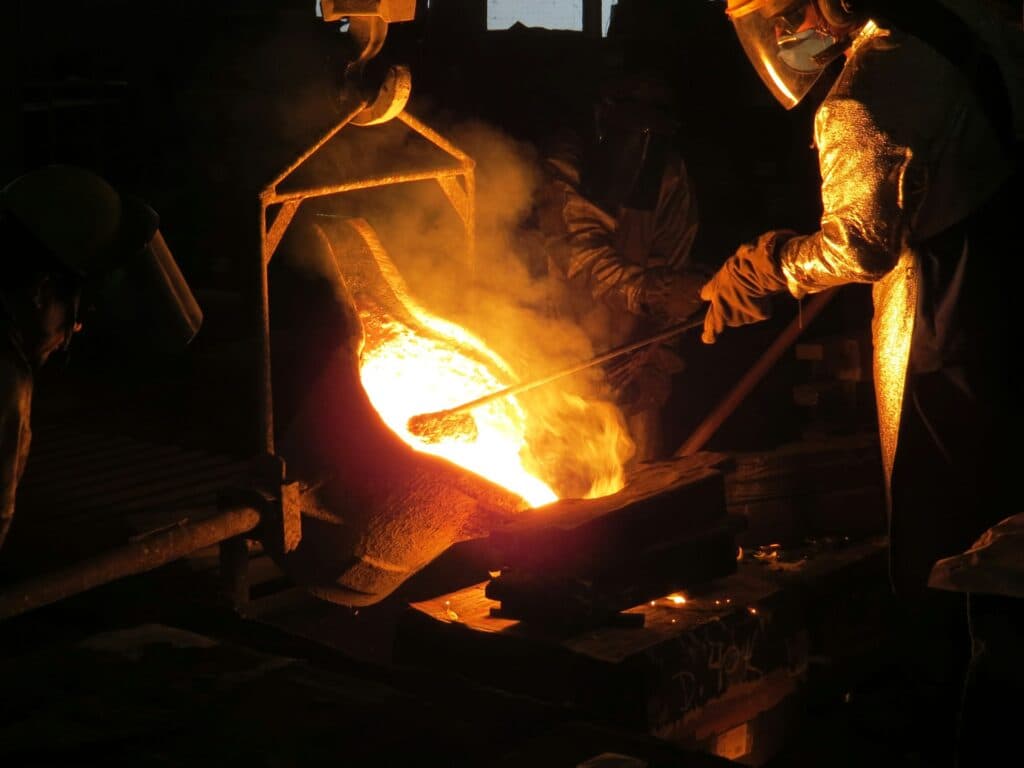
Italy’s steel federation Federacciai warns that without a fundamental change in European industrial policy, the continent’s last blast furnaces could close, reports S&P Platts. While Italy is urging Brussels to ensure affordable energy and effective protection against low-cost imports, Czech steelmakers are calling in an open letter to the new government for Czechia to speak up in the EU before Europe loses the ability to produce strategic materials on its own. The federation describes the transition to hydrogen-based steelmaking as technologically and economically absurd.
Europe’s steel industry is at a crossroads, a point underscored by Italian steel federation Federacciai, which warns that without a fundamental and targeted European industrial policy, Europe risks losing its strategic steel production—the key raw material for construction, the automotive industry, infrastructure and the defence industry.
“Decisions must be made in Brussels, or Europe risks becoming geopolitically, economically and industrially irrelevant,” Federacciai President Antonio Gozzi said at the General Assembly in Bergamo on 10 November.
Carbon border tax, emissions allowances and high energy prices
The federation highlighted several challenges facing the steel sector and called for a comprehensive package of measures—from more effective import safeguards and reform and simplification of the Carbon Border Adjustment Mechanism (CBAM) to ensuring cheap and stable energy. Gozzi warned that without a realistic transition to low-emissions production, European blast furnaces could close. The steel industry needs a smooth runway for adopting new technologies, he said, not the immediate shutdown of traditional production.
High energy prices remain the biggest weakness of European industry. Gozzi called for a reassessment of the system in which electricity prices are set by the costs of gas- and coal-fired power plants burdened by emissions allowances. He welcomed Italy’s planned Energy Release programme, which is intended to offer industry electricity from renewable sources at around EUR 60–65/MWh. He warned, however, that Europe as a whole lacks a long-term, unified energy strategy, including options for direct electricity purchases between countries or across borders.
Federacciai is also calling for the introduction of a “Buy European” principle, which would require at least 60% of materials used in public procurement to come from European production. According to Gozzi, this approach would ensure that EU investment genuinely strengthens domestic industry.
He also addressed the Carbon Border Adjustment Mechanism (CBAM), calling it an essential tool while warning that, without market safeguards and a realistic transition period, it could paradoxically accelerate the closure of European blast furnaces. Ending the free allocation of emissions allowances could push the price of carbon emissions as high as USD 200 per tonne, making primary steel production in Europe economically unsustainable.
“Without a realistic transition period, we are heading towards the closure of the last blast furnaces—and with them, we will lose the strategic capacity to produce key types of steel,” Gozzi said.
The Italian federation also criticises excessive faith in a rapid transition to green steel produced using hydrogen, which it considers technologically and economically absurd, and is calling for the development of carbon capture technologies (CCS) at existing facilities.
US steel tariffs are another factor. Although their direct impact on Italy will be limited—exports to the US account for less than 1% of Italian production—the indirect consequences could be far-reaching. The problem, he said, is that China’s overproduction and reliance on exports will divert volumes towards Europe, increasing pressure on European producers.
The position of Czech steelmakers
Similarly stark warnings are also coming from Czechia. In an open letter to the future government of the Czech Republic in September this year, representatives of steelworks and related industries warned that Czech steelmaking faces systemic collapse because of expensive energy, emissions allowances and inadequate protection against low-cost competition from Asia.
Czech companies are calling on the government to push in Brussels for a review of the EU ETS, a delay to the end of free allowances, restrictions on scrap exports and, above all, a realistic assessment of the Green Deal’s impact on industrial competitiveness. Like their Italian counterparts, Czech steelmakers warn that if Europe does not change course, it could lose not only thousands of jobs but also its strategic self-sufficiency in producing a key material.
Green steel: A goal still out of reach
The term “green steel” is often used in discussions about the future of steelmaking, but it does not yet exist in practice, and there is no clear definition of it. Traditional grey steel is produced in blast furnaces by burning coke and coal, generating around two tonnes of CO₂ per tonne of steel. Low-emissions steel uses electric arc furnaces powered by renewable electricity and recycled scrap, which can reduce emissions by up to 90%.
Truly green steel would go further, using hydrogen produced from renewable sources (so-called “green hydrogen”) or new electrolytic processes that completely replace the carbon reduction of iron ore. Projects such as Sweden’s HYBRIT and H₂ Green Steel have already reached the pilot stage, but mass production is not expected until after 2030, provided there is enough hydrogen and renewable energy.
A strategic raw material for defence, too
Europe therefore faces a paradox: it is pushing industry to decarbonise while failing to offer realistic conditions for its survival. Steel remains a strategic raw material, essential not only for construction, energy and the automotive industry, but also for weapons production and defence infrastructure.
Losing the ability to produce steel on its own would mean losing industrial sovereignty. As Italian and Czech steelmakers agree, Europe cannot afford to depend on imports of a basic raw material essential to its security and economic future.
Translation disclaimer
This article is a machine translation of the Czech original and has not yet been fully reviewed. In case of any doubt, please refer to the Czech version.
Sdílejte článek prostřednictvím:
You might also like
10 October 2026, 07:02
9 October 2026, 13:47