23 October 2026, 11:01
Loading...
ENTSOG: EU gas storage facilities could end winter at 40% capacity
Veronika Jurcová
20 October 2024, 09:16
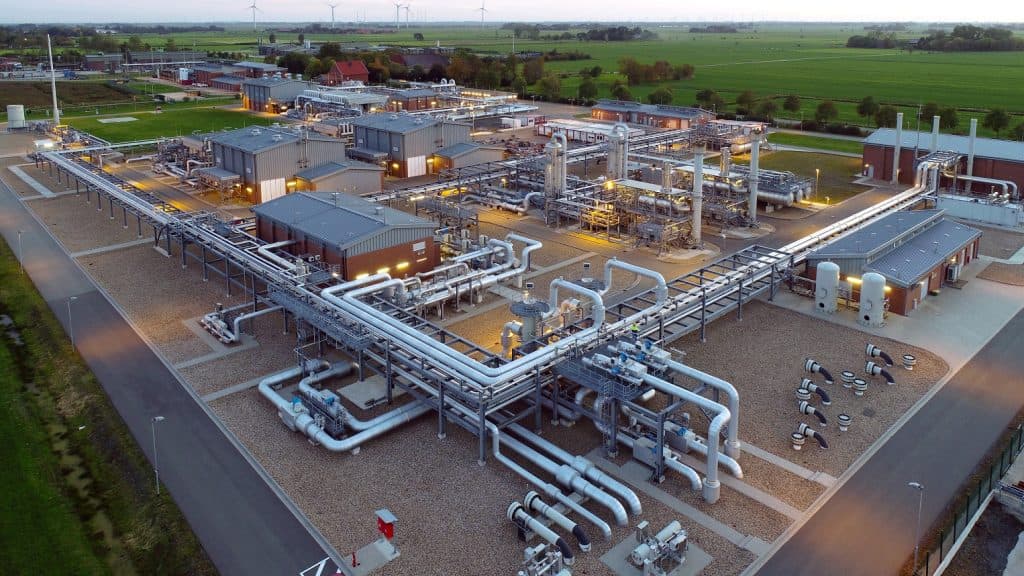
The European Network of Transmission System Operators for Gas (ENTSOG), in its regular Winter Supply Outlook, assesses the gas supply security situation positively, even in the event of a possible disruption to Russian gas supplies. According to the report, Europe could end the winter season with storage levels of up to 40%, which ENTSOG says confirms the independence of the EU gas system.
The European Network of Transmission System Operators for Gas (ENTSOG) presented its regular Winter Supply Outlook on 16 October, confirming that the EU is well prepared for the 2024–2025 winter and the following summer. It points to high levels of gas storage across the EU and an overall stable gas supply security situation.
The document includes an EU-wide simulation of scenarios involving disruptions to gas supplies and infrastructure, not only for the upcoming winter season (from 1 October 2024 to 31 March 2025), but also with a view to longer-term preparedness.
As in previous years, the report tests the EU’s resilience against a range of scenarios that could disrupt gas supplies to the EU. This year’s report also analysed the impact of the end of the agreement on Russian gas transit through Ukraine, which is due to expire after December 2024, as well as supplies via the TurkStream pipeline.
According to the report, the EU is maintaining high levels of gas storage. As of 1 October 2024, storage facilities were 94% full, equivalent to 1 083 TWh. This result is primarily attributed to storage facilities being 59% full at the start of the injection season, lower gas consumption during the year, and special measures introduced by member states.
Gas supply security targets are being exceeded
The EU continues to exceed its target of filling gas storage facilities to 90% by 1 November and reducing gas consumption by 15%. Last winter, it managed to cut consumption by 18%.
The report also says Europe could end the winter with storage levels at 40%, even without pipeline gas supplies from Russia via Ukraine or TurkStream. However, it warns that sufficient gas injection must be ensured during the next summer season, and that storage capacity flexibility should be considered to improve preparations for winter. Norway and liquefied natural gas (LNG) remain the largest sources of gas supplies for member states.
“It is positive that at this time of year we are once again seeing much higher-than-usual storage levels, and that the current stable supply situation is the result of the continued efforts of member states,” said ENTSOG Managing Director Piotr Kuś.
LNG availability will be key for summer 2025
In response to stakeholder requests, the current edition of the report also includes an analysis for summer 2025. The report warns that, to reach the target of 90% storage by the end of summer 2025, gas storage levels must remain at 30–40% at the start of the injection season, which will depend on LNG availability.
If LNG supplies are limited, some demand adjustment may be needed to meet the storage target before winter. In a high-demand scenario caused by very cold weather, gas storage and supply flexibility might not be sufficient to meet demand if Russian gas supplies via Ukraine and the TurkStream pipeline were completely disrupted. In such a situation, demand reductions and additional supplies of around 30 billion m³ would be needed to keep storage levels at least at 30% at the end of winter.
The report also mentions the possibility of using Ukrainian storage capacity as one flexible option, if accepted by the market. However, attacks on Ukraine’s energy infrastructure and ongoing security risks remain the main deterrents.
Translation disclaimer
This article is a machine translation of the Czech original and has not yet been fully reviewed. In case of any doubt, please refer to the Czech version.
Sdílejte článek prostřednictvím:
You might also like


23 October 2026, 06:34