Denmark considers ending 40-year ban on nuclear energy
Denmark is considering lifting its ban on nuclear energy, in place since 1985, which would mark a major shift in its energy policy to date, focused primarily on wind and solar power. Climate, Energy and Utilities Minister Lars Aagaard announced that the government would conduct a thorough analysis of new nuclear technologies, particularly their potential to complement renewables and improve the stability of electricity supplies, the Financial Times reports.
Climate, Energy and Utilities Minister Lars Aagaard announced at a public hearing in the Danish parliament that the government is considering lifting the ban on nuclear energy and plans to analyse new nuclear technologies and their potential contribution to the stability of the energy system, particularly as a complement to the renewable sources on which the country's energy sector now largely relies.
The ban on nuclear energy was introduced in 1985 amid strong public opposition, fears of nuclear accidents and the unresolved issue of radioactive waste management. Nevertheless, Denmark has played a historically significant role in nuclear research, particularly thanks to Niels Bohr, who founded an institute in 1921 where nuclear fission was experimentally verified for the first time in 1939. The country operated three research reactors at the Risø National Laboratory, which were gradually shut down by 2001.
Today, Denmark is among Europe's leaders in the share of renewable energy, particularly thanks to the extensive use of wind farms in coastal areas. Alongside wind and solar power, the country still relies partly on fossil fuels such as coal and natural gas, and benefits from connections to the electricity grids of neighbouring countries, including Sweden and Norway. Thanks to this grid integration, Denmark has a lower rate of electricity supply interruptions than most of Europe.
However, in light of recent widespread power outages in southwestern Europe, the Danish government is beginning to reassess its energy strategy. The aim is to better address the challenges associated with a growing share of renewables and ensure greater stability and resilience across the system.
Lars Aagaard told the newspaper Politiken that over the next year he would conduct a thorough analysis of the advantages and disadvantages of returning to nuclear energy. In his view, Denmark's energy system cannot rely exclusively on solar and wind power, as these sources need a stable complement.
Aagaard cautioned, however, that Denmark is not yet ready to return to nuclear technology—it lacks the expertise, regulatory framework and answers to key questions about safety and waste management.
Small modular reactors in the spotlight
Nuclear power is gaining importance again, according to the International Energy Agency (IEA). Although some countries are moving away from nuclear power, global installed capacity is growing thanks to investment, particularly in China, Russia and other regions. Since 2020, investment in nuclear technologies has increased by almost half, reaching its highest level in a decade.
Sweden is considering reviving its nuclear infrastructure. Belgium, which had originally planned to gradually shut down its nuclear reactors, is considering not only extending their operating lives but also building new facilities.
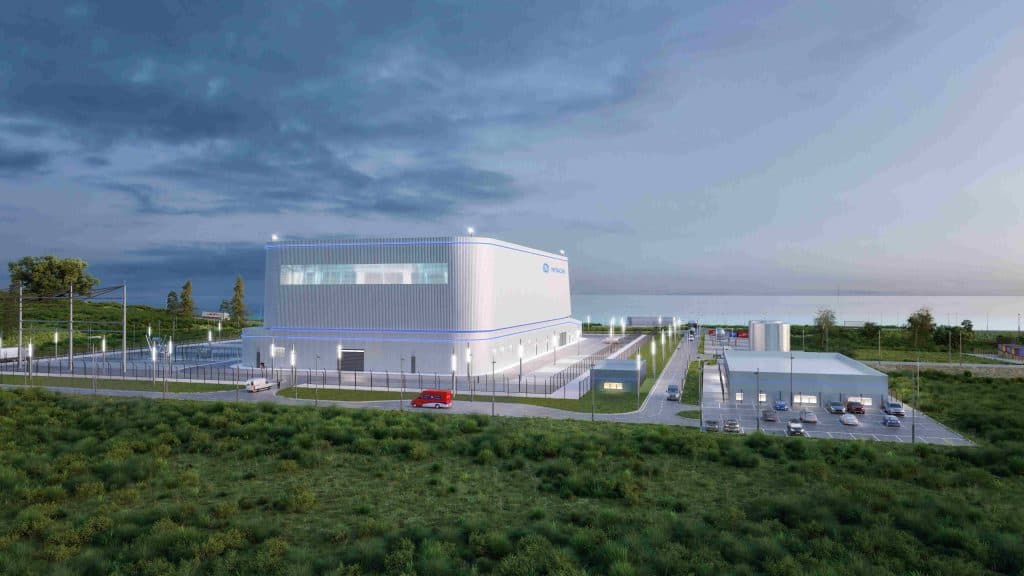
Lars Aagaard has ruled out a return to traditional forms of nuclear power, but the government is beginning to take an interest in new technologies, specifically small modular reactors (SMRs). These compact units are attracting the attention of investors worldwide. However, most SMR projects are still in development or awaiting regulatory approval.

Other European countries are also actively interested in this technology, including Norway and Finland. In Central Europe, the Czech Republic is considering SMRs, and ČEZ plans to build modular reactors with a combined capacity of three gigawatts in the Czech Republic by 2050. It has already signed a strategic cooperation agreement with Rolls-Royce SMR.Slovakia is also seeking a site for potential construction, while Poland has entered into a cooperation agreement with Rolls-Royce,
Questions for the future
Former Danish Prime Minister and former NATO Secretary General Anders Fogh Rasmussen said he supports lifting the current ban.
“Wind and solar are great sources—but only when the wind is actually blowing or the sun is shining. We need a reliable, zero-emissions baseload source of energy. It makes no sense to rule out nuclear energy in advance. I believe the government has already begun the process of lifting the ban,” he told the Financial Times.
Nuclear energy remains a sensitive issue in Denmark, not only because of the possible construction of new facilities but also because of the question of long-term radioactive waste management. A research reactor near Copenhagen operated until 2001, and its waste is still being stored temporarily at the site of the former laboratory in Risø.
In 2018, parliament decided to establish a permanent repository, which is to be completed by 2073, but no specific site has yet been selected. Six of the 22 sites originally considered for a permanent repository were shortlisted, but the decision was put on hold amid discussions about the possibility of exporting the waste abroad.
A dispute over uranium mining in Greenland, an autonomous part of the Kingdom of Denmark, has also been developing in parallel. The Kvanefjeld project, focused on mining uranium and rare earths, was banned in 2021 after years of legal proceedings and is now heading towards international arbitration between the investor and the governments of Greenland and Denmark. The country's potential future stance on mining is therefore also open to question.
Translation disclaimer
This article is a machine translation of the Czech original and has not yet been fully reviewed. In case of any doubt, please refer to the Czech version.




