
23 October 2026, 14:38
Loading...
European Commission: EU needs to invest hundreds of billions of euros in nuclear power
Veronika Jurcová
16 June 2025, 13:43
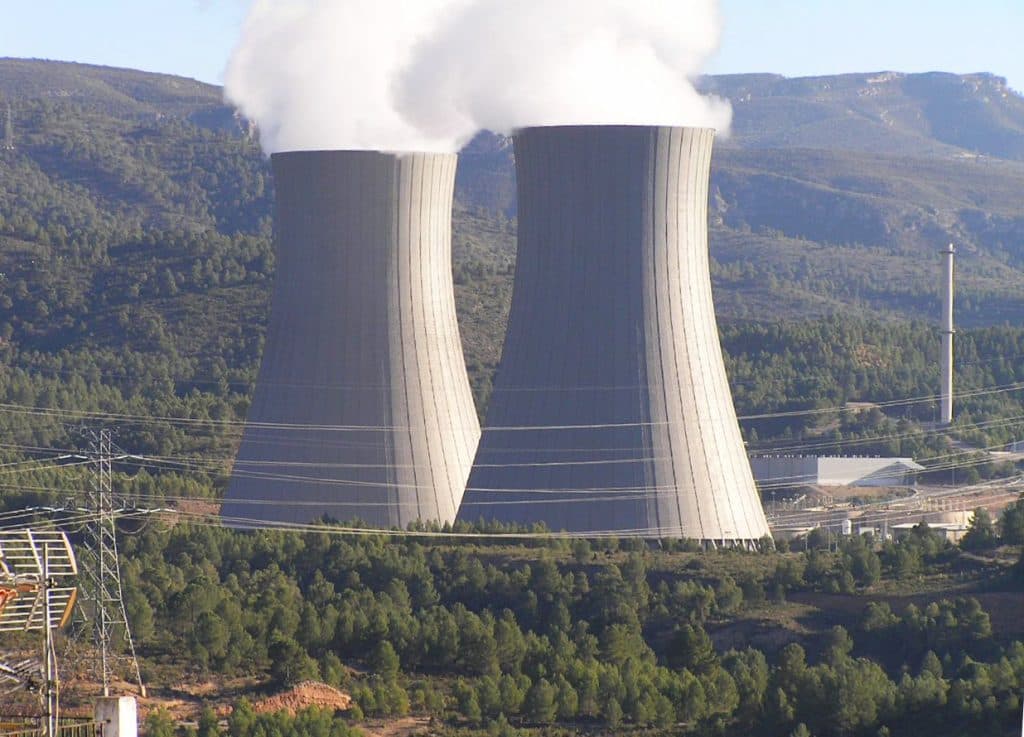
On Friday, 13 June, the European Commission published a report outlining the current state and future of nuclear energy in the EU. According to the document, the planned expansion of nuclear generation capacity in member states will require investment of 241 billion euros. To reduce the risks these projects pose to the private sector, new financial instruments will need to be introduced, the Commission said, according to Reuters.
The Illustrative Nuclear Programme (PINC), which the European Commission publishes every few years under the Euratom Treaty, summarises the current state and outlook for nuclear energy in the EU. The document serves as a strategic framework, mapping investment needs, planned projects and challenges in safety, waste management and research through to 2050.
According to the latest draft of the PINC, nuclear energy will continue to play an important role in the EU's energy mix—primarily in the member states that choose to use it. The Commission also highlights the ageing nuclear fleet and the need for massive investment of up to 770 billion euros to cover reactor upgrades, decommissioning, long-term waste disposal and the construction of new facilities. It pays particular attention to supporting research and development of new technologies, such as small modular reactors (SMRs), and the need to maintain European know-how in the face of competition from rapidly growing markets outside the EU.
According to European Commissioner for Energy Dan Jørgensen, nuclear energy has a role to play in building a resilient and clean energy system.
"To truly achieve the transition to clean energy, we need to make use of all zero- and low-emission energy solutions. Nuclear energy has a role to play in building a resilient and cleaner energy system. Creating the right framework conditions will enable the EU to maintain its industrial leadership in this sector while ensuring the highest safety standards and responsible management of radioactive waste,"Jørgensen said.
Investment needs in nuclear energy through 2050
In its draft Illustrative Nuclear Programme (PINC), the European Commission notes that nuclear energy will remain an important part of the EU's energy mix. At present, 14 member states operate a total of 129 reactors with an installed capacity of 120 GW, and the average age of the units is close to 30 years.
Ten countries are working on building new units. Projects in Finland, Hungary and the United Kingdom are at the licensing stage, while projects in the other member states—Bulgaria, the Czech Republic, Lithuania, Poland and Romania—are at the preparatory stage. In the Czech Republic, preparations are currently well advanced for the construction of the fifth unit at the Dukovany Nuclear Power Plant.

Dukovany Nuclear Power Plant. Source: ČEZ
Member states' plans envisage increasing installed capacity to 109 GW by 2050, up from the current 98 GW. Achieving these plans will require 205 billion euros for new units and a further 36 billion to extend the operating lives of older reactors. The Commission also warns that delaying new projects by just 5 years would increase costs by a further 45 billion.
Given the high risks and costs of nuclear projects, Brussels is proposing to expand financial instruments to attract private capital. Nevertheless, the draft document says that the European Commission and the European Investment Bank are preparing a pilot scheme to support power purchase agreements worth 500 million euros, which nuclear projects will also be able to participate in.
EU budgets have so far not directly supported the construction of nuclear facilities, partly because of deep divisions between member states—particularly between pro-nuclear France and Germany, which has turned away from nuclear power. Even so, the Commission stresses that continued investment in innovation, research and specialist training will be needed to maintain Europe's technological and safety lead amid the rapid development of nuclear energy in China, India and elsewhere.
Efforts to reduce dependence on Russian nuclear materials should also form part of energy security. As part of its REPowerEU strategy, the Commission is therefore proposing stricter conditions for new contracts to import uranium and other raw materials from Russia.
The final version of the PINC will be published after the European Economic and Social Committee has issued its opinion and will be discussed at the Energy Council meeting in Luxembourg on 16 June 2025.
Translation disclaimer
This article is a machine translation of the Czech original and has not yet been fully reviewed. In case of any doubt, please refer to the Czech version.
Sdílejte článek prostřednictvím:
You might also like


23 October 2026, 11:01


23 October 2026, 06:34