A factory for nuclear microreactors to be built at the site of the original Manhattan Project

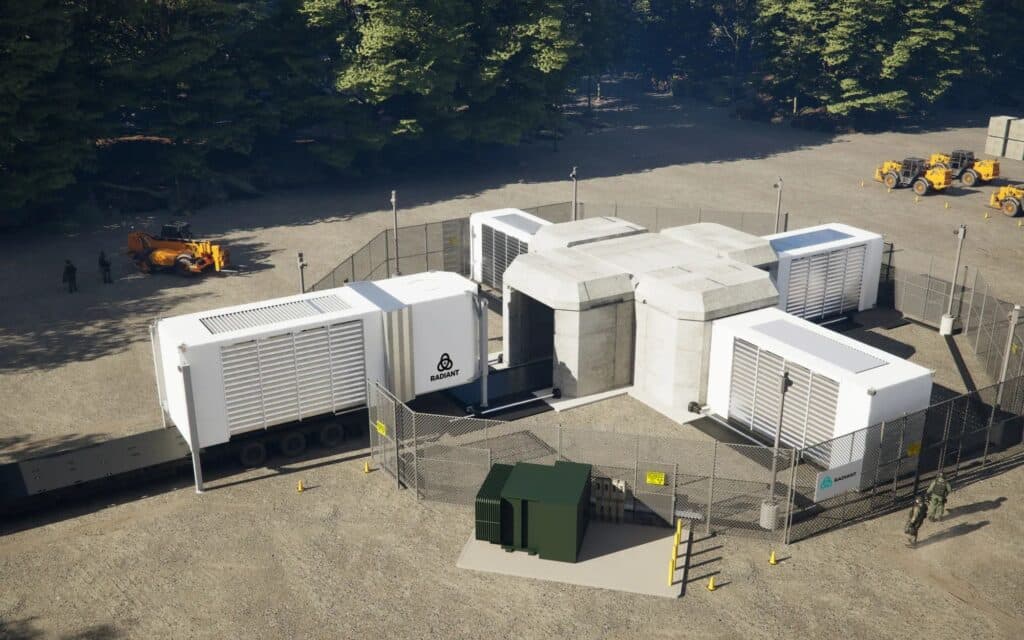
California-based Radiant will build its first nuclear microreactor manufacturing plant in Oak Ridge, Tennessee, at the site of the original Manhattan Project. Production of its portable Kaleidos reactors is due to begin in 2028, and the plant will bear the symbolic name R-50.
The site, which includes parts of the original K-27 and K-29 facilities, was purchased by Radiant from the Oak Ridge Industrial Development Board. These buildings were originally part of the Manhattan Project—the US research and development programme during World War II aimed at developing the first atomic bomb.
Construction of the new plant is due to begin in early 2026. Radiant plans to deliver its first mass-produced Kaleidos microreactor to customers in 2028, then expand production capacity to as many as 50 reactors a year. In honour of the site and its history, the plant will be named R-50.
The Kaleidos microreactor
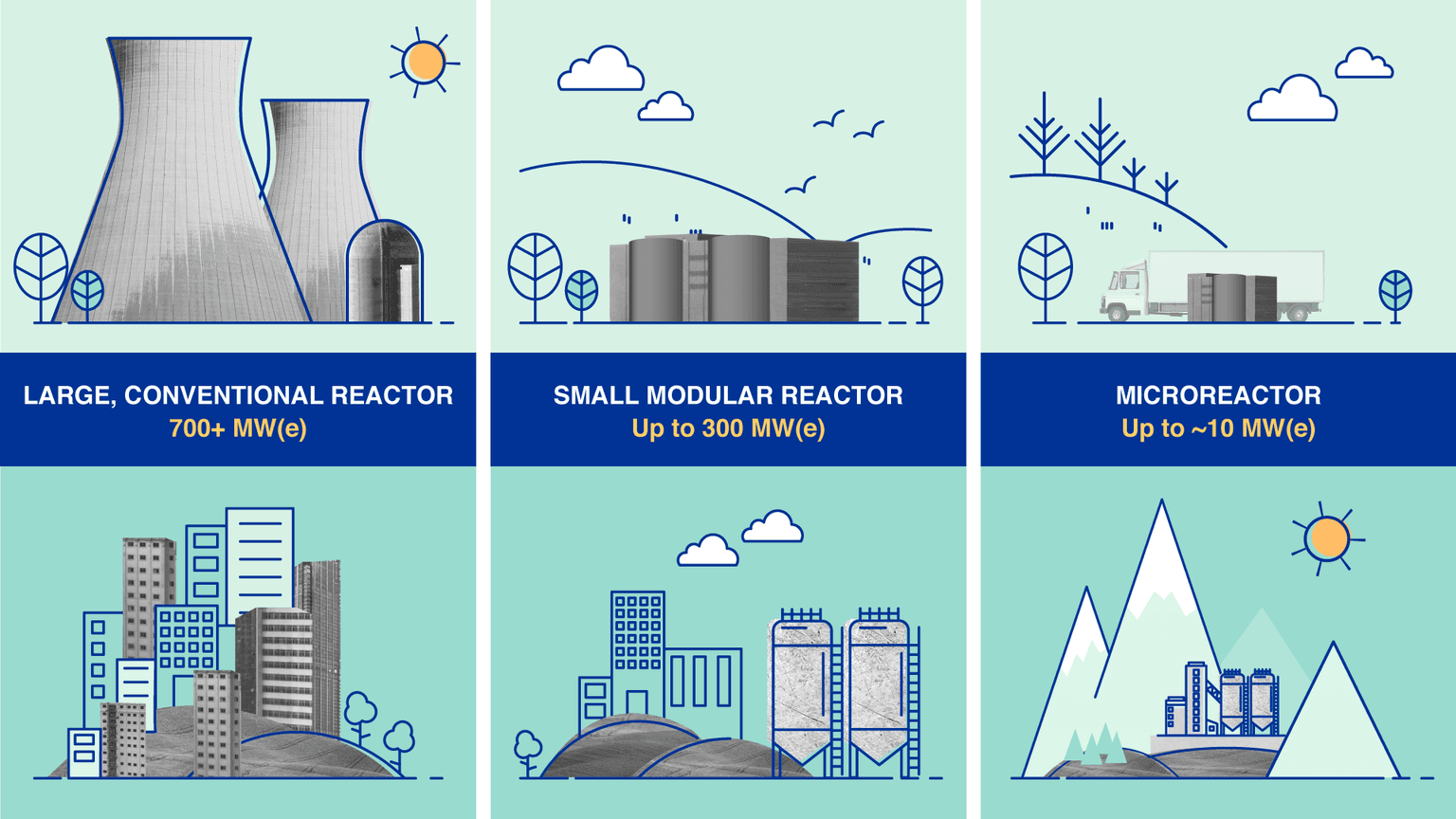
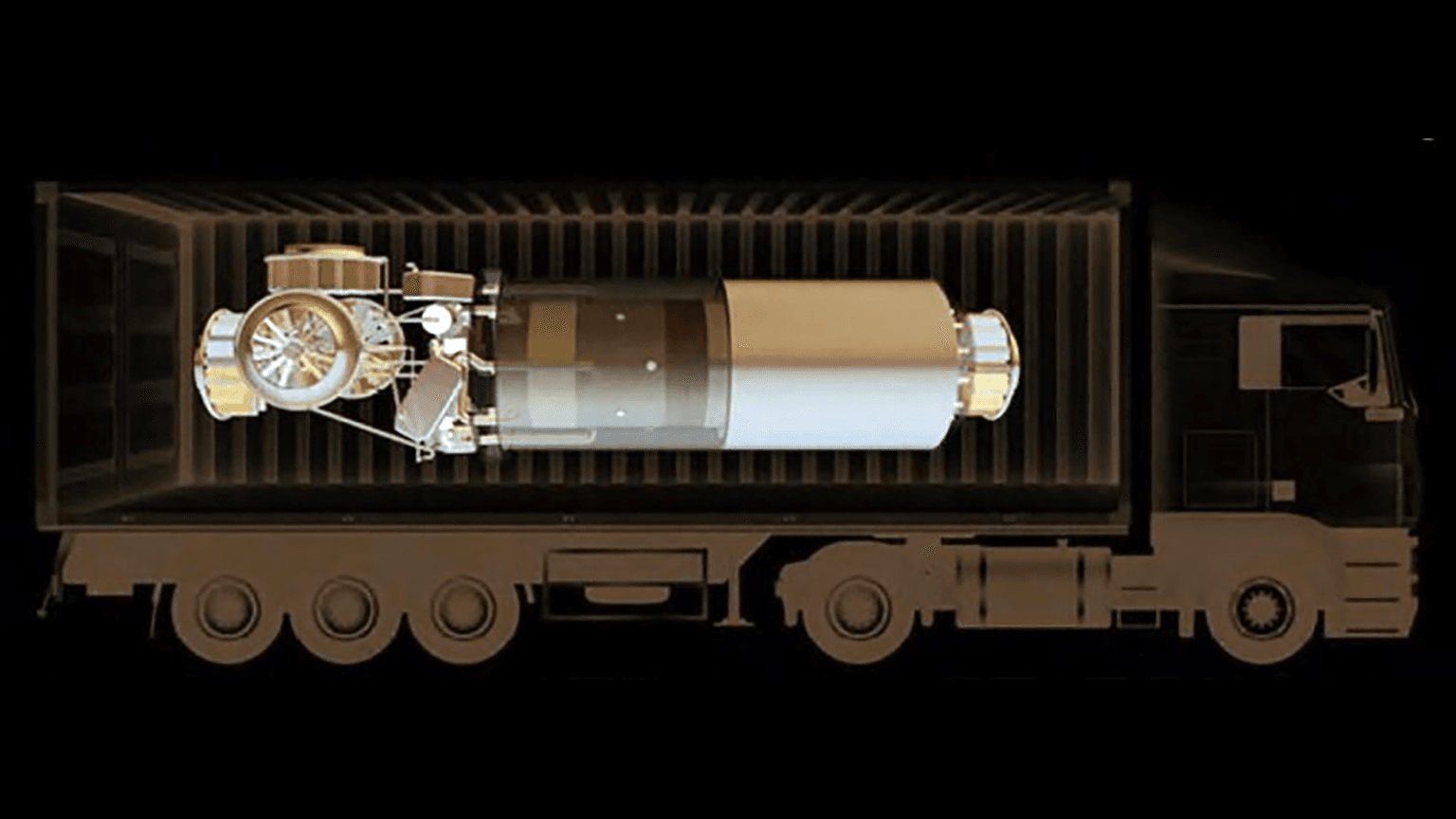
Radiant is developing the 1 MWe Kaleidos high-temperature gas-cooled microreactor, which uses a graphite core and TRISO (tri-structural isotropic) fuel. The entire system—the reactor, generator, cooling circuit and shielding—is housed in a single transportable container, allowing for rapid installation and operation even in remote locations.
| Reactor type | High-temperature gas-cooled (HTGR) |
| Installed capacity | 1 MWe |
| Coolant / moderator | Helium / graphite |
| Fuel | TRISO (tri-structural isotropic) |
| Design | Integrated system in a transportable container |
| Operating cycle | 8–10 years without refuelling |
| Developer | Radiant Industries (USA) |
TRISO fuel consists of small spherical uranium particles encased in three protective layers of silicon carbide and silicon oxide. These layers ensure the complete containment of fission products, even at very high temperatures, significantly improving reactor safety. Thanks to this design, TRISO fuel does not require active cooling systems or complex containment structures, and allows stable operation even under extreme conditions.
The first reactor test is planned for 2026, with commercial deployment to follow in 2028.
Investment backed by the state of Tennessee
Radiant is the sixth company to benefit from Tennessee’s Nuclear Energy Fund. The fund was established as part of Governor Bill Lee’s 2023–2024 budget and, following increases in 2024 and 2025, has funding of USD 70 million.
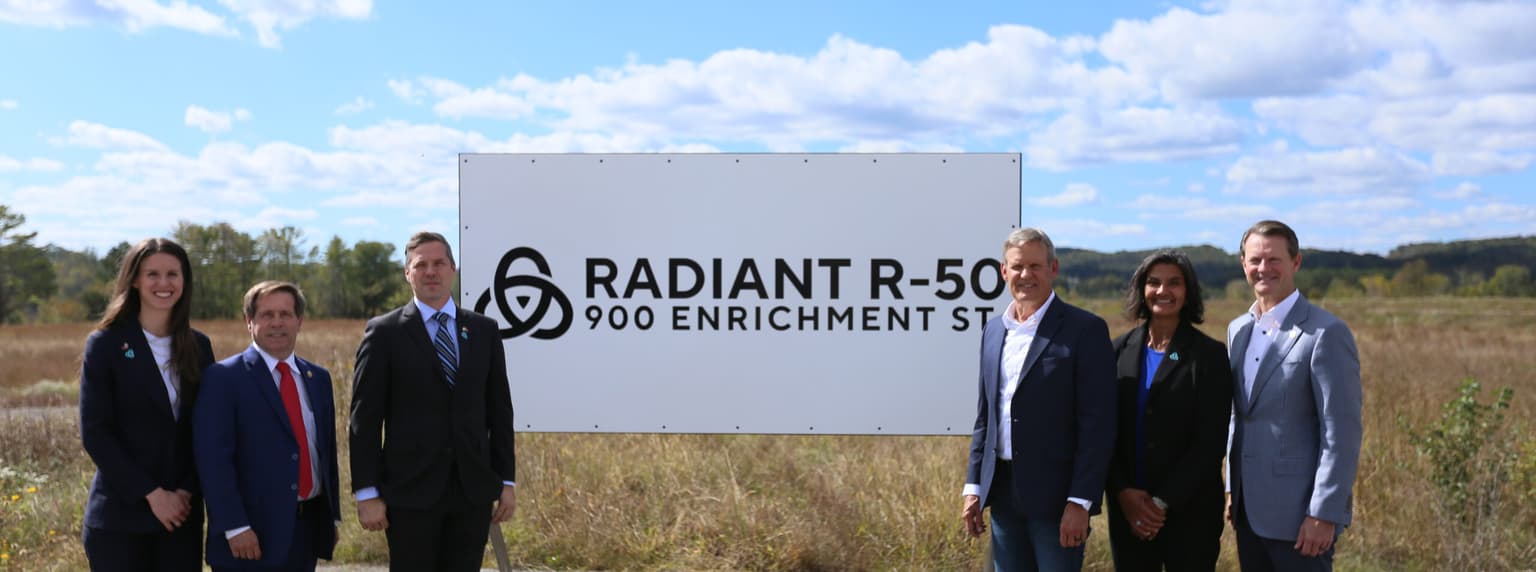
The project’s estimated investment is USD 280 million and it will create 175 highly skilled jobs. According to Commissioner Stuart McWhorter, as of September 2025 it is the third nuclear project announced in Tennessee, confirming the state’s position as a leader in next-generation nuclear energy.
American nuclear innovation
Radiant is one of 11 projects selected by the US Department of Energy (DOE) for the Nuclear Reactor Pilot Program. The programme aims to bring at least three advanced reactors online outside national laboratories by July 2026.
The company has also been selected for the first tests under the Demonstration of Microreactor Experiments at Idaho National Laboratory and is among eight developers eligible for funding under the Advanced Nuclear Power for Installations programme, which focuses on using microreactors at US military bases.
Reactions and significance of the project
"What was once the birthplace of the Manhattan Project will now become the site where the first mass-produced nuclear microreactors are manufactured. The first mass-produced reactor units will roll off the production line by 2028," said founder and CEO Doug Bernauer.
Chief Operating Officer Tori Shivanandan added that Oak Ridge was a logical choice thanks to the expertise of its local workforce, the region’s long nuclear tradition and its favourable business environment.
Governor Bill Lee described Radiant’s arrival as proof that Tennessee is becoming a national hub for clean and reliable energy.
Radiant’s project is a significant step towards commercialising nuclear microreactors and also symbolically connects the past and future of nuclear technology—from the Manhattan Project to the era of compact modular energy sources.
Translation disclaimer
This article is a machine translation of the Czech original and has not yet been fully reviewed. In case of any doubt, please refer to the Czech version.




