Finland becomes the first country in the world to authorize operation of a deep geological repository

Finland has become the first country in the world to grant an operating licence for a deep geological repository for spent nuclear fuel. The Onkalo project has thus moved closer to starting operations. However, fuel disposal itself is still subject to the completion of final tests and inspections by the nuclear regulator.
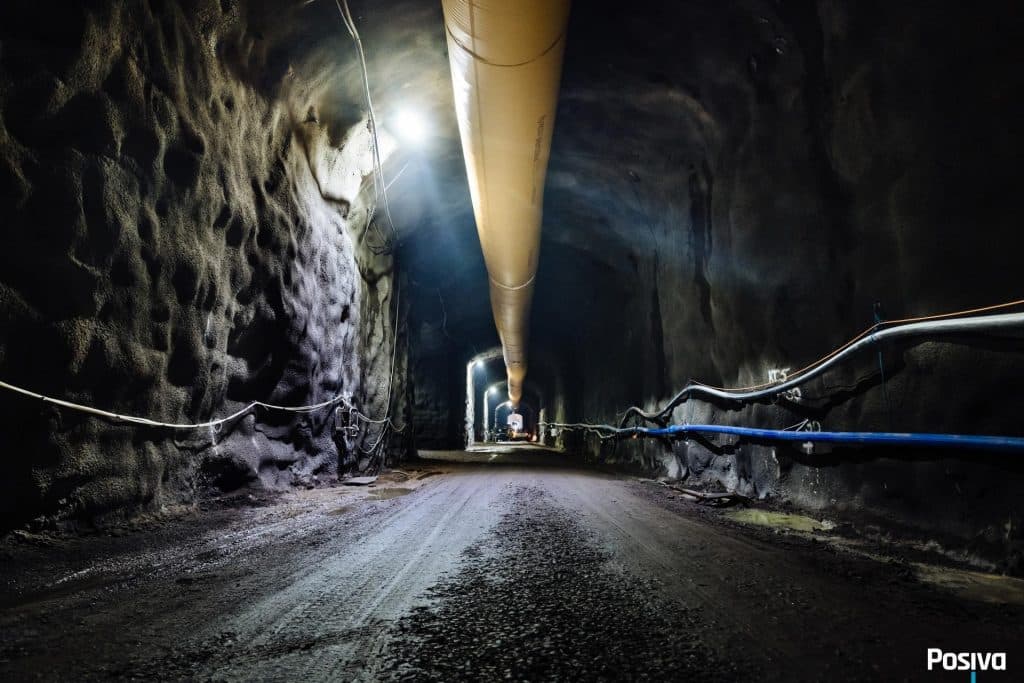
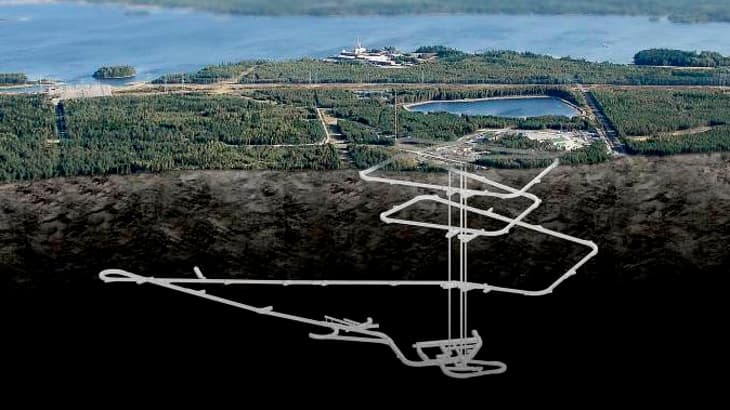
The Finnish government’s decision of 22 October to grant a licence to Posiva’s facility at Olkiluoto in the west of the country follows more than four decades of research, technical preparations and construction on a project intended to serve Finland’s nuclear power sector for more than a century. The complex includes an above-ground facility where spent fuel is sealed in disposal canisters, and the deep geological repository itself.
Starting operations requires approval from the nuclear regulator
The government’s decision was based on a positive safety assessment issued on 4 August 2026 by the Finnish Radiation and Nuclear Safety Authority (STUK). After several years of assessment, the regulator concluded that the facility meets the nuclear and radiation safety requirements necessary for an operating licence. Posiva applied for the licence in December 2021.
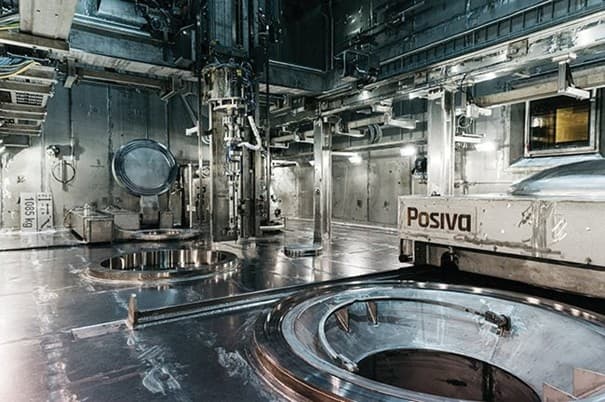
Before spent fuel disposal can begin, Posiva must complete the remaining tests and inspections as part of commissioning the facility and meet the regulator’s other requirements. STUK will then carry out a final inspection to verify that the facility is ready for safe operation. Posiva has not yet specified when the repository will begin normal operations.
The current operating licence is valid until the end of 2070. The facility will continue to be supervised by STUK, which will regularly assess its safety and check compliance with the requirements. Posiva must also regularly update the documentation demonstrating the repository’s long-term safety, with the first updated assessment due no later than ten years after the licence is issued.
Onkalo can hold fuel equivalent to 6,500 tonnes of uranium
The repository is intended for the permanent disposal of spent nuclear fuel from the Olkiluoto and Loviisa power plants, which together operate five nuclear reactors. The licence allows the handling of spent fuel equivalent to a maximum of 6,500 tonnes of uranium (tU). According to the Finnish government, this amount represents approximately 3,300 disposal canisters.
The fuel will be transported gradually to the repository from interim storage facilities at the nuclear power plants. Posiva expects to dispose of around 30 to 40 canisters per year in the initial phase, with the number potentially rising to as many as 60 a year later on. The licence also permits, to a limited extent, the handling of low- and intermediate-level waste and certain other radioactive waste generated in Finland.
Spent fuel will be isolated 430 metres underground
The repository’s design is based on the KBS-3V concept, which uses a system of complementary engineered and natural barriers. Before being placed underground, the spent fuel assemblies will be dried and sealed in special canisters with a cast-iron inner insert and an outer copper shell. The canisters are one of the main engineered barriers intended to ensure the long-term isolation of spent fuel from the surrounding environment.
The prepared canisters will then be transported to a depth of approximately 430 metres, where they will be placed in vertical disposal holes drilled into the floors of individual tunnels. The space between the canister and the surrounding rock will be filled with bentonite clay, which swells on contact with water and restricts its flow. The repository’s safety will therefore depend not only on the canisters themselves, but also on the properties of the bentonite barrier and the surrounding bedrock.
Disposal will continue into the 22nd century
The repository is being built and will be operated by Posiva, which is owned by Finnish nuclear power plant operators Teollisuuden Voima (TVO) and Fortum. The company was established in 1995, although development of Finland’s deep geological disposal solution began more than a decade earlier.
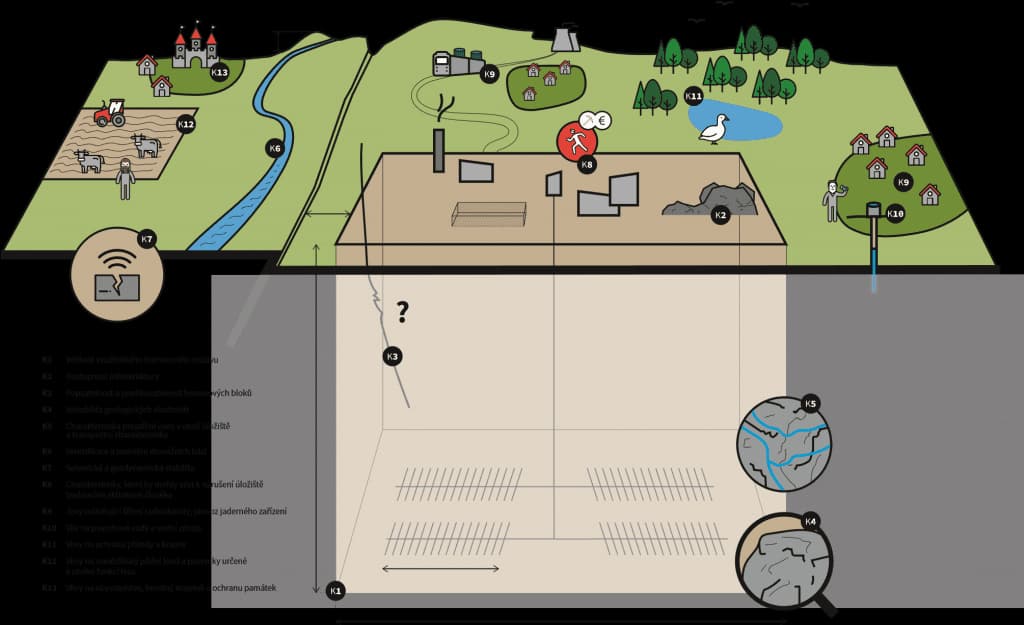
Under current assumptions, spent fuel disposal will continue into the 2020s of the 22nd century. Once it is complete, the remaining underground spaces will be filled and the repository permanently closed. The system of engineered and natural barriers will then ensure the long-term isolation of the stored fuel without the need for active operation of the facility.
The Finnish project could serve as an important example for other countries preparing their own deep geological repositories. These include the Czech Republic, where the Radioactive Waste Repository Authority (SÚRAO) is continuing geological surveys at four shortlisted sites. Experience from the construction and future operation of Onkalo could also contribute to preparations for a Czech repository.
Translation disclaimer
This article is a machine translation of the Czech original and has not yet been fully reviewed. In case of any doubt, please refer to the Czech version.