2 October 2026, 21:55
Loading...
How to finance nuclear power? Watch the British!
Jan Žižka
8 October 2018, 18:33

It is said that nuclear power plants will now be built only where the state plays an exceptionally strong role – in China or Russia, that is. Yet this view is firmly rejected by a country that relies far less on state intervention and has extensive historical experience with nuclear energy. That country is the United Kingdom, where the first truly commercial nuclear power plant, Calder Hall, began operating as early as 1956.
Czech politicians and officials talking about the construction of new nuclear reactors have been unable to make any progress for several years. It is still unclear exactly who should finance such construction and how. Meanwhile, the British are coming up with new ideas in this regard. They too are facing major problems. Nevertheless, if a way is found to deliver nuclear unit projects worth hundreds of billions of crowns in developed market economies, the United Kingdom is likely to become an inspiration for many other countries.
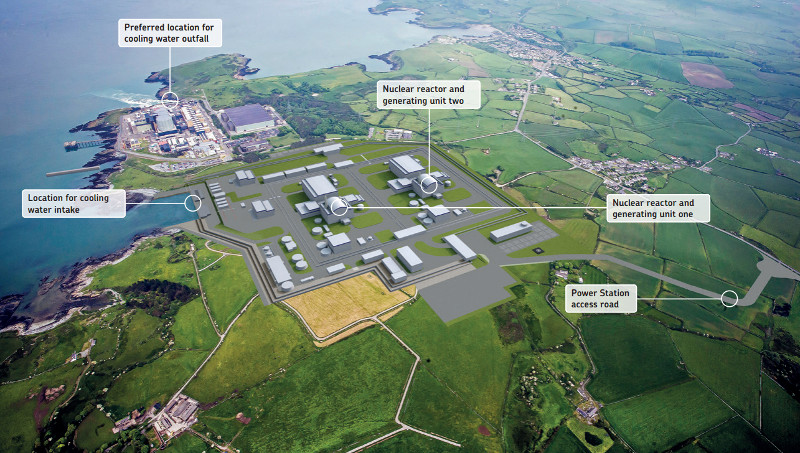
The United Kingdom is now preparing to build six new nuclear power plants. In the case of the first one (Hinkley Point C in southwest England), London attracted French and Chinese companies with a system of guaranteed electricity prices from the future new units (the so-called Contract for Difference). In the case of the second (Wylfa Newydd in Wales), this involves unprecedented participation by the British state alongside investors from the Land of the Rising Sun – Hitachi and Japanese state agencies.
Among regulated assets
For further plants, however, a model is emerging that is intended to place a much lower financial burden on both electricity consumers (as at Hinkley Point) and taxpayers and the state budget (as at Wylfa Newydd). The British are seriously considering including nuclear power plants among regulated assets. They are discussing the RAB (regulated asset base) model, the equivalent of which is well known in the Czech Republic – this is how the operation and development of transmission and distribution networks are financed here. Naturally, we pay the relevant charges through electricity prices.
If the British bring their currently favoured plan to fruition, British consumers will in effect pay through electricity prices the portion of costs not covered quickly enough by revenues from electricity generated by the new units. This could solve one of nuclear power plants' biggest problems: although they are economically advantageous in the long term, investments in nuclear reactors take many decades to generate returns. This is why it is so difficult to attract private investors to such projects.
This is precisely what the RAB model is meant to change – investors will gradually start earning returns during the power plant's multi-year construction period. Investments in regulated assets appeal to those betting on long-term certainty, without the prospect of sudden wealth but also without unexpected drops in asset values. Typical investors therefore include pension or infrastructure funds that directly acquire equity stakes in the relevant projects.
The regulator must ensure that investor returns are reasonable and correspond to the necessary costs. It is possible to debate why nuclear power plants should be included among regulated assets at all, but the British clearly proceed from the conviction that investments in nuclear units are simply strategic and necessary. (There are, of course, very different views on this, but that is a subject for another article.)
Not just expensive loans
In the Czech Republic, the debate on financing the construction of nuclear power plants has been narrowed to the dilemma of whether the state, which can borrow very cheaply, should build them, or whether a private (or semi-private) company should do so, which would substantially inflate the overall budget for the new reactor project. A third path is now emerging in England. The aim is for private companies' projects not to be based (solely) on expensive loans, but on creating attractive opportunities for the suitable investment of surplus funds.
That does not, of course, mean that investment funds will bear all the costs of building nuclear power plants. Further new reactors are also to be built at the Sizewell nuclear power plant on England's east coast. The investors already known from Hinkley Point C are currently involved there – namely France's EDF, backed by China's state-owned CGN. The French have gained a reputation as enthusiasts for involving other companies or funds in the project through the RAB model, though they themselves intend to remain the key investor.
Yes to major projects
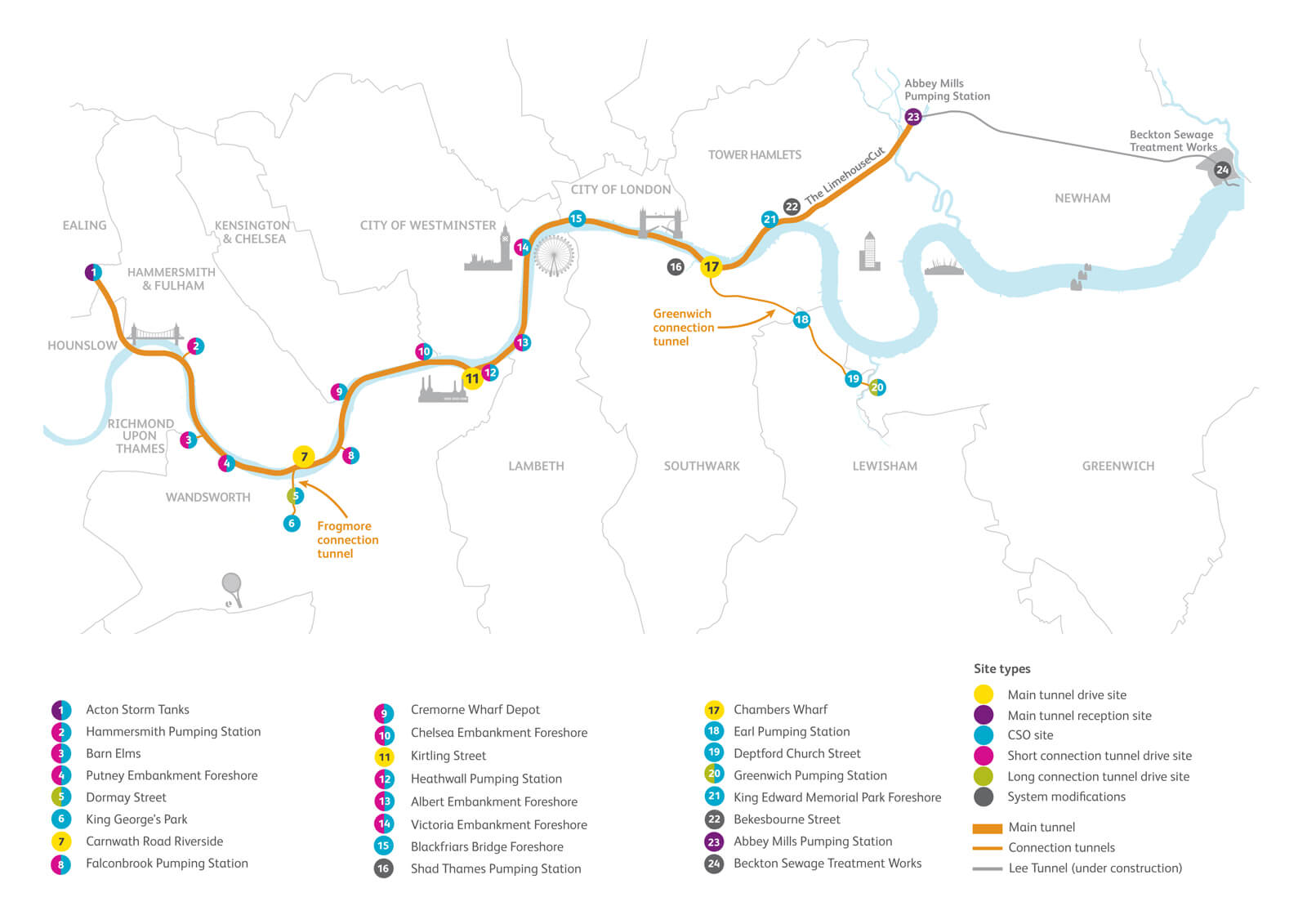
The British are pioneers not only in nuclear energy and its financing. London is also blazing a trail in finding ways to deliver major construction projects in other sectors, including transport and water management. This also applies to various forms of public-private partnership. Inspiration for financing nuclear power plants came from the so-called “super-sewer” project – a 25-kilometre tunnel beneath the River Thames that will prevent pollution of the waterway in London. The TTT (Thames Tideway Tunnel) project is based precisely on the RAB regulated-assets model – private investors, including those from the Allianz group, are investing in it through a joint consortium.
It is worth recalling that financiers from the Allianz group had previously gained a foothold in Czech energy through their investment in the country's Net4Gas gas pipeline network. On the other hand, Germany's Allianz cannot be counted on in the nuclear sector, as such investments are not politically acceptable for companies and funds from the neighbouring country.
In the case of the Thames Tideway Tunnel, total investment amounts to £4.2 billion, and this major infrastructure project is due to be completed in 2023. Mark Corben, the former finance chief of the “sewer” consortium, now leads a team of experts at the UK Department for Business, Energy and Industrial Strategy preparing a nuclear power plant financing model.
Seeking ways to make it work
Europeans' inability to bring major projects to completion because of excessive bureaucracy – not only power plant construction but also, for example, Berlin airport – has become one of the arguments against the development of nuclear energy in the Czech Republic. Paradoxically, this inability is mentioned by people such as Dana Drábová, head of the Czech nuclear safety regulator, and ČEZ investor and minority shareholder Michal Šnobr. In the Czech Republic, there is a real risk that many responsible officials will draw the self-serving conclusion that such projects simply cannot be delivered. The British are far more likely to seek ways to make them possible, on acceptable terms for both investors and consumers.
The British path towards further nuclear development will also be thorny. Sceptics may argue that the British Contract for Difference guaranteed-price model applied at Hinkley Point C also once appeared to be an excellent example for others, but ultimately encountered serious doubts in Britain itself. Last year, British auditors at the National Audit Office (NAO) concluded that the London government had not acted properly at Hinkley Point – it had reached an agreement with France's EDF without sufficiently considering all costs and risks. On the other hand, the British are gradually acquiring experience and know-how that virtually no one else in the world possesses.
A different world of nuclear power
It is also uncertain how current Labour leader Jeremy Corbyn would approach the new financing model if he were eventually to come to power. The search for a new model has apparently also contributed to slowing another project in northwest England – new reactors at the Moorside plant. Japan's Toshiba, which is leaving nuclear energy and has already relinquished its entire US-based Westinghouse business, wanted to sell the project to South Korean company KEPCO. However, it is clearly in no hurry to take over the project, waiting to see how the situation develops. Toshiba is nevertheless discussing the British investment with investors that have already bought the aforementioned Westinghouse from it – Canada's Brookfield Business Partners.
The activities of Brookfield, one of the world's largest infrastructure funds, demonstrate that routes to financing nuclear energy may lead in a different direction than in the past. Attracting “financial sharks”, on the other hand, requires the aforementioned thorough involvement of both sector regulators and nuclear safety authorities.
The author is a consultant and energy projects specialist at HATcom.
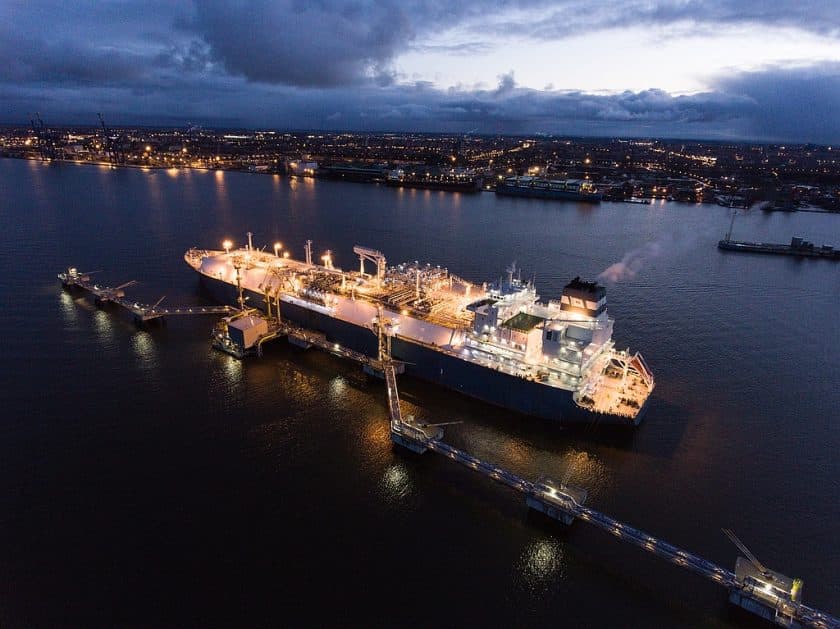
Lead photo author: Peter Linde, flickr.com
Translation disclaimer
This article is a machine translation of the Czech original and has not yet been fully reviewed. In case of any doubt, please refer to the Czech version.
Sdílejte článek prostřednictvím:
You might also like

2 October 2026, 15:14
2 October 2026, 10:06
2 October 2026, 06:14