
23 October 2026, 14:38
Loading...
Kazakhs say 'yes' to nuclear power: referendum paves way for first nuclear power plant
Veronika Jurcová
14 October 2024, 06:34
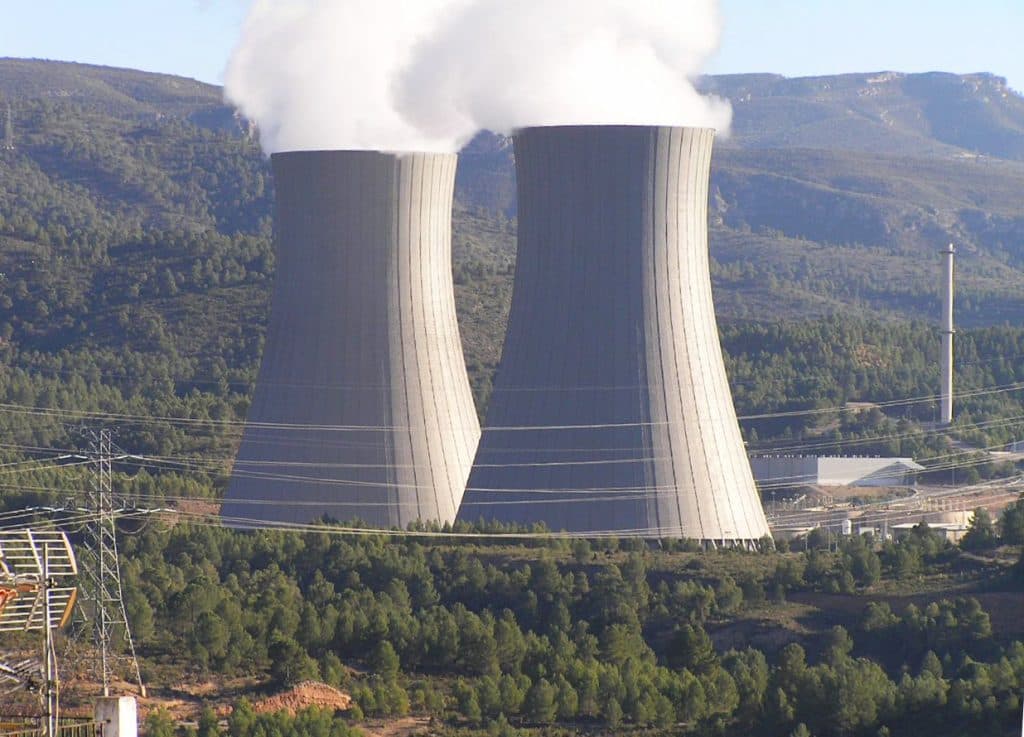
Kazakhstan held a referendum on 6 October on building its first nuclear power plant, and the results showed voters had backed President Kassym-Jomart Tokayev’s proposal. The plant is planned for the area near the village of Ulken on the shore of Lake Balkhash in southeastern Kazakhstan. However, the plan has also drawn public criticism over concerns about potential risks, the legacy of Soviet nuclear testing, and unease about possible Russian involvement in the project, reports Euractiv.
In the referendum held on 6 October 2024, almost 71% of Kazakh voters supported building the country’s first nuclear power plant, with turnout at 64% of the population. The plant is expected to cost 10 to 12 billion dollars, and the government expects the contractors to provide the financing.
The government sees nuclear power as key to ensuring energy security and gradually replacing coal-fired power plants, on which the country still depends. Some residents of the area where the plant is planned expect it to create jobs, while others are concerned about the environment.
Despite having significant natural gas reserves, Kazakhstan relies mainly on coal-fired power plants. Its energy infrastructure is outdated, and the country imports electricity from Russia. Critics therefore propose gas-fired power plants as a less polluting alternative to coal-fired plants that would carry fewer risks.
The government, by contrast, argues in favour of nuclear power. Kazakhstan is one of the world’s leading uranium producers, and although it has not yet used nuclear energy for commercial purposes, it has some experience with nuclear technology. The country operates three research reactors, and a Russian-designed BN-350 sodium-cooled fast reactor operated near the city of Aktau until 1999.
Kazakh Nuclear Power Plants (KNPP), a subsidiary of the state-owned Samruk-Kazyna fund, was established in 2014. Its remit includes not only operating the future plant, but also preparing preliminary project work, including a feasibility study completed in 2018. The area near the village of Ulken on the shore of Lake Balkhash was identified as the most suitable site for construction, although the official location has not yet been announced.
The planned first nuclear power plant is expected to use a large reactor, but the deployment of small modular reactors is also being considered as a way to gradually replace coal-fired power plants. The construction plan has faced criticism not only over potential risks, but also because of historical experience with Soviet nuclear testing and the possible involvement of Russia in building the plant.
Historical experience
Kazakhstan has a painful history of nuclear material use, having served as a testing ground for the Soviet nuclear programme. More than 460 nuclear tests were conducted at the Semipalatinsk site between 1949 and 1989; it was closed in 1991.
The tests caused serious harm to the health of local residents and devastated the environment, leaving parts of the northeastern Semei region uninhabitable. The government nevertheless argues that nuclear power is needed to complement renewable energy sources, and points to Kazakhstan’s position as one of the world’s largest uranium producers.

Source: Total Media Qazaqstan: Semipalatinsk nuclear test site
Distrust of nuclear technology persists for reasons beyond Soviet nuclear testing. Kazakhstan was part of the Soviet Union at the time of the 1986 Chernobyl disaster, which caused long-term health problems for many Kazakhs who took part in the cleanup. Recent events at Ukraine’s Zaporizhzhia nuclear power plant have also heightened public concerns about possible cooperation with Russia on construction.
Concerns about Russia
President Tokayev said he would prefer an international consortium to build the plant. Potential partners mentioned alongside Russia’s Rosatom include China National Nuclear Corporation, France’s EDF and South Korea’s Hydro & Nuclear Power, which is set to build two nuclear units at Dukovany in the Czech Republic. None of these companies has yet been confirmed as the project leader.
“From my personal point of view, an international consortium of global companies with the most advanced technologies should work together in Kazakhstan,” President Tokayev said after casting his vote in the referendum.
No details were given, but the statement was seen as an attempt to ease concerns about possible Moscow involvement in the project. It is unclear, however, whether the potential suppliers mentioned would be willing to work in a multinational consortium that includes Russia.
Kazakhstan, which borders Russia to the north and west and China to the east, is in a sensitive geopolitical position, balancing its relationships within Central Asia and beyond. President Tokayev is seeking multilateral cooperation with the West, particularly as Western countries impose sanctions on Russia over its conflict in Ukraine and tensions between the West and China continue to rise.
Referendum process
In the run-up to the referendum, nearly 30 activists were reportedly arrested and the government prevented protest actions, although international observers reported no serious irregularities during the vote.
Kazakhstan’s largest city, Almaty, recorded the lowest turnout, at 25%, attributed to a boycott by opponents of the project. Some members of the public doubt the point of the referendum and tend to believe that the decision has already been made, Reuters reports Reuters.
“I came to the conclusion that the decision to build a nuclear power plant, and to build it with (Russian state nuclear company) Rosatom, has already been made in (Tokayev’s office), and people in Kazakhstan are being invited to polling stations as ‘notaries’ to confirm this decision with their votes,” popular blogger Vadim Boreiko wrote.
Translation disclaimer
This article is a machine translation of the Czech original and has not yet been fully reviewed. In case of any doubt, please refer to the Czech version.
Sdílejte článek prostřednictvím:
You might also like


23 October 2026, 11:01


23 October 2026, 06:34