Rising gas prices push Japan back toward nuclear power

Japan is laying the groundwork for building next-generation nuclear power plants, and doing so as it restarts idled reactors. The reasons include persistently high natural gas prices and the emergence of data centres that consume huge amounts of energy. However, the country faces a range of political challenges and opposition from some members of the public.
Japan signalled late last year that it was considering building new nuclear reactors at existing sites. In the wake of the 2011 Fukushima nuclear accident, this marks a major shift in rhetoric on nuclear power generation. Since the accident, the Land of the Rising Sun has been gradually restarting its nuclear facilities and bringing 14 of the 54 reactors that had been shut down back online.
The Fukushima accident can be considered one of the most significant recent milestones in nuclear power plant safety, and it fundamentally influenced global attitudes towards supporting this technology.
Before the accident, nuclear power accounted for approximately 30% of the country's total electricity mix. The reactors were shut down in its aftermath, bringing generation to almost zero. Since nuclear power generation resumed, its share has risen to 8.5% of the country's total electricity generation.
The new Strategic Energy Plan aims to ensure that Japan gets 20% of its energy from nuclear power by 2040, reducing the share of fossil fuels in electricity generation from almost 70% in 2023 to 30–40%.
According to information provided by executives at nuclear facilities, the current phase of reactor restarts is expected to continue until at least 2030. Professor of science and technology policy at the University of Tokyo Kazuto Suzuki believes most nuclear facilities will be back in normal operation within five years. Suzuki also expects new, cheaper technologies, such as small modular reactors (SMRs), to come onto the market by then.
"There is a general consensus that ultimately we have to rely on nuclear power. Betting on SMRs may be necessary. There is a very strong political impetus, but there is little public awareness of what is happening with SMRs," Suzuki said.
Rising energy demand, but also political reluctance
One of the main factors behind the major shift in Japan's energy policy was the sharp rise in gas prices triggered by Russia's invasion of Ukraine. As the island nation is the world's second-largest importer of liquefied natural gas, this has dealt a heavy blow to the Japanese economy.
Another significant factor is the revised forecast for electricity consumption by data centres, which are essential to the smooth operation of artificial intelligence. Consumption for data centre operations is expected to double or triple by 2030. These forecasts have reversed expectations of declining electricity demand in a rapidly depopulating country.
Japan has drawn up a plan for five types of next-generation nuclear reactors, which are expected to be safer than the boiling water reactors used at the Fukushima Daiichi plant. Gas-cooled high-temperature reactors are currently the preferred option, and the government says they could start operating sometime in 2030. They would soon be followed by advanced light water reactors, then small modular reactors, breeder reactors and, finally, nuclear fusion.
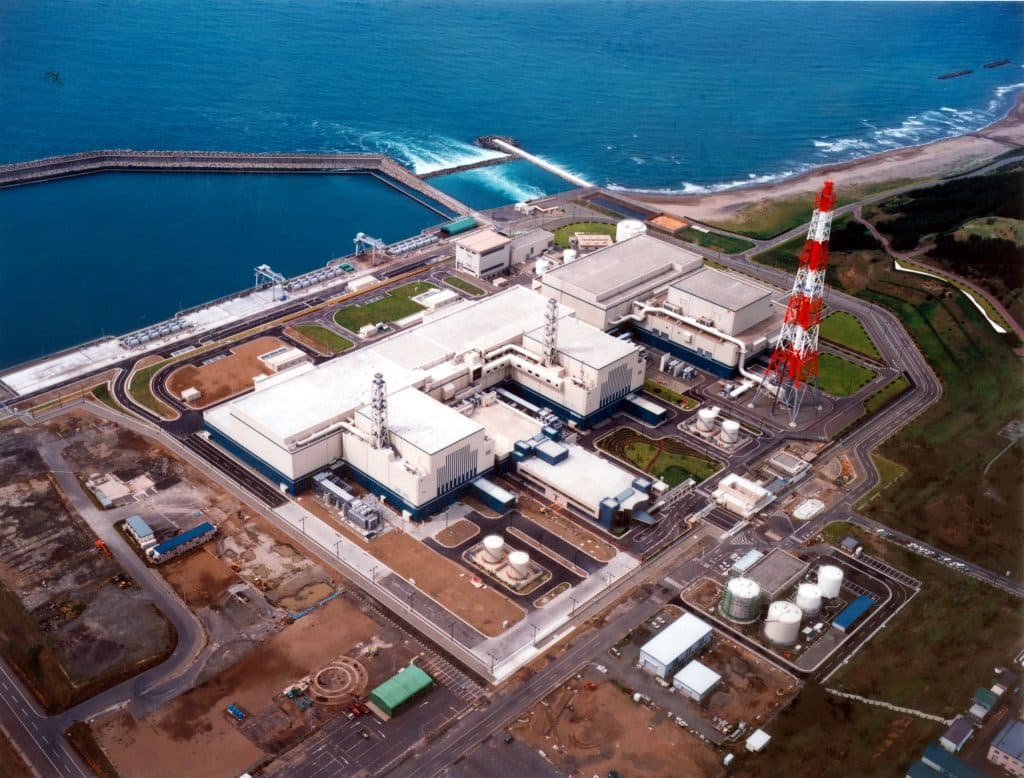
At sites such as Kashiwazaki-Kariwa, home to the world's largest nuclear power plant, plans often run into local opposition to nuclear power. The plant's restart is being held up by the local governor.
The Japan Federation of Bar Associations, which has taken an active stance on the issue, is critical of the new policy and argues that decarbonisation must come from renewable energy sources.
The future of SMRs in Japan is uncertain
Given the development of smaller nuclear reactor technologies, the Japanese government and industry consider it essential to fund projects overseas in order to maintain expertise in the supply chain. The country also aims to keep pace with other SMR pioneers, such as Russia and China, whose designs have been used in more than 90% of the nuclear projects that have begun construction since 2017.
Hiroki Sato, executive director of global business at Japanese energy company Chubu Electric, which has invested in NuScale, a leading US developer of small modular reactors, considers introducing the new reactor technology in Japan very challenging, particularly given the slow pace and cautious approach of the country's regulator and opposition from some members of the public.
Sato believes SMRs will not appear in Japan before 2040, even though the country and major technology companies need clean baseload power from nuclear and geothermal sources.
IHI is one of the Japanese companies backing NuScale as an investor and supplier of key equipment. Yasuyuki Hasegawa, who heads the heavy-industry group's nuclear division, says: "I think we can bring this technology to Japan, too, but the biggest question is when."
GE Vernova Hitachi, a US-Japanese joint venture, has received approval to build an SMR in Ontario, Canada, which it aims to bring online in 2030.
Other Japanese companies are also backing NuScale, hoping that success overseas will pave the way for a revival of nuclear power in Japan and convince consumers and regulators to embrace safer technologies.
Translation disclaimer
This article is a machine translation of the Czech original and has not yet been fully reviewed. In case of any doubt, please refer to the Czech version.




