Canadian oil in demand: Chinese demand drives sector to record highs
Shares in Canadian oil companies are nearing multi-year highs. In December, the four biggest players in the Canadian oil market presented investors with very positive outlooks and announced capital spending of 19.5 billion dollars, along with plans to increase production this year. Growing oil exports to China have also helped the Canadian oil sector expand over the past year.
Canada’s oil industry is enjoying one of its best periods in some time. Many companies are producing record numbers of barrels and increasing returns to their shareholders, despite relatively low oil prices. Canada also has vast oil reserves, giving companies a secure long-term position, particularly as decarbonisation efforts slow.
The giant to the south
Two speeches dominated the World Economic Forum last week: those by US President Donald Trump and Canadian Prime Minister Mark Carney. In his speech, Carney spoke of a “rupture in the global political order”. He was responding to Trump, who a week earlier had discussed his efforts to acquire Greenland as part of the United States and had previously joked about the annexation of Canada.
For geopolitical and energy analysts, however, the more interesting fact may have been that Carney flew to Davos, Switzerland, directly from Beijing. Canadian officials described the trip as “important and historic” — the last time a Canadian prime minister visited China was in 2017.
One reason for Carney’s trip was to find additional markets for one of Canada’s main exports: oil. As he said, according to the BBC, the aim was to strengthen cooperation where interests overlap, namely in energy and climate, while easing tensions in areas where they diverge — particularly defence and critical minerals.
Chinese demand
Canadian crude oil production in the first half of 2025 broke previous records, according to the Canadian regulator. By June 2025, average daily production had reached 5.19 million barrels. According to the Financial Times, citing data from the Baltic and International Maritime Council (BIMCO), Canadian oil exports to China quadrupled year on year, while US oil exports to China fell by 61 % over the same period.
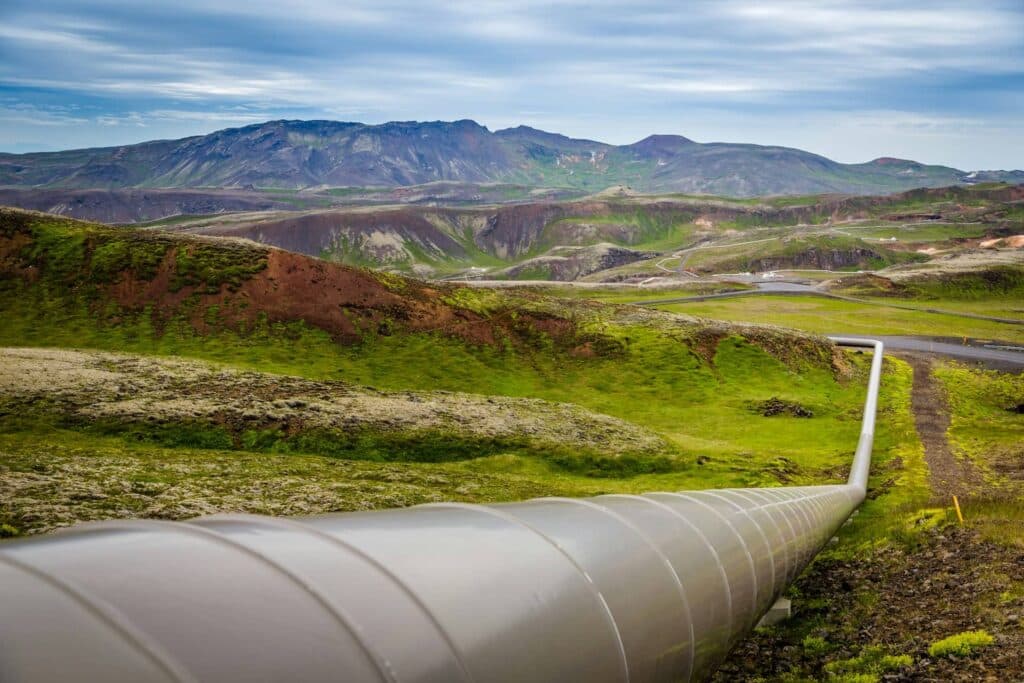
The increase in exports to Asia is a direct result of the opening of the Trans Mountain Expansion pipeline, which made it possible to transport oil from Alberta (which accounts for more than 80 % of Canadian production) to the west coast and onward to Asia. Alberta’s oil industry has thus benefited significantly from geopolitical tensions, further bolstering calls to build additional pipelines.
The Venezuela question
Canadian oil is predominantly heavy, meaning it has a different composition and requires different processing technologies. Venezuelan oil, which has recently returned to the debate following the US incursion into Venezuela, is also heavy, and some analysts therefore expect it could compete with Canadian production.
However, restoring Venezuela’s oil sector will take time after years of neglected infrastructure, institutional collapse and sanctions. The country’s future political trajectory and its relations with the US also remain uncertain. The outlook for Canada’s oil sector therefore remains very positive for now.
Translation disclaimer
This article is a machine translation of the Czech original and has not yet been fully reviewed. In case of any doubt, please refer to the Czech version.




