Price caps on Russian oil appear ineffective. Most tankers carrying the country’s oil are not subject to them

Since G7 countries and others introduced price caps on Russian oil and later on petroleum products, their effectiveness has been debated. The caps are enforced through Western companies involved in oil shipping and insurance. However, an analysis by S&P Global suggests that most Russian oil is transported by tankers not subject to this regulation. This makes it harder for Western countries to enforce the caps.
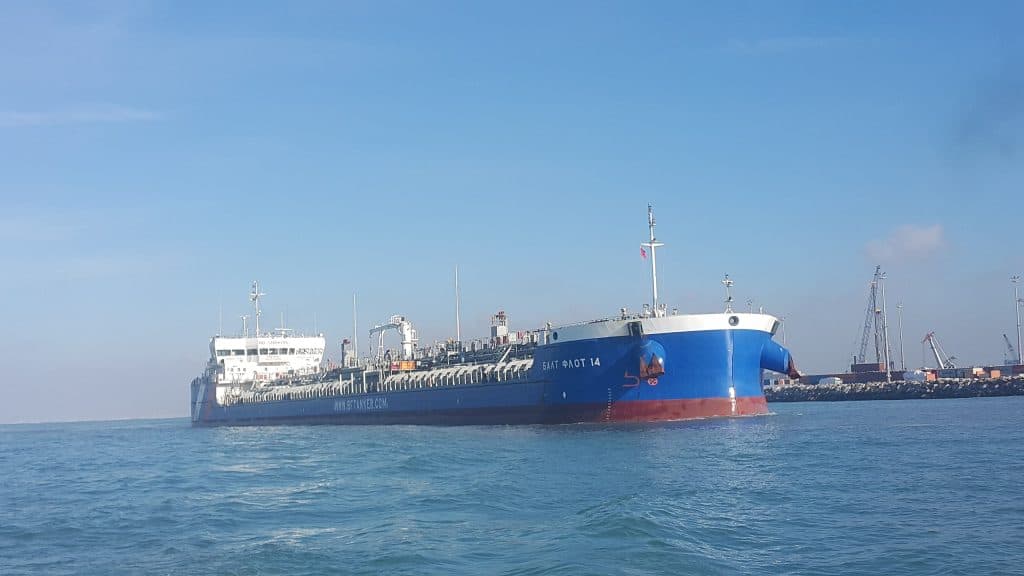
Russian oil traders have been facing sanctions imposed by the G7 and EU since the end of last year, which set a maximum price at which they can sell their oil. However, far from all Russian exports are subject to these sanctions. A recent analysis by S&P Global suggests that around 60% of Russian exports, or nearly 2 million barrels of oil per day, are transported by tankers owned or operated by companies based outside the G7 countries, EU, Australia, Switzerland or Norway. These tankers are also not insured by Western companies.
According to S&P Global, Russia previously routinely used Western companies to insure tankers carrying its oil. But after Russia invaded Ukraine in February last year, the companies themselves began to turn away from Russian business. By November last year, before the price caps were introduced, non-Western tankers were already carrying nearly half of Russia’s export volumes.
"We always expected Russia to introduce countermeasures in an attempt to circumvent the price cap," said Ben Harris, vice president of the Brookings Institution think tank.

"There must be widespread evasion of the oil price cap. The perceived risk of companies being found to have violated the measures is low... The authorities enforcing the sanctions may not have the capacity," commented Isaac Levi, an analyst at the Centre for Research on Energy and Clean Air think tank.
According to S&P Global, shippers currently have to obtain confirmation from traders that their oil is being sold at prices no higher than the cap. However, they are not required to verify this in any way. U.S. Treasury Secretary Janet Yellen has said that the United States is very likely to begin enforcing compliance with the caps among Western companies.
"I think we will see stricter enforcement over the next three to six months. You will see at least a few regulatory actions for obvious fraud," Ben Harris told S&P Global.
Russia says price caps are damaging the global economy
Although the effectiveness of the price caps on Russian exports is debatable, Russian government representatives say they are damaging the global economy. Oil export revenues are crucial to Russia’s state budget, which is under considerable strain because of the war in Ukraine. Russian Energy Minister Nikolai Shulginov himself has acknowledged this.
In early September, U.S. officials said that the price caps were working, pointing to Russian revenues from sales falling by half in the first half of this year. In addition to their direct impact on Russia’s budget, the caps and other sanctions make it harder for the country to invest in oil production and the energy sector more broadly, as it has to spend additional funds on measures to circumvent them.
Translation disclaimer
This article is a machine translation of the Czech original and has not yet been fully reviewed. In case of any doubt, please refer to the Czech version.




