23 October 2026, 14:38
Loading...
EU leadership admits error in approach to nuclear energy
Vladimír Wagner
4 April 2026, 08:16
In the second week of March, European Commission President Ursula von der Leyen spoke at a nuclear energy conference in Paris. She stated that the move away from nuclear energy promoted by the European Union had been a major mistake and must be corrected. Let us take a closer look at what needs to be done in this regard.
The statement by European Commission President Ursula von der Leyen at the Paris conference on nuclear energy in March 2026 can be described as completing the transformation of the European Union's view of nuclear energy. This began at a similar conference held in Brussels in March 2024.
In her address at the Brussels meeting, Ursula von der Leyen stated that one of the consequences of Russia's invasion of Ukraine and the need to reduce the EU's dependence on natural gas was a change in the EU's attitude towards nuclear energy. The EU is moving from suppressing nuclear energy to supporting its use. Crucial in this respect is support for extending the safe operation of existing units, which is currently the cheapest route to low-emission electricity. Further support should be directed towards the development of small modular reactors (SMRs), which promise great potential for deploying nuclear sources. She acknowledged that the path to low-emission energy cannot do without nuclear energy and that there is a need to move towards a technologically neutral approach to different sources. Energy is crucial to Europe's competitiveness, and from this perspective nuclear energy has a place in its future.
In her speech at the Paris nuclear conference in March 2026, she went even further and confirmed the completion of the EU's shift in attitude towards this sector. She stated that promoting a move away from nuclear power had been a tragic strategic mistake, which had led to the share of electricity generated by nuclear reactors in Europe falling from roughly 30 % to 15 %. According to her, the European Union must do everything it can to correct this mistake.
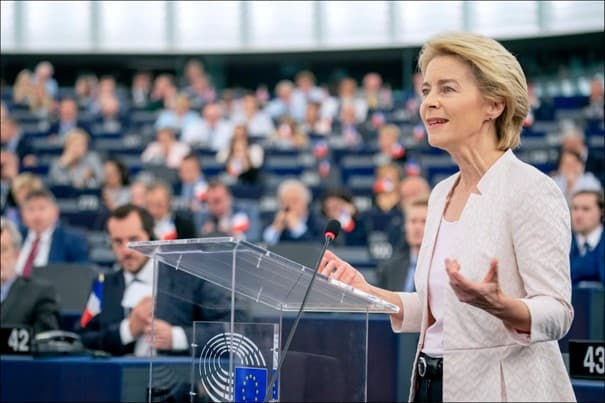
European Commission President Ursula von der Leyen has also acknowledged the necessity of nuclear sources for Europe's energy sector (source: European Parliament)
She also mentioned a number of specific measures aimed at financially supporting nuclear projects. The European Investment Bank will also participate in their financing. Resources raised from emissions allowances will also be available to finance nuclear energy programmes. She specifically mentioned a EUR 200 million fund to support SMR development, which should contribute to their widespread commercial deployment in the 2030s. This is not merely a relatively limited sum, but a means of attracting a substantial volume of private capital.
In the field of SMRs, standardisation and simplification of rules for licensing individual projects at European level are crucial. European supply chains need to be created in this area, and this technological sector should be used to restore Europe's leading industrial position. This requires supporting links between the capacities of different countries and covering all areas needed for the development of nuclear energy, from fuel production through reactor development, construction and operation to fuel recycling and education in the necessary fields.
While in 2024 it was a matter of recognising nuclear power as a clean source, it is now about its intensive development and broad future deployment. The focus is shifting to specific financing projects and broad European support for them. Europe would like to become a key player in nuclear technologies again.
At present, thirteen of the European Union's twenty-seven members operate nuclear units. Some others want to join them by building new units. Some countries have also reversed their nuclear phase-outs. Austria and Germany remain vocal opponents of nuclear energy. However, it should be recalled that German Chancellor Friedrich Merz has also described the move away from nuclear energy as a huge strategic mistake. While he sees correcting this mistake in Germany as unfeasible, the country's position may change in this regard in the future as well.
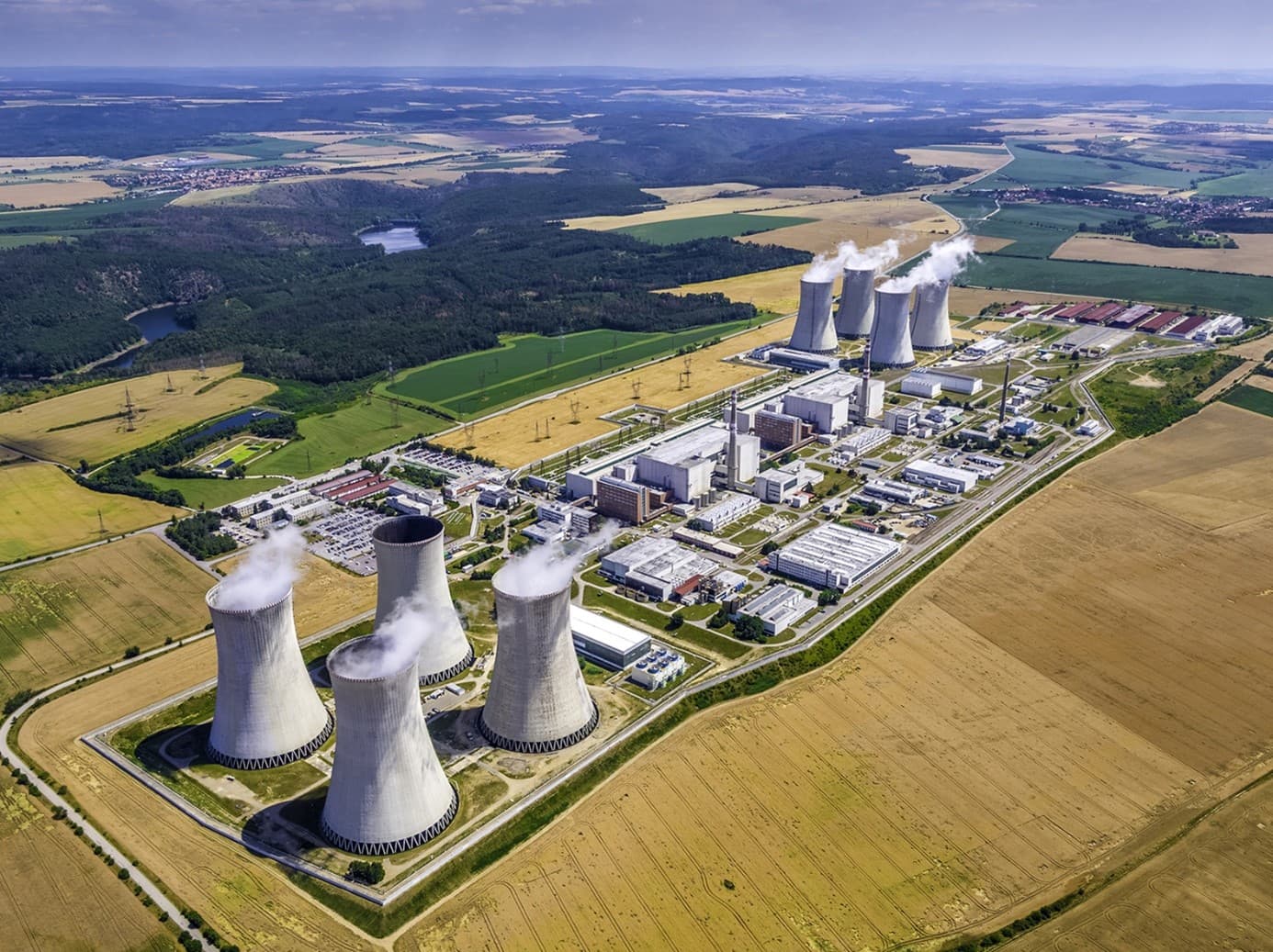
The old units at the Dukovany nuclear power plant could remain in operation until the middle of this century (source: ČEZ)
What needs to be implemented, and how far along is Czechia on this path?
The change in mood in the EU should be exploited as much as possible to launch a genuine nuclear renaissance in Europe. Let us recall the key tasks facing nuclear energy in the EU. The first challenge is to operate existing reactors safely for as long as possible. On the one hand, Europe's reactor fleet is relatively old, with a large proportion of reactors approaching forty and fifty years of operation. On the other hand, it is becoming clear that reactors can be operated safely for a very long time—potentially up to eighty years. This makes it possible to retain existing reactors beyond the middle of this century. There should therefore be sufficient time to replace them and to expand capacity more substantially.
The EU's independence in fuel supplies is crucial in this regard. A key achievement is the replacement of Russian fuel for VVER-type reactors with Western-produced fuel. The Temelín plant, with its VVER1000 reactors, has also switched to supplies from Westinghouse and Framatome (formerly Areva), while Westinghouse will supply fuel for VVER440 units. Europe also has a fairly good position in the area of preparing recycled MOX fuel, thanks to France and the United Kingdom. It is clear that Czechia is unlikely to carry out fuel production and recycling. In this area, it will rely on those countries, or possibly participate in some form of cooperation with them.
Czechia has already embarked on this path. ČEZ plans to operate VVER440 units for up to seventy years. It is focusing its maintenance of these reactors on such a long operating life. This means they could remain in operation even at the beginning of the second half of this century. Experience from operating older units of the same type at Finland's Loviisa nuclear power plant will be of interest in this area. Temelín could then remain in operation for much of the second half of this century as well. Czech companies are very intensively involved in servicing VVER units not only in Czechia, but also, for example, in Slovakia and Ukraine.
Ursula von der Leyen and other European politicians promote SMRs in particular over conventional large Generation III reactors. In my view, this is largely because they are trying to justify their U-turn in their view of nuclear energy. Somewhat in the spirit of: “Our criticism of nuclear energy and large reactors was not entirely unjustified, but these SMRs are something completely different.”
My personal view is that where a site exists for a large project and significant capacity is needed, it will remain more advantageous to build a large reactor in the future. In this sector, Europe should focus on using the designs that were also included in the Dukovany tender: the French EPR, the US AP1000 and the South Korean APR1400 (APR1000), which are already commercially available. Czechia has already made its selection and should build two APR1000 units at Dukovany, followed by another pair at Temelín. Czech companies will be intensively involved in delivering these units, while also supplying a number of components for other reactor types, for example EPR units being built in the United Kingdom.
Support for district heating through supplies of low-grade heat to district heating systems and industry from existing and newly built large reactors is very important. Work on this is progressing intensively in Czechia: heat has been supplied from Temelín to České Budějovice for three years already, and work is under way on a hot-water pipeline from Dukovany to Brno. Their capacity can be expanded in the future.
For SMRs, the first conventional designs need to reach commercial availability as soon as possible. Among European designs, the closest to this goal is Rolls-Royce's 470 MWe pressurised water reactor. In the Euro-Atlantic world, the furthest advanced is GE-Hitachi's 300 MWe BWRX-300 boiling water reactor, construction of which has already begun at Canada's Darlington plant. A number of European countries are considering these two reactor types. They are medium-sized rather than small reactors.
Through ČEZ, the Czech Republic has opted for Rolls-Royce reactors. The reason was the possibility of taking a stake in Rolls-Royce SMR and participating in the development and manufacture of these reactors. The first prototype and training unit should be built at Temelín, while preparations are under way for a trio of these units at Tušimice. These units could replace the current large coal-fired power plants and heating plants in Czechia. ČEZ has a very good nuclear energy strategy, not only in the area of SMRs, as I described in an earlier article.
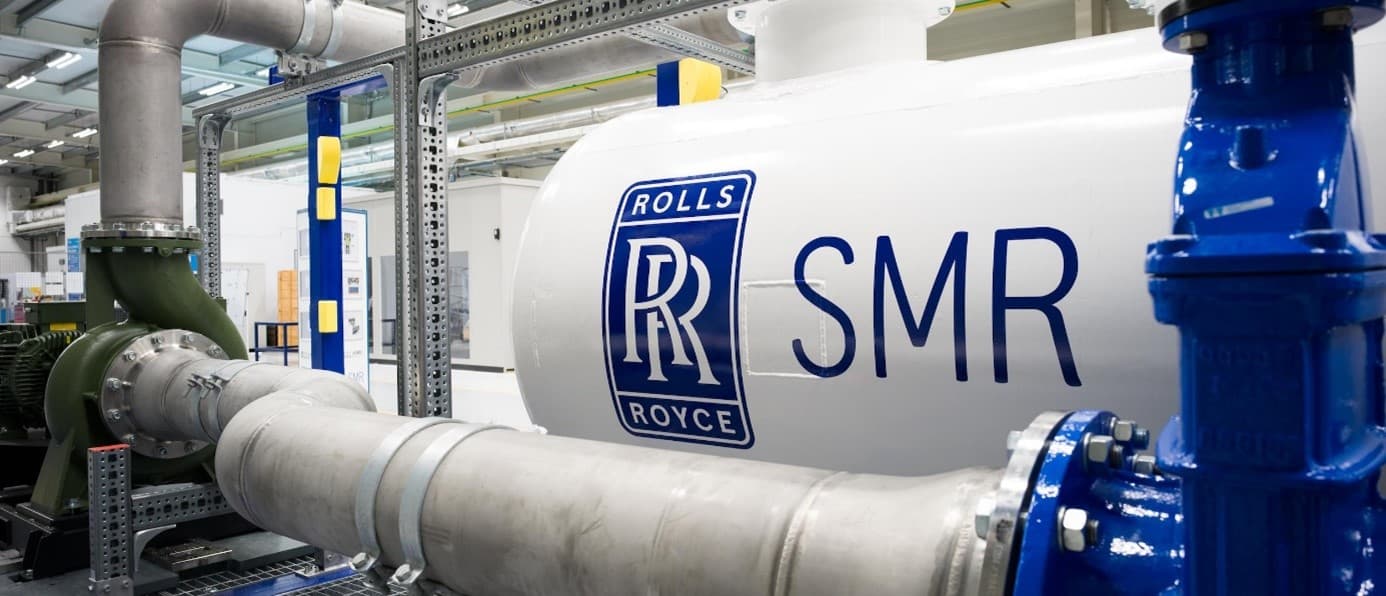
ČEZ is cooperating with Rolls-Royce SMR on a small modular reactor (source: Rolls-Royce SMR)
There is not yet a commercial offering of genuinely small reactors with thermal output of up to 100 MWt that could be connected to district heating systems. Work is under way on a number of projects, for example the Finnish 50 MWt LDR-50 SMR or the French 30 MWt Calogena project. The latter is of interest to Czechia because CVŘ s.r.o., a subsidiary of ÚJV a.s. in Řež, has participated in its development. Commercial deployment of such a reactor would enable nuclear sources to enter decentralised energy systems.
The European Union places extreme emphasis on sustainability. It should also focus on closing the fuel cycle and developing advanced large reactors and Generation IV SMRs. These reactors are also crucial for the deployment of nuclear sources in industry, where very high temperatures are needed. At the same time, this would help Europe reach the forefront of technological development in nuclear energy.
ÚJV a.s. in Řež and Czech technical universities are participating in the development of these technologies. There is no need to rush too much here; the key is to monitor and understand developments in this area so that Czech industry can join in on time when the application of these technologies takes off.
The Czech Republic has a long-standing tradition in nuclear energy. It has managed to retain its industrial and research capacities, and education in this field is also at a very good level. The State Office for Nuclear Safety (SÚJB) also commands considerable respect, thanks in part to the recently deceased Dana Drábová. We should therefore make the most of the change in the political climate within the institutions of the European Union. It is an opportunity for key technological and industrial development. A similar view also appears in other articles.
The need to change the taxonomy
The taxonomy relating to nuclear energy, jointly with natural gas, was adopted in 2022 and took effect on 1 January 2023. Precisely because of the strong anti-nuclear stance in the European Parliament, the taxonomy was heavily influenced by ideology. Nuclear energy was classified as only a transitional technology, which is highly restrictive for a very long-term investment. This approach will have to change fundamentally.
The requirement to have a permanent deep geological repository for spent fuel by 2050 is almost absurd. Moreover, the taxonomy places emphasis on nuclear fuel recycling. It should be recalled that even where spent fuel is not recycled and is placed in a deep geological repository, it is necessary to wait decades for its activity and heat production to decline. Even in this case, a repository will not be needed for many decades, while the volume of fuel is very small and the entire amount produced during a power plant's lifetime can be temporarily stored on its site. Moreover, if recycling is to take place, a permanent repository will not be needed before the end of the century.
The taxonomy also contains a number of time limits that will certainly need to be adjusted. It is very likely that discussions on revising this document will begin in the near future. The Czech Republic should be prepared for this and should push for it to be based on scientific and technological knowledge, without ideological influence. I analysed it in detail already when it was being drafted (see here).
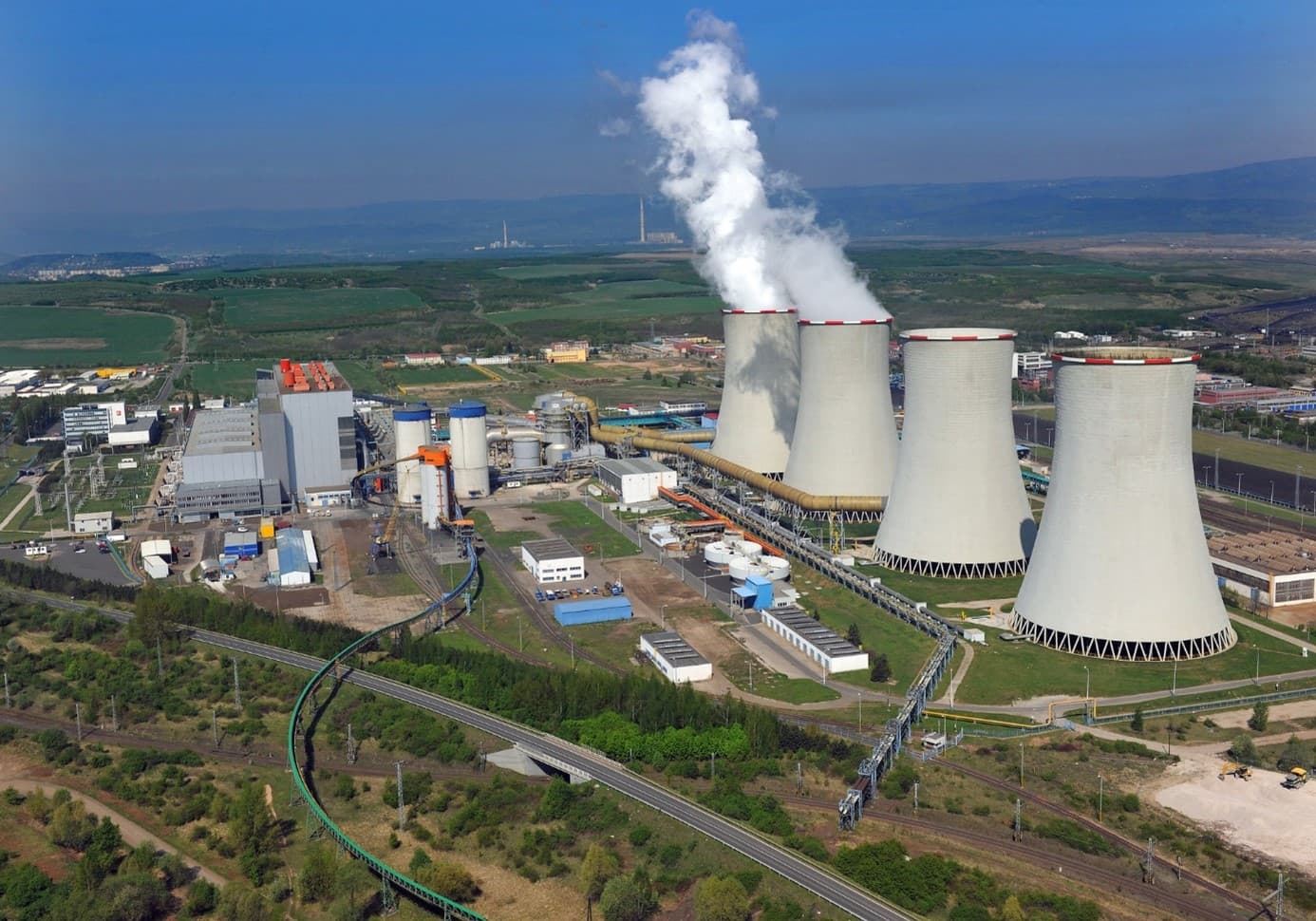
Small modular reactors could replace coal-fired units at the Tušimice power plant (source: ČEZ)
Conclusion
Nuclear sources are crucial for the Czech energy sector. At the same time, its industry has a very strong position in nuclear technologies. It is therefore in its interest to take advantage of the current change in the approach to nuclear energy within the institutions of the European Union. The key is to achieve a change in the taxonomy that puts nuclear energy on an equal footing with other low-emission sources. This will significantly help in finding ways to finance nuclear projects. This should make it possible for a nuclear renaissance to genuinely begin in Europe as well, as it is already under way elsewhere in the world, as shown by the overview of current nuclear energy development (here, here and here). To bridge the period until nuclear projects capable of replacing current coal-fired sources can be completed, it would be sensible to keep these sources in operation, as described in a recent article.
Translation disclaimer
This article is a machine translation of the Czech original and has not yet been fully reviewed. In case of any doubt, please refer to the Czech version.
Sdílejte článek prostřednictvím:
You might also like
23 October 2026, 11:01
23 October 2026, 06:34