How many cars could run on new Czech Dukovany units
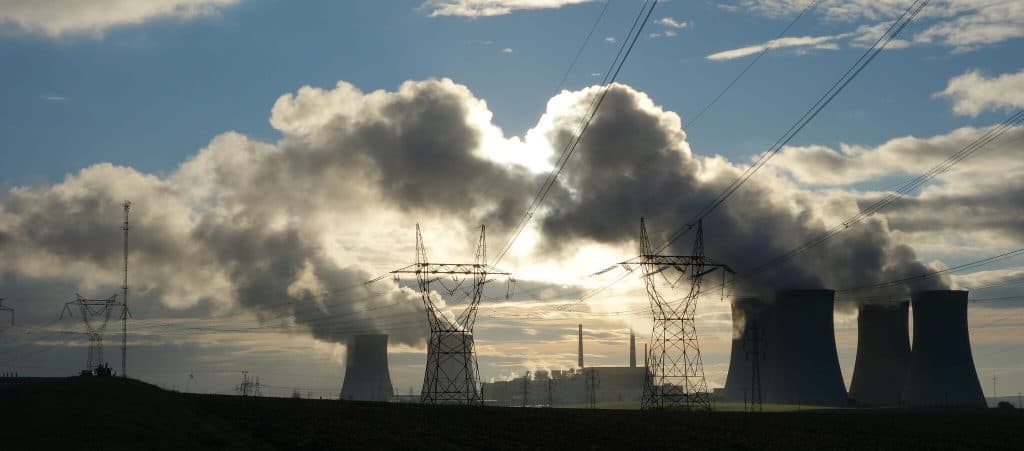
Czech society has a very positive attitude towards nuclear energy. The same cannot entirely be said of electric mobility, so let us look at how many vehicles could theoretically run on the newly built Dukovany units.
The previous article on wind power plants sparked a lively discussion. Two topics frequently appeared in the comments. First, the variability of wind generation, which produces according to current weather conditions, was often mentioned; second, wind generation was very often compared with a nuclear power plant, with requests that I instead compare transport consumption with a nuclear source.
As for the first topic, the conclusion of the article explicitly mentions that configuring the energy system as a whole is more complex, with other sources such as nuclear, hydroelectric or combined-cycle gas power plants also coming into play. Nevertheless, the aim of the article was to highlight the amount that wind generation can produce in relation to oil imports. In other words, the article nowhere claims that vehicles can be powered solely and exclusively by wind power plants, but shows the total amount of energy that wind generation can contribute to the overall energy mix.
How many cars could run on new Czech Dukovany units
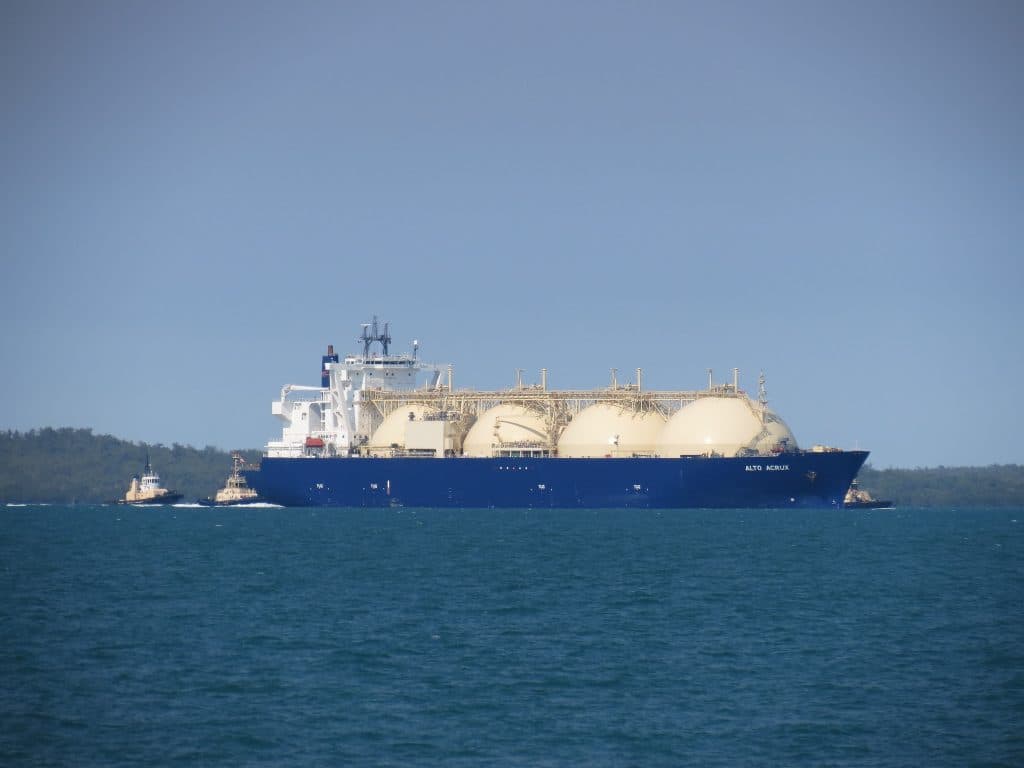
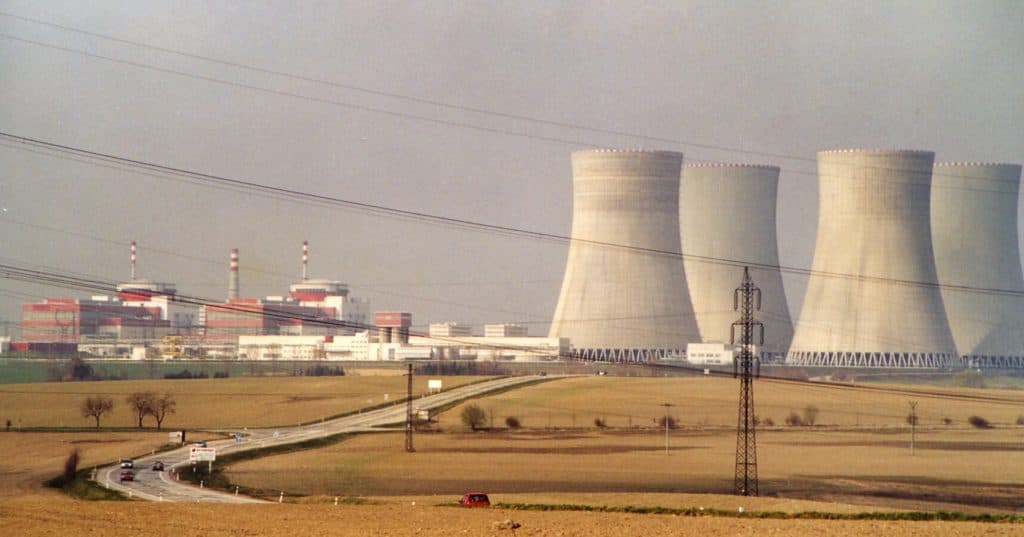
As a supplement on generation from a nuclear source, I offer the following calculation. The Czech Republic imports around 7 million tonnes of oil annually, corresponding to about 70TWh of energy. For comparison, total electricity consumption in 2025 was roughly 60TWh. The consumption of oil fuels in transport thus exceeds final electricity consumption, equivalent to the output of nine planned Dukovany nuclear power plant units (around 8 TWh/year).
One of the main reasons for switching transport to electricity is its significantly lower energy intensity. Electric propulsion is substantially more efficient than combustion engines, and unlike a conventional combustion-engine car, an electric car can efficiently store braking energy back in its battery. If we compare two similar cars, a relatively economical petrol car has an average consumption of around 6.5l/100km. Converted into kWh, this amounts to about 60kWh/100km. A similar electric car, again on an annual average basis, consumes roughly 20kWh/100km, including charging efficiency. I discuss vehicle consumption in greater detail in this article.
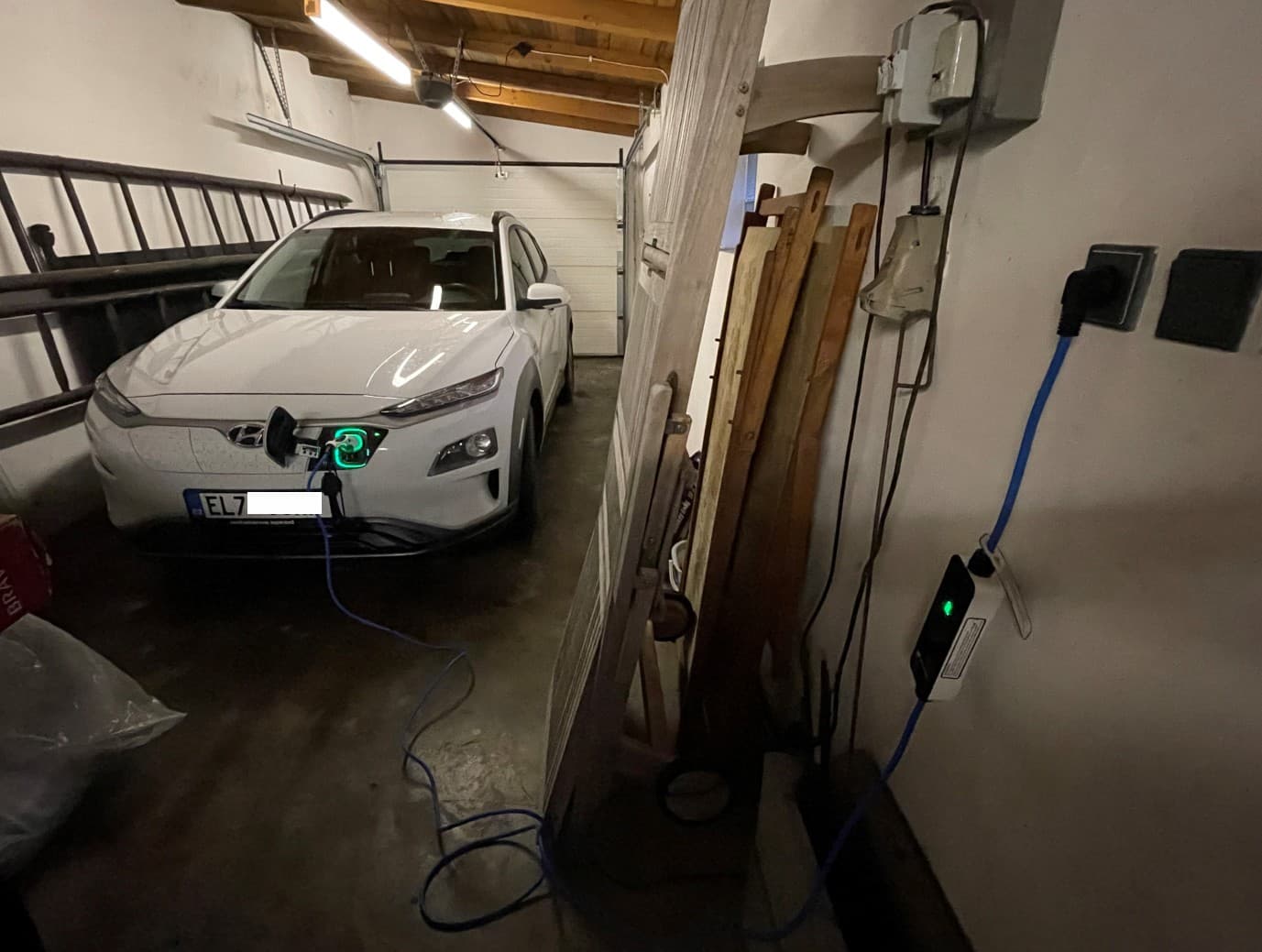
Put very simply, an electric car therefore has roughly one-third of the direct consumption (consumption while driving, TTW). In the case of electricity, powering vehicles therefore simply requires around one-third of the 70TWh, meaning about 24TWh. The newly built Dukovany units, with a capacity of 2.4GW, will produce just under 17TWh of electricity annually, providing energy for around 70% of all vehicles.
The new units are expected to start up in 2037 - 2038, while by 2040, even under a progressive electric mobility development scenario, at most one-third of all vehicles on the roads will run on electricity, with total consumption of around 8TWh. At the time of their commissioning, the newly built units will therefore theoretically produce energy for twice as many vehicles as will be in operation at that time.
How does it compare on cost
At current oil prices of around $100 per barrel, the Czech Republic spends nearly CZK 110bn annually on imports. This must be supplemented by further billions for fuel refining and logistics. The cost of the new Dukovany units will be around CZK 400bn. Operating, financing and other associated costs must of course also be added. Nevertheless, even this cursory calculation makes it clear that investment in domestic nuclear sources is much more efficient than spending money on oil imports every year.
What will a kilometre of driving cost motorists
The price of electricity from the new units is estimated at roughly €90/MWh in today’s prices, equivalent to about CZK 2.3/kWh. The final price for household consumers, including distribution charges and taxes, may range from CZK 3.5 - 6.5/kWh depending on the tariff. The cost of energy per kilometre of driving therefore ranges between 60 haléř and CZK 1.3. Excise duty will also need to be included. It is currently paid only on liquid fuels, and as the share of electric vehicles in the fleet rises, their operation will of course be taxed as well. Excise duty is currently set at CZK 8.25/l for diesel (temporarily reduced) and CZK 12.8/l for petrol. A conventional combustion-engine vehicle therefore pays roughly 40-80 haléř per kilometre in excise duty. It is currently difficult to predict when and at what rate the taxation of electric vehicle operation will be introduced. If we assumed roughly 60 haléř per kilometre, the total cost would be between CZK 1.2-2/km.
The average price of petrol in the Czech Republic was approximately CZK 42/litre as of mid-May 2026. From 2028, around CZK 3 for an emissions allowance must be added to this amount, bringing the cost per kilometre to around CZK 3. Total operating costs will therefore be significantly lower for electricity than for combustion-engine cars even without one’s own generation source, including the “excise duty”. Incidentally, this shows how misleading the scaremongering over emissions allowances is. They do make vehicle operation somewhat more expensive, but compared with geopolitical influences, the allowance itself has a minimal impact on the price. Moreover, allowance revenues remain in the country, and the funds raised are subsequently used domestically, for example to improve public transport systems.
When setting a tax on the operation of electric vehicles, the aspect of local emissions should also be considered in future. Excise duty is generally regarded solely as a charge for using the road network. However, if we truly wanted to be technologically neutral and fair to all types of propulsion, part of the excise duty revenue should go to the Health Ministry budget as a charge for the negative externalities caused by local exhaust pollution. I would leave the quantification of these health externalities to healthcare experts, but we should not neglect these costs of operating combustion-engine vehicles in the name of technological neutrality.
For owners of their own generation sources, the cost per kilometre is even lower.
Conclusion
Returning to the introduction of the article, total generation from a particular source is only an indicative figure and must always be placed in the context of the energy mix. Compared with wind generation, a nuclear power plant operates at a higher capacity factor (80% versus 23%), but a nuclear source also does not operate for part of the year due to fuel replacement, just as the wind does not blow at full strength for part of the year. Both sources therefore need backup, storage and flexible generation to cover fluctuations in consumption. Wind generation operates at a lower capacity factor, but it also has lower investment costs and can be built significantly faster than new nuclear units. A sensible energy mix therefore cannot be based on just one type of generation; different sources need to be combined so that they complement each other effectively and ensure electricity for consumers even when the wind is not blowing or fuel is being changed in a reactor. This is why countries with a significant share of nuclear energy in their mix, such as France or Finland, also have a significant share of renewable sources alongside nuclear units, suitably complementing nuclear power.
Either way, it is better to base transport on a mix of domestic sources than to rely on fuel imports from halfway around the world, which can be disrupted by a single blocked strait. Especially in an automotive powerhouse, where one-fifth of cars produced already have external charging capability and locally manufactured electric cars rank among Europe’s most popular models.
France in particular should serve as an example. It is far from betting only on nuclear power; it regards it as a stable foundation and is building renewables as a low-cost complement, for example by supporting solar panels on built-up areas, agrivoltaics, and the mass electrification of transport to reduce oil imports.
Note:
An intensive discussion on energy consumption began beneath the article. When declaring energy consumption, it is necessary to distinguish between a vehicle’s direct energy consumption from tank to wheels (TTW - tank to wheel) and total consumption including fuel production, encompassing electricity generation and distribution, or oil refining and logistics respectively (WTW - well to wheel). Although the text clearly indicates that the energy consumption calculation refers to direct consumption, I am also adding calculations for total energy consumption.
Translation disclaimer
This article is a machine translation of the Czech original and has not yet been fully reviewed. In case of any doubt, please refer to the Czech version.