23 October 2026, 14:38
Loading...
How should Czechia respond to the latest IPCC warnings about the threat of global warming?
Vladimír Wagner
23 August 2021, 13:07
The recently published sixth IPCC assessment report seeks to analyse the anthropogenic impacts of CO2 emissions on the climate. It is therefore interesting to look at the real possibilities for responding to this report, especially in Czechia, and at the fundamental paradoxes in the approach to it. While green activist organisations verbally proclaim the need for rapid emissions reductions, they do not ease their fight against low-emission nuclear energy.
The latest report by the IPCC panel studying global change is considered even more alarming than its predecessors. Such a result is not surprising, as greenhouse gas emissions continue to rise steadily. All its models predict temperature increases at least until the middle of the century, with warming exceeding 1.5 to 2.0°C unless emissions are dramatically reduced. The increase in greenhouse gas concentrations and its anthropogenic origin are very well measured and documented. The rise in global temperature and some of its impacts are likewise studied with reasonable accuracy. The share of anthropogenic influences in these changes is determined with far greater uncertainty. And model predictions of future climate developments are subject to even greater uncertainty.
Whatever the dominant sources of past and present climate changes may be, changed conditions have different impacts in different regions, both positive and negative. In some areas, conditions for the life and development of natural and human communities are improving, while in others they are deteriorating. It should be recalled that throughout history, conditions for the development and survival of populations have changed dramatically in a number of places as a result of both natural and anthropogenic influences. Current global warming will also worsen conditions for agriculture and the survival of human communities in some regions. Some may even become uninhabitable. Conversely, other areas that are currently too cold may gradually become more favourable for life. The main problem with current changes may be that they are likely to occur much faster than in earlier times. This will make effective adaptation more difficult.
Despite the aforementioned uncertainties regarding the share of individual sources driving climate change and their future development, human civilisation should respond in three important directions. The first is the effective and purposeful reduction of greenhouse gas emissions. The second is improving the ability to withstand the impacts of climate developments, whatever their causes. This means strengthening environmental protection and the ability of animal and plant communities, landscapes and natural systems to withstand climate change and extremes. We likewise need to improve the ability of our towns and villages to withstand extreme natural phenomena and deal with their consequences. Positive changes brought by climate change need to be used effectively, while negative ones must be addressed efficiently. The third is the need for intensive development of scientific knowledge and technologies needed to better understand the real sources and course of climate change, enabling a dramatic reduction in the aforementioned uncertainties in our forecasts. The development of science and technology is also crucial for an effective and environmentally sensitive transition to low-emission sources. It is equally important for effective environmental protection and for increasing the resilience and sustainability of our civilisation.
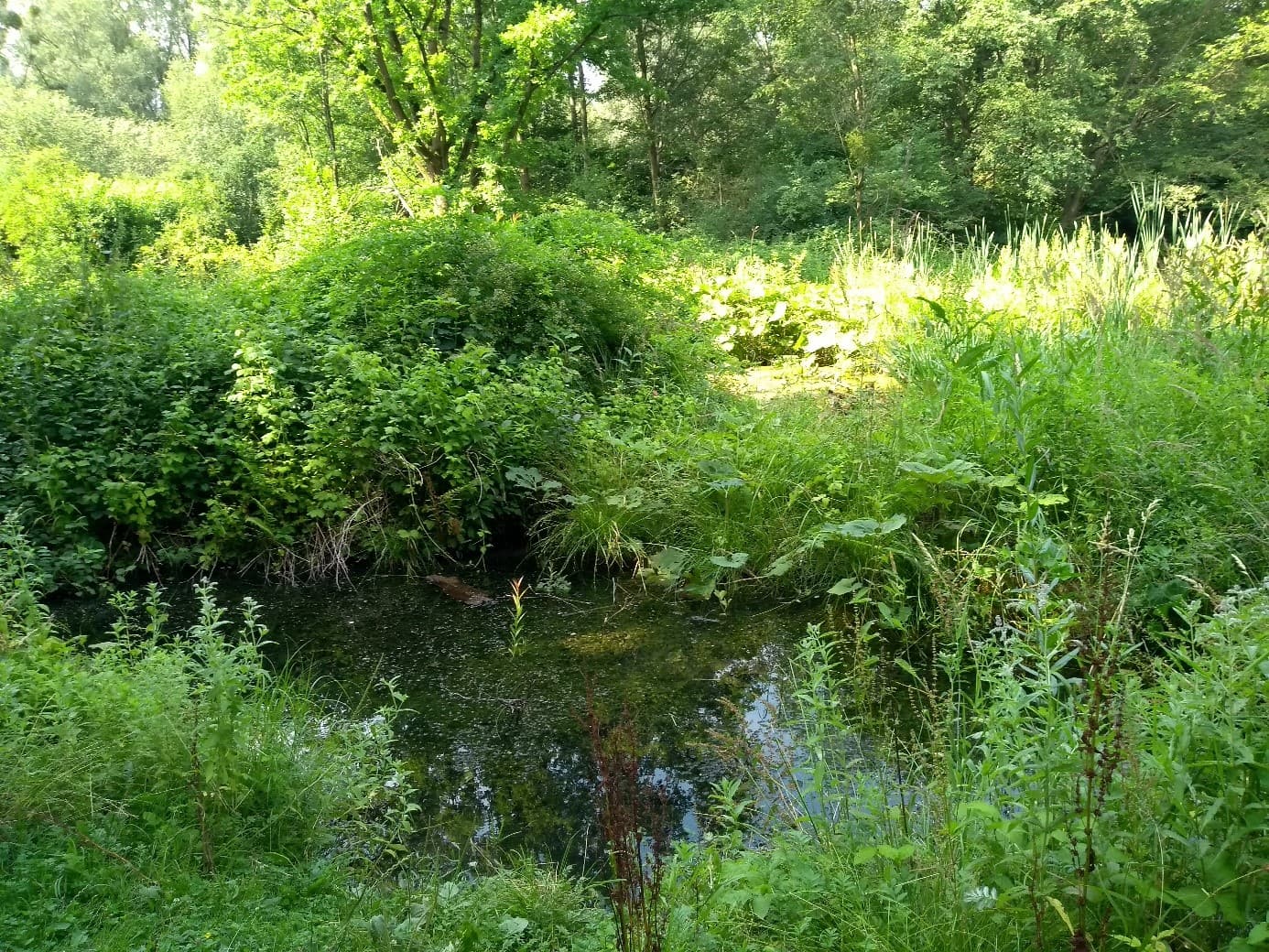
Water management is a very important component of increasing landscape resilience to global changes. Pools in the Meandry Lučiny natural monument. (Photo: Vladimír Wagner).
Transition to low-emission sources
As mentioned, transitioning to low-emission technologies makes sense. However, it must take place efficiently and must not lead to environmental impacts worse than those avoided through lower greenhouse gas emissions. This is perhaps simplest in the case of the power sector. Several types of low-emission sources exist here, and future research promises a number of improvements in this area. However, the transition to low-emission sources should proceed rationally and on the basis of scientific and technological facts.
This means that an energy mix corresponding to the geographical and other characteristics of a given region must be created. A specific feature of electricity is its limited ability to be stored. To a considerable extent, its generation and consumption must therefore be balanced at every moment. The energy mix must thus provide not only the required generation over a given period, but also the necessary capacity at every moment. Since a significant share of low-emission sources depends on weather and geographical conditions, the mix must reflect these conditions and be sufficiently diverse. This is why a low-emission mix based purely on renewable sources has only been built in very specific situations, such as Norway or Iceland. By contrast, low-emission mixes based on a combination of nuclear and renewable sources have been operating for many years or decades in a number of regions. These include France, Sweden, Switzerland, Slovakia and the Canadian province of Ontario.
In the 1970s and 1980s, Germany, like France, was intensively developing nuclear energy. At the turn of the century, however, it opted for the Energiewende, which entails a rapid and complete exit from the use of this low-emission source. To a considerable extent, these sources have had to be replaced by fossil fuels. Germany therefore remains very heavily dependent on fossil sources. Until recently, it was still building new coal-fired capacity. While it has now stopped doing so, it plans to operate coal-fired sources until 2038 despite extreme pressure to end their use. Retired coal units, as well as nuclear ones, are being replaced largely by gas-fired sources. While these have roughly half the carbon dioxide emissions of coal when burned, once greenhouse gas leaks during natural gas extraction and transport are included, gas does not fare much better than coal. It is therefore questionable whether it is truly environmentally sound to replace newly built coal units, whose construction carbon footprint has already been incurred, with new gas-fired ones. In their case, the carbon footprint of new construction is incurred in addition. A comparison of France and Germany clearly shows which path to low-emission electricity generation is effective and successful. Germany's carbon dioxide emissions from electricity generation are many times higher, and greenhouse gas emissions associated with the extraction of imported natural gas must also be added.
Instead of taking a rapid path to emissions reductions, Germany is thus heading towards replacing low-emission sources with fossil-fuel ones and towards the very long-term use of natural gas combustion. The closure of nuclear reactors that could still supply low-emission electricity for decades and significantly reduce carbon dioxide emissions was recently criticised by a UN organisation. The call not to take such steps was directed specifically at the European Union, especially Germany and Belgium. Yet neither this call nor the strong appeal of the IPCC climate panel has led green activists and a substantial share of EU politicians and the public to change their views. Pressure from these movements has resulted in replacing coal with the large-scale burning of wood transported from across the ocean being considered a clean source, while the use of nuclear sources to reduce emissions cannot yet be supported under the European Union taxonomy—quite the opposite. Instead of a rational approach and a search for effective paths towards an optimal energy mix and emissions reductions, the European Union is unfortunately dominated by movements and politicians relying primarily on irrational ideological views without knowledge.
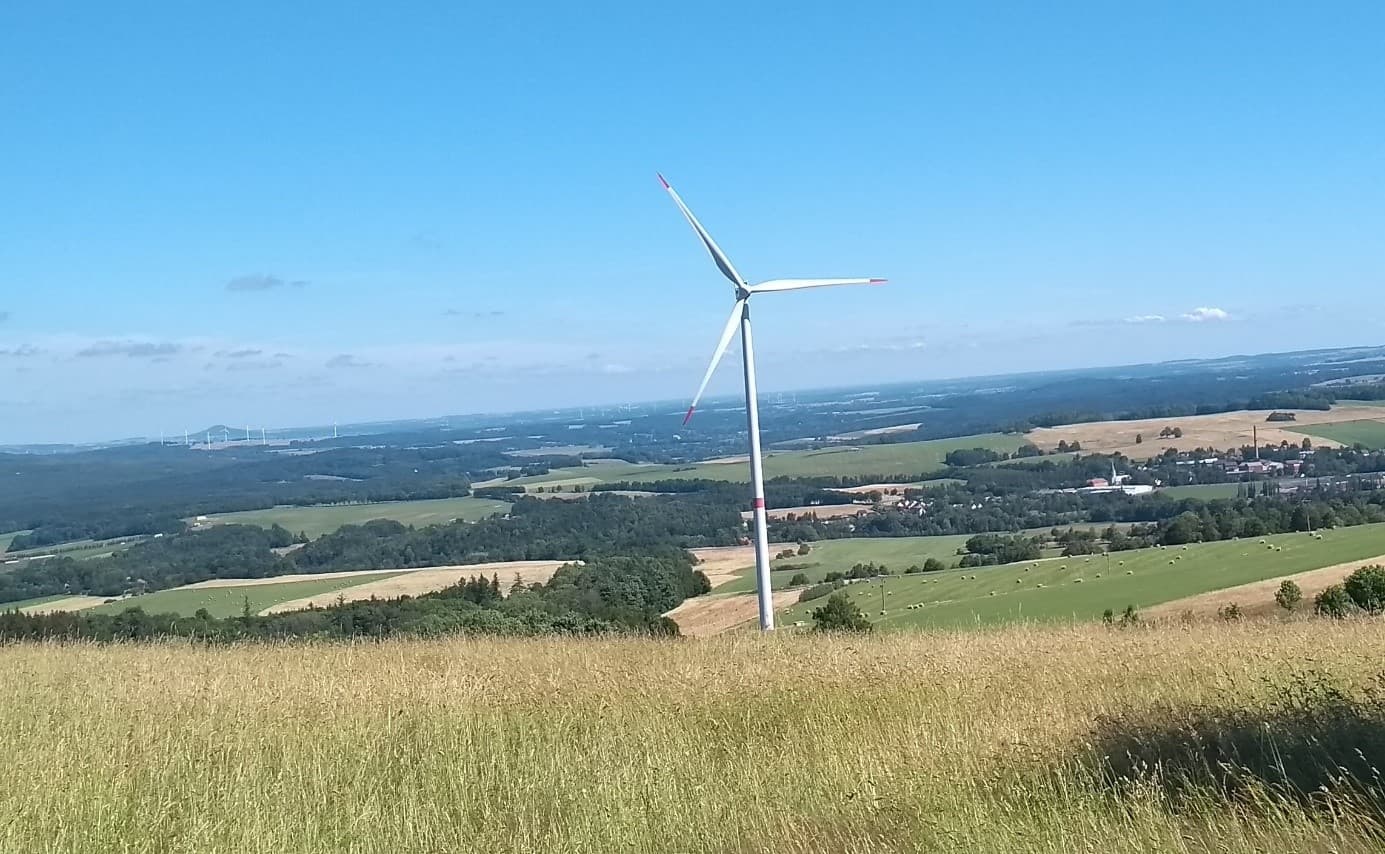
Decentralised wind turbines and farms could also contribute to the transition to low-emission electricity generation in Czechia. In the foreground is a solitary turbine in the Jizera Mountains; in the background to its left is a group of turbines in Poland. (Photo: Vladimír Wagner).
The situation in Czechia
The Czech Republic has very limited opportunities to use renewable sources. On the path towards a low-emission mix, it cannot do without nuclear sources. There has been a conflict over their use in the country for 30 years. It is strongly influenced by anti-nuclear green activists. As already mentioned, the paradox is that these very groups are also the main advocates of the need to combat greenhouse gas emissions.
In the 1990s, these activists, led by the Greens, Greenpeace and Hnutí DUHA, fought intensively to halt construction of the Temelín nuclear power plant. Their arguments were exactly the same as those they now use against the construction of nuclear units. They claimed that construction was uneconomic, that electricity from nuclear units would be unnecessary and would be displaced by cheap electricity from renewable sources. They nearly succeeded in stopping the Temelín power plant project entirely. Completion of at least two units was defended only with great difficulty. For many years after they entered operation, they continued to fight for their shutdown. They also advocated very intensely for limiting the use of the Dukovany reactors, following Germany's example, to just 30 years and for shutting them down between 2015 and 2017. Greenpeace's latest energy strategy is still based on the premise that they should already have been shut down.
The arguments used by green activists against the construction of nuclear reactors at that time can be clearly seen in the justifications for the Ropák award, which they regularly gave to those who advocated building the first two units at Temelín. I already analysed them at the time and predicted that the activities of those awarded the Ropák prize would bring fundamental environmental benefits. By contrast, the anti-nuclear tendencies promoted by those who bestowed it would prove to be a dead end.
At present, Temelín and Dukovany are the largest suppliers of low-emission electricity in Czechia. Temelín has become a clear economic success and, together with Dukovany, is a pillar of the stability of ČEZ. Without these power plants, Czechia would be almost at square one in its transition to low-emission energy.
However, the aforementioned green anti-nuclear organisations have undertaken almost no self-reflection following the previous experience in which their claims proved completely wrong. Greenpeace has stopped fighting against the operating units at Temelín. It also no longer insists on the immediate shutdown of the Dukovany reactors after 30 years, although its current energy strategy still does not count on Dukovany. However, it continues to oppose the construction of new nuclear sources, using exactly the same arguments as it used in the 1990s against the first two Temelín units. And it likewise awards the Ropák prize for supporting nuclear energy. I would venture the opinion that it is just as dramatically mistaken in this case. Its campaign is in reality seeking to ensure that coal-fired sources and the future retired Dukovany reactors are replaced with gas-fired rather than low-emission nuclear sources.
As already mentioned, switching from coal to gas is not particularly beneficial in terms of total greenhouse gas emissions. Closing existing coal units and building new gas-fired ones to replace them also entails costs and a carbon footprint associated with their construction. What is crucial, however, in order to focus them as much as possible primarily on balancing and backup, thereby minimising their use, is the introduction of capacity payments. This mechanism is necessary for the use of coal-fired and gas-fired sources in the aforementioned role. With a major increase in emissions allowance prices and gas prices, the time for which they are used and the margin achieved, and therefore profit, decline to such an extent that their operation is not worthwhile without capacity payments.
In Czechia, there has been very strong opposition to capacity payments, not only because of strong pressure for the rapid closure of coal-fired sources and against any sign of support for fossil-fuel power plants. Germany negotiated their introduction and a financial model with the European Commission, but Czech politicians did not even try to do so. I described in a recent article how, at the current high gas price, even the very high current price of emissions allowances does not ensure that gas-fired plants economically displace coal-fired power plants. However, they lead to a fairly dramatic increase in electricity prices. Even so, they do not allow fossil-fuel sources to be economically sustainable without capacity payments. Without capacity payments, coal units will hardly be operated and gas-fired ones that could potentially replace them in the role of backup and balancing will hardly be built on economic grounds. It is therefore very important to secure support for a capacity payment financial model in Czechia, whether it ultimately applies to coal-fired or gas-fired units.
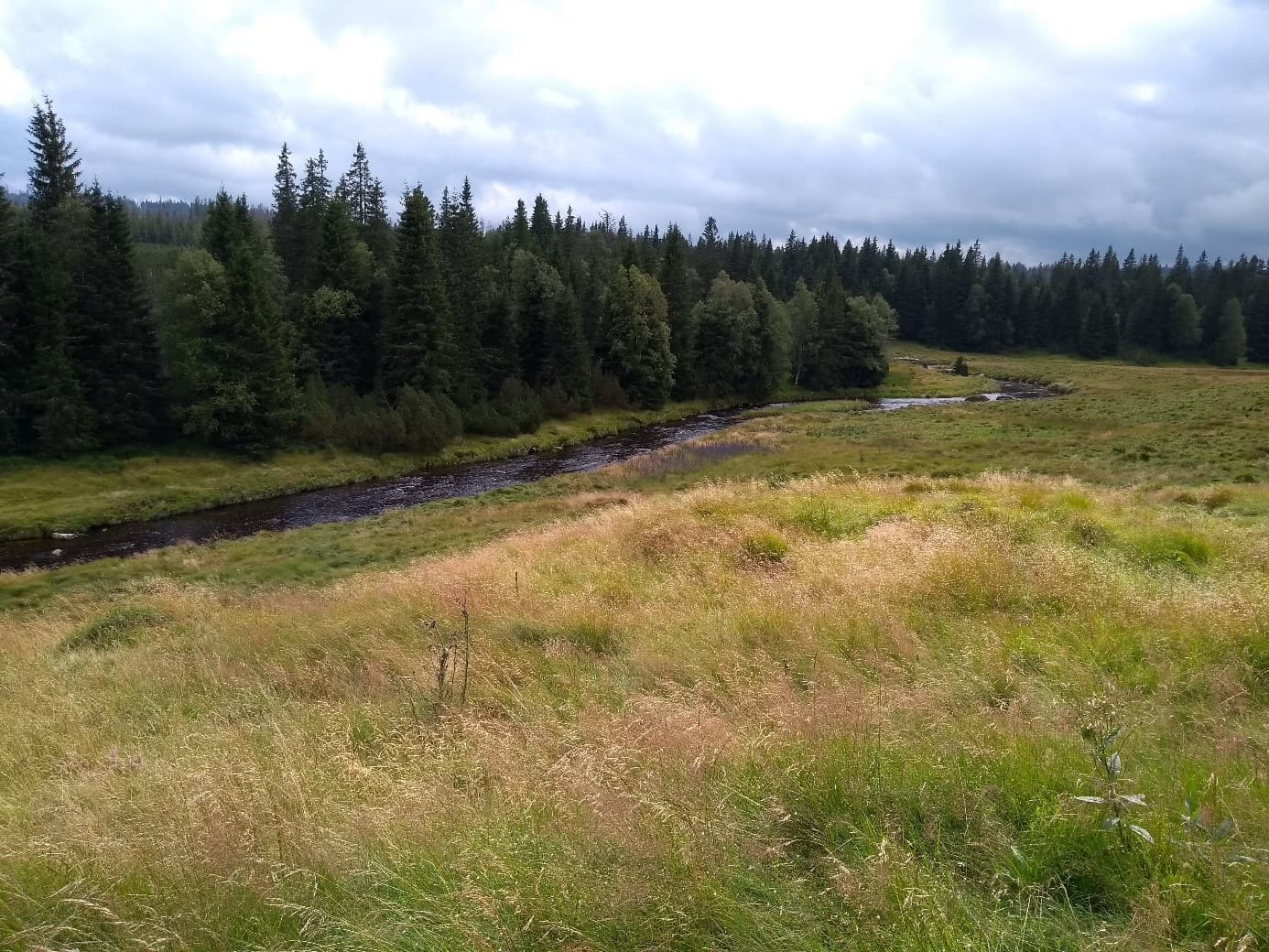
One of the most beautiful parts of Šumava near Modrava (photo: Vladimír Wagner).
What steps should be taken for a realistic path to a low-emission mix
In my view, shutting down coal-fired sources at all costs without replacing both their generation and their balancing and backup services is very dangerous. The economic standard of living in our country is very strongly dependent on industry. A dramatic increase in energy prices and a threat to its availability at certain times could seriously endanger the social stability of society. The situation is serious mainly because a shortage of sources when there is no wind and no sunshine will affect the dominant share of European Union states, and all of them will expect to import electricity at such times. This applies especially to our neighbours Germany and Austria. For Czechia, it is therefore critical to secure energy for periods when there is neither sunshine nor wind at home or among our neighbours. When our neighbours have a surplus of wind or solar energy, they will gladly supply it to us.
In my view, the following points are important for a truly realistic path to low-emission energy in Czechia that would be an environmentally appropriate response to the sixth IPCC report. First of all, it is necessary to design a capacity payment scheme and negotiate its approval, whether we eventually use it for coal-fired, gas-fired or other sources. Effective models need to be implemented for integrating decentralised balancing and storage, thereby improving grid flexibility.
It is finally necessary to restart the construction of low-emission sources. For Czechia, it is critical to begin construction of new nuclear sources as soon as possible. It is quite absurd that those who in the past claimed we had plenty of time and did not need to hurry with their construction now claim it is already too late to build them and there is no point trying. It is likewise necessary to implement the construction of decentralised renewable sources in an environmentally sensitive manner. In both cases, suitable financial models must be found and we must demonstrate our capabilities in these areas. I wrote about this in greater detail previously.
Coal-fired sources should then be shut down according to how successfully their generation as well as their balancing and backup functions can gradually be replaced by new means. From the perspective of transitioning to low CO2 emissions, there is no point in replacing coal-fired sources with new gas-fired ones at all costs.
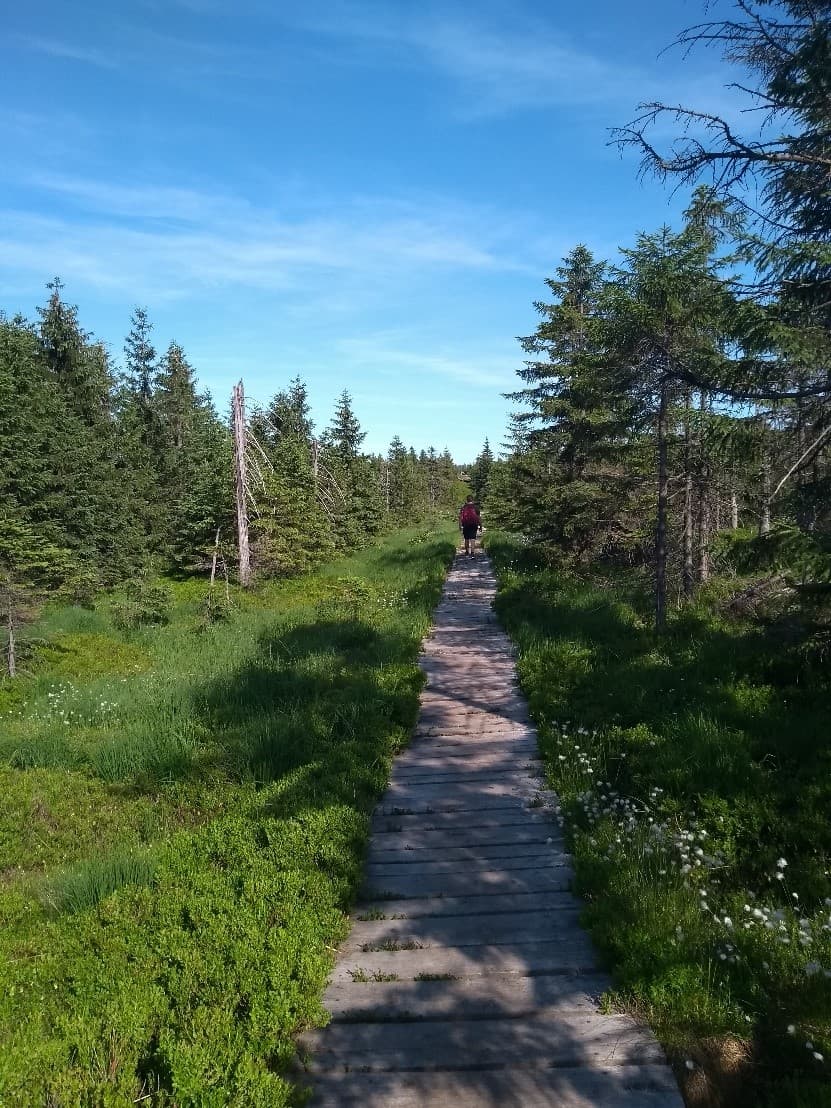
The Czech landscape is very beautiful and we should protect it. Environmental criteria should take precedence over a simplified fight against carbon emissions and for the highest possible share of renewable sources. Jizera Mountains Trail – part of the trek around Czechia. (Photo: Vladimír Wagner)
Conclusion
It truly cannot be assumed that the disruption of the energy sector and the economic and social impacts of such a step would help us improve our ability to face climate change. Quite the opposite: an economically strong and stable society with strong scientific and technological potential can face various challenges far better. A society with a strong scientific base can also make far better rational choices of truly effective and environmentally sensitive solutions. Not only because of the IPCC report, resolving the energy transition is currently a key issue for the world, the European Union and Czechia. It is an area that fundamentally affects competitiveness and society's ability to survive and develop. It should therefore also be a key issue in the current elections, and political parties should at least have a clearly defined internal view of the future energy strategy. This would allow them, if they win the election, to immediately begin addressing the energy transition with knowledge of the issue.
However, if we look at the programmes of the individual coalitions and parties, we see that they are as vague as possible on energy. Probably so as not to lose the votes of voters who are for and against nuclear power. It is clear from this that none of the parties considers the issue decisive. Very often, this is also because the parties and coalitions themselves contain factions and politicians who are strongly opposed to nuclear power. Others accept, or even support, the need to build new nuclear sources. Reaching agreement within parties can therefore also be difficult.
If we look at the Spolu coalition, Luděk Niedermayer and some other politicians associated with TOP 09 or KDU-ČSL are strongly opposed to nuclear power. Luděk Niedermayer fights very intensively against the construction of new nuclear units not only in Czechia but also in the European Parliament. If we look at the Pirates, they have a very strong anti-nuclear faction. It holds a very influential position within the Pirates' European Parliament grouping. The Czech anti-nuclear stance therefore has a very strong position in the European Parliament, making it very difficult to defend our pro-nuclear positions at that level. The Pirates also have a strong pro-nuclear group. This is also why the Pirates and STAN coalition has only very general phrases about energy in its election programme. Ivan Bartoš recently stated that they would address the energy strategy and the role of nuclear energy only after the elections and only after carrying out a comprehensive analysis of the merits of nuclear energy. He did not specify what he meant by that. This too clearly shows that the Pirates and STAN coalition has not clarified its stance on the energy transition even within its own ranks. But the situation is similar in the Spolu coalition. Often, the only thing its politicians agree on is ideological dogma. I have already described the negative impact this has on implementing the energy transition.
When I look at what the current and previous governments have managed to achieve in energy, I am genuinely seized by considerable scepticism about the real future of Czech energy. I fear that political parties will not be able to agree on a common course in the future either, and political manoeuvring and conflict will persist. Instead of a strategic approach, they will wait until they have to put out burning problems. The joint effort—or rather lack of effort—of our politicians in energy will be as successful as the outcome of their efforts to tackle the COVID-19 epidemic. I would be glad to be wrong.
Translation disclaimer
This article is a machine translation of the Czech original and has not yet been fully reviewed. In case of any doubt, please refer to the Czech version.
Sdílejte článek prostřednictvím:
You might also like
23 October 2026, 11:01

23 October 2026, 06:34