How to address the impact of energy developments in Europe on Czechia?
Secondary school students are once again preparing to take to the streets to demonstrate for the climate. At the same time, energy prices are rising rapidly. Not only Belgium and Germany are planning intensive construction of gas-fired power plants. Let us examine the possible direction of Czech energy policy in the context of European developments and recommendations that secondary school students should consider.
Last Tuesday, the Czech Fridays for Future movement announced that it would join the climate strike to be held on Friday, 24 September. The students cite the conclusions recently issued by the Intergovernmental Panel on Climate Change (IPCC). I have previously urged students to listen to scientists, seek to understand the issue and base their demands on real facts and possibilities. I have tried to discuss the matter with them and have also written them my recommendations.
Before the new strike, I would like to remind them of some dramatic aspects of recent developments in European energy. Over the past year, emissions allowance prices have risen dramatically. The European Union sees them as an important instrument for phasing out coal-fired power plants. Allowance prices have risen from 6 EUR/tCO2 to more than 60 EUR/tCO2. This is a huge problem for countries that still have a high share of coal-fired generation and whose standard of living relies heavily on industrial production. They are experiencing a significant rise in electricity prices and a deterioration in industrial competitiveness. The Czech Republic is among them.
It should be noted that coal units are mostly being replaced by gas-fired ones. However, this has a number of problematic aspects. Gas units also produce CO2 emissions. While these are lower, by more than half, they still require the purchase of a significant volume of allowances. Moreover, natural gas generates significant greenhouse gas emissions during both extraction and transport. In reality, gas is therefore comparable with coal in terms of greenhouse gas emissions. An even greater problem is the dramatic increase in natural gas prices that has occurred recently. It is mainly caused by rising demand resulting from the shutdown of nuclear and coal-fired sources.
Demand for this commodity is likely to continue rising in the future. Thus, no dramatic reduction in its price can be expected. The current rise in both allowance and gas prices means that coal mined close to a power plant remains significantly more cost-competitive than gas. It is therefore possible that the economic displacement of coal sources expected in the coming years will not occur. It is also questionable whether it makes sense to replace coal sources, whose construction-related carbon footprint has already been incurred, with new gas sources which, when emissions from gas extraction and transport are included, are not much better than coal.
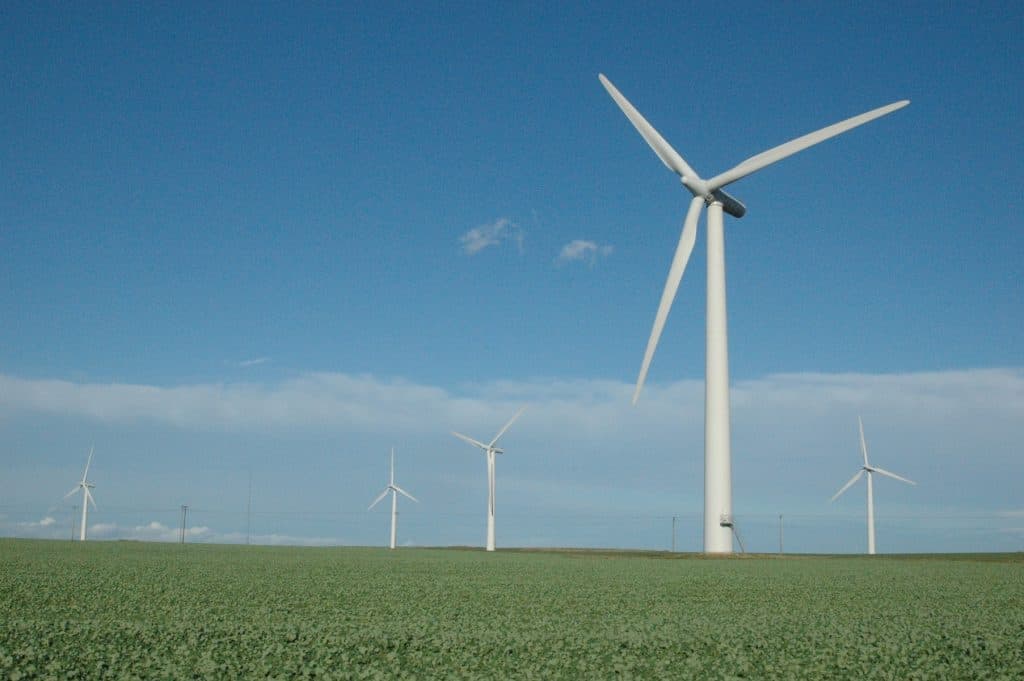
Replacing fossil and nuclear sources with low-emission sources is highly problematic under our conditions. Unless there is a dramatic technological breakthrough in storage, the possible share of photovoltaic generation is determined by the annual capacity factor of these sources. Under our geographical conditions, this share can therefore hardly exceed 15% of a country's electricity generation. This is confirmed by the development of solar PV use in Germany and other European countries. For wind power, we lack the potential of a sea coast, and public acceptance of building large numbers of turbines is a major problem. Let us recall that replacing the generation of one Temelín unit, which produces roughly 8% of our electricity output, would require around 4 GWp of wind turbines. The largest turbines built in Czechia have a capacity of 2 to 3 MWp. Replacing one Temelín unit would thus require 1,500 to 2,000 turbines. It should be remembered that even Bavaria, which is very similar to us, has failed to raise the share of wind generation above a few percent despite enormous pressure to build renewable sources. This was precisely because of public opposition. It is difficult to expect that we could fare better.
It is also very difficult to assume that the equivalent output of a 1 GWe nuclear unit could be built in wind turbines more quickly. Sites for turbines have not been selected, building permits are lacking and there is the aforementioned considerable public opposition. For nuclear units, we have selected sites and a number of permits have already been obtained. Construction at these locations has public support.
It can also be assumed that when the wind blows and the sun shines here, the situation is similar among our neighbours, and at such times it will not be a problem to import electricity from them, even if we do not build the solar PV and wind turbines. Electricity will be lacking, with nowhere to import it from, when solar PV and wind turbines are not generating. The example of Belgium and Germany shows that countries that have embarked on a path of curbing nuclear energy are aware of this.
Belgium and Germany show us the future
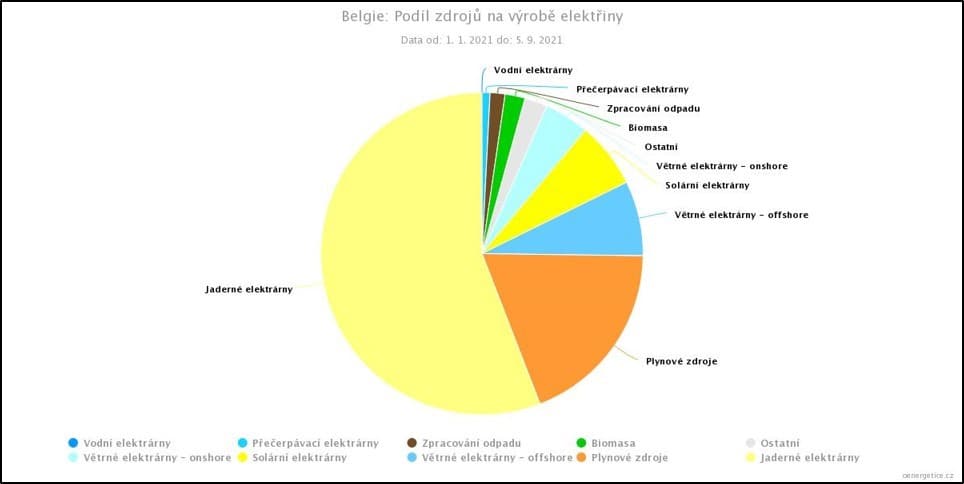
Germany shows us where abandoning nuclear energy leads, while the consequences of such a decision will very soon be seen in Belgium. Belgium has roughly the same population as Czechia and is also a highly industrialised country. As in Czechia, its potential for hydropower is relatively limited. Unlike us, it can build large offshore wind turbines, which produce a substantial share of its renewable electricity generation.
Belgium built up a strong nuclear sector that has supplied around half of its electricity generation since the late 1980s. This enabled it to dramatically reduce power-sector emissions. It currently operates seven nuclear units with a total capacity of almost 6 GWe. At the same time, it has managed to build relatively high renewable capacity in recent decades: almost 4 GWp of wind capacity, while installed solar PV capacity has already exceeded 6 GWp. Thanks in part to high output from low-emission sources, Belgium was able to completely abandon coal use.
In recent years, it has thus obtained around 50% of its electricity from nuclear, roughly 25% from low-emission sources and 25% from gas each year. The exceptions were 2018 and 2020, when the share of nuclear generation was lower. In 2020, this was mainly caused by lower consumption due to the COVID-19 epidemic. In 2018, it was due to the discovery of microcracks in the reactor vessels of some Belgian reactors. In their existing form, they posed no risk. The problem would have arisen if they had formed during reactor operation and there had been a risk of their number increasing. Detailed examinations, carried out in 2018 as well, demonstrated that the microcracks had already formed during the manufacture of the reactor vessels. They were discovered only thanks to improved modern materials analyses now in use. They therefore pose no safety risk.
Pressure from green anti-nuclear activists led to the adoption in 2003 of a law banning the construction of new reactors and limiting the operating lifetime of existing ones to 40 years. This would have meant shutting down the three oldest units as early as 2012 and 2015. Given the inability to replace nuclear electricity generation at a time when Belgium was becoming increasingly dependent on imports, the government decided to extend the operation of the oldest units by ten years, also because of the risk of electricity shortages, higher CO2 emissions and rising electricity prices. They should therefore be shut down in 2022 and 2025. The current government, in which the Greens hold a strong position, insists on closing all nuclear units by 2025.
However, it is clear that by then renewable sources will be able to replace only a minimum of nuclear generation and available capacity. It is also clear that under current conditions no one will begin building combined-cycle gas plants to replace the nuclear units. This is also why the Belgian government asked the European Commission to approve rules for capacity payments. These should make it possible to finance gas-fired power plants while also limiting their operation to a minimum and thus limiting their CO2 emissions. After a year of negotiations, Belgium recently received approval for these rules from European Union bodies. Belgium therefore expects to build up to 4 GW of capacity by 2025, which is needed to replace nuclear units and maintain system stability. Even if this is achieved, some of the required electricity will in any case also need to be imported. Belgium is thus one of the few countries that had very low CO2 emissions. In future, however, it expects to replace low-emission sources with fossil ones and see a relatively dramatic rise in greenhouse gas emissions. In reality, this increase will be far higher than stated. Emissions from natural gas combustion must be supplemented by emissions from its extraction and transport.
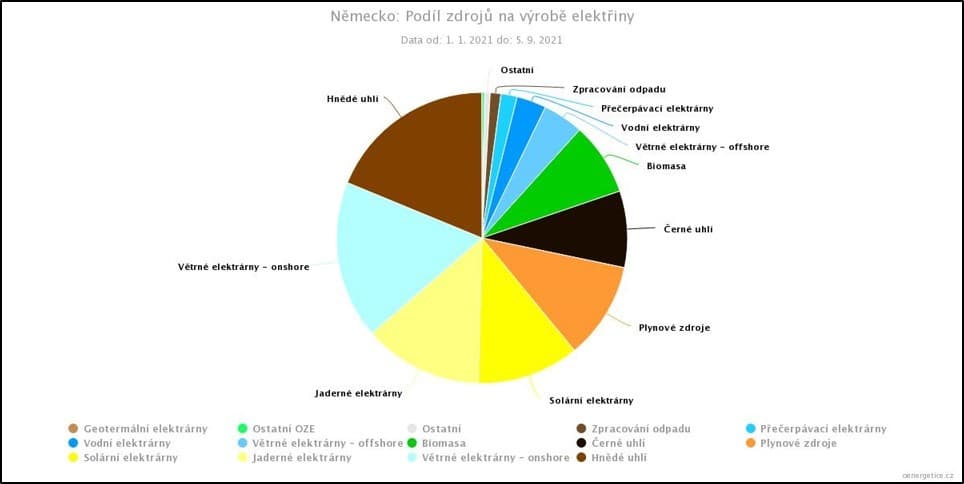
Germany has been pursuing a similar path to that chosen by Belgium for longer. Nuclear energy also originally supplied a large share of low-emission electricity there. A large proportion of German nuclear reactors has now been shut down; another three will be shut down at the end of this year, followed by the remaining three at the end of next year. Germany will thus lose 8 GW of capacity from sources that have supplied roughly 13% of its electricity generation over the past three years. Germany has known from the beginning that much of this output, and above all the role in supporting grid stability, would have to be taken over by new fossil sources. This was why new coal units were being built until recently. While these are now expected to be phased out gradually, Germany expects to use coal until 2038. At the same time, it expects intensive construction of gas-fired sources. This is also why it insisted so strongly on completing the Nord Stream II gas pipeline. It also secured European Commission approval for capacity payment rules even earlier than Belgium did.
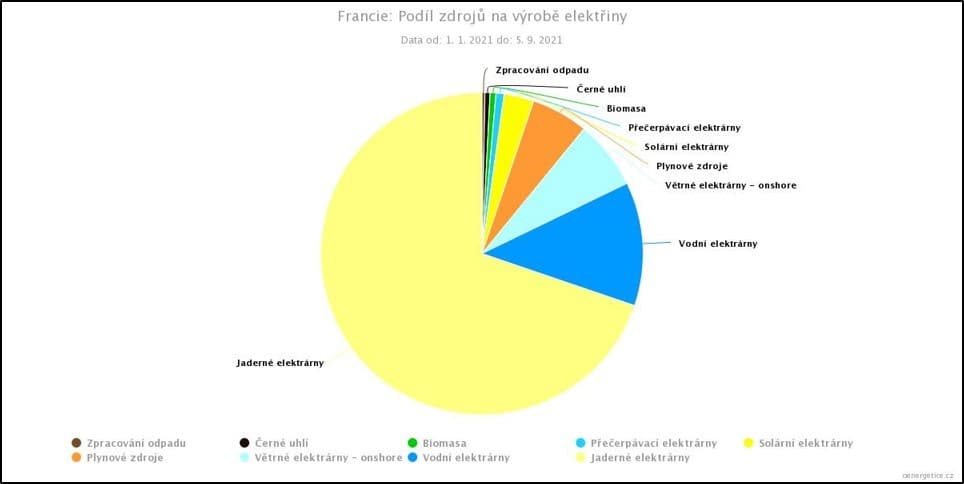
Germany has many times higher CO2 emissions per unit of electricity generated than countries that make intensive use of a combination of nuclear and renewable sources. These include France, Sweden, Switzerland and, until now, the aforementioned Belgium. Germany's situation will deteriorate significantly further after its nuclear units are shut down. Germany is formally reducing emissions by switching from coal to gas, but when emissions from its extraction and transport are included, this reduction is purely on paper.
Conclusion
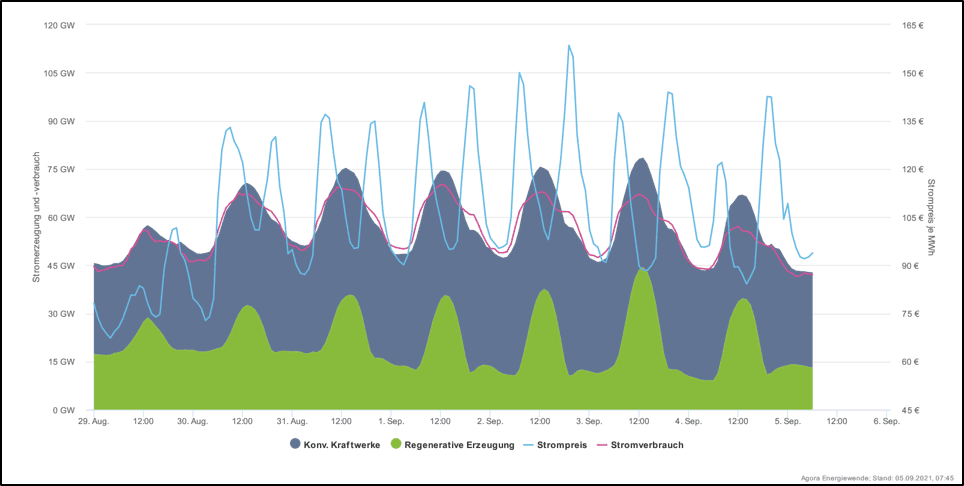
Based on the summarised experience from current developments and the situation in Germany, recommendations can be formulated for a realistic path towards low-emission energy. The increase in allowance and gas prices has dramatically raised spot electricity prices on the German market, which ranged from 90 to 160 EUR/MWh during the working days of last week. This strongly affects prices on our energy exchange as well. Prices are also rising for long-term contracts, affecting both households and industry. The competitiveness of our industry will decline, as will the standard of living, especially for low-income population groups. This may also have a very dramatic impact on the social and political stability of society.
Developments in Germany and the expected change after Belgium shuts down nuclear power, compared with the situation in France or Slovakia, clearly show that implementing the energy concepts of green anti-nuclear activists is a disaster in terms of CO2 emissions. It is therefore clear that secondary school students in the Fridays for Future movement certainly should not listen to them—if they truly care about ecology and reducing CO2 emissions.
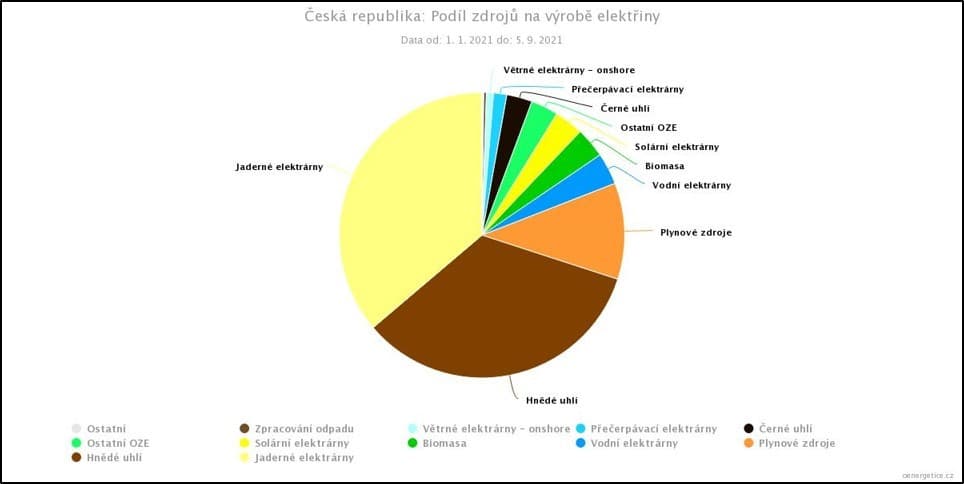
In conclusion, I would like to offer several recommendations on what students should demand from politicians and the future government if they truly care about emissions reductions and environmental protection. The most important thing is to insist on the longest possible safe operation of existing nuclear units. In the case of Dukovany, this means sixty years, i.e. until 2045. At the same time, they should press for the rapid start of construction of a new unit at Dukovany, as well as others at Temelín and Dukovany. If commercial small modular reactors become available, they also deserve support.
They should support the development of renewable sources, primarily in decentralised form. Before the problem of large-scale storage is solved, total installed solar PV capacity should optimally be sufficient to cover summer daytime peaks. They should advocate improving grid resilience and flexibility by introducing smart control and storage elements. And, naturally, they should support research and development in renewable and nuclear sources as well as storage.
During the transitional period, until the share of low-emission sources is sufficiently increased at the expense of fossil ones, fossil sources need to be used. Neither nuclear nor renewable sources, nor storage elements, can be built at the required generation capacity within a few years. If we truly care about total greenhouse gas emissions, there is little point in replacing coal sources with gas ones at any cost. This is particularly so when their use will be very limited in time and a new source has to be built. The closure of the ultra-modern German Moorburg coal-fired power plant is certainly not an example worth following. What is very important, however, is for our government, like those of Germany and Belgium, to negotiate rules for capacity payments. This will make it possible to maintain balancing services and cover capacity shortfalls at a given time with fossil sources, while minimising their emissions. It must be realised that if closing nuclear and fossil sources without replacement causes widespread, prolonged and massive supply outages—one such event was narrowly avoided at the beginning of this year—and a social collapse, this certainly will not contribute to a path towards low-emission energy and environmental sustainability. Until the transition to a low-emission mix is completed, it is not advisable to push the transition to electric mobility at any cost, especially if it may have a quite dramatic impact on living and social standards, particularly among low-income residents.
I would be very pleased if students considered the facts and recommendations presented before going on strike and formulating their demands. Above all, however, they should become thoroughly familiar with the natural, technological and sociological principles related to this issue. Excessive emotions and ideological thinking, which obscure a rational and realistic perspective, are not the right guides. Unfortunately, precisely such an atmosphere influenced by ideology currently prevails among politicians. Young people should reflect on that as well.
Translation disclaimer
This article is a machine translation of the Czech original and has not yet been fully reviewed. In case of any doubt, please refer to the Czech version.