12 October 2026, 10:27
Loading...
Turkey's energy future: record battery capacity and coal remains strong
Vojtěch Kříž
14 April 2026, 06:10
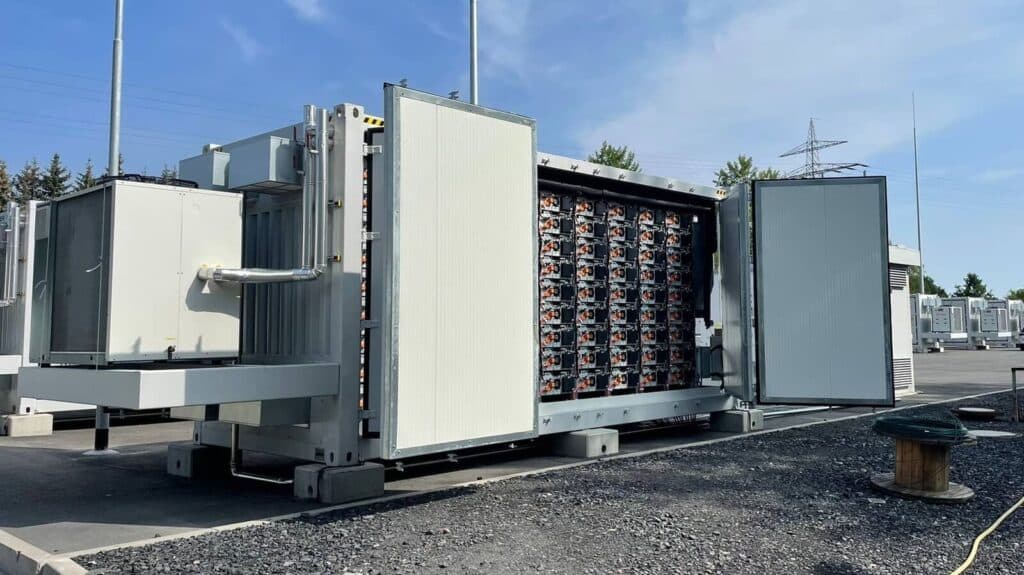
Turkey has approved the construction of a record 33 GW of battery storage capacity since 2022. This far exceeds that of European countries, including the Czech Republic. If the projects are built, the country straddling Europe and Asia will have one of the world’s largest battery capacities. Renewable energy generation is also increasing in the country, but coal remains irreplaceable for now.
For the past 25 years, Turkey’s electricity generation has relied on three sources: coal, gas and hydropower. As electricity demand grew, other sources gradually began to enter the mix. Solar and wind power have also made significant inroads in recent years. According to think tank Ember, their combined share of electricity generation reached 22% last year. Solar power in particular has more than tripled in Turkey since 2020.
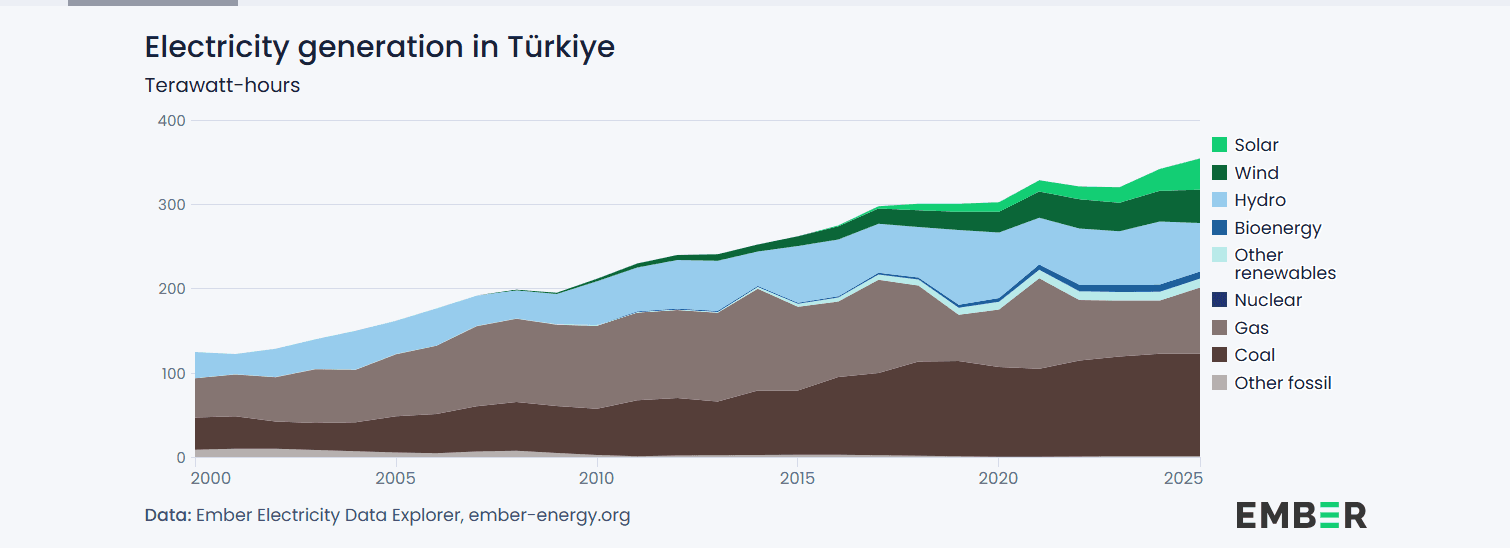
Turkey’s energy mix since 2000. Source: Ember
Many point out that this growth, together with gas-fired generation, is offsetting the decline in hydropower output. Due to drought, hydropower plants in some parts of the country are unable to generate as much electricity as they did in the past.
A battery revolution
Many projects are being planned in Turkey that will increase installed renewable energy capacity. What is particularly noteworthy, however, is the approved installed capacity of battery storage facilities: 33 GW, approved by Turkish authorities since 2022. Some projects are part of planned renewable energy projects, while others are standalone. If they are built, however, Turkey will far outpace European countries in battery storage.
Few countries have similarly ambitious plans, but whether they will be implemented remains an open question. The massive boom is due to legislation introduced in 2022, which gives preferential access to renewable projects paired with batteries. Since the legislation came into force, battery projects with a combined installed capacity of 221 GW have applied for grid connections; 33 GW of these projects have been approved so far.
Turkey is officially targeting 120 GW of installed renewable capacity by 2035, which would triple its current capacity of around 40 GW. Such an increase, however, will require up to $28 billion in investment in the transmission grid.
Experts say hybrid solar power plants are another way to develop renewables, particularly when paired with hydropower plants whose output is declining. According to think tank Ember, there is potential for around 8 GW of additional installed solar capacity in hybrid projects, mainly at sites in the south of the country.
Turkey uses its relatively sizeable fleet of hydropower plants as a source of flexibility. In the second half of the 20th century, hydropower plants provided as much as 40% of Turkey’s electricity generation. According to some sources, output peaked in 1988, when hydropower accounted for 60%. In recent years, however, hydropower has suffered from more frequent and severe droughts. Droughts reduce these plants’ capacity factors, as reflected in the falling average amount of electricity they generate.
Coal remains a mainstay
Although coal’s growth in Turkey has slowed, it has still not peaked, according to analysts. Turkey plans to continue using coal in the coming years, even though two-thirds of it is imported. Last year, the government even introduced an incentive mechanism that guarantees coal a purchase price above Turkey’s average electricity price. This is likely to lead to an expansion of coal-fired power plants.
Turkey is the only OECD country actively developing new coal-fired power plants. The country has not committed to phasing out coal-fired power generation. It is, however, a signatory to the Paris Agreement and says it is working towards carbon neutrality by 2053. It is also set to host this year’s annual COP31 conference.
The above-mentioned incentive for developing coal-fired power plants is expected to remain in effect until 2030, although some new plants will receive certain guarantees until 2045. According to the Ministry of Energy, the aim is also to replace old plants with new ones.
Translation disclaimer
This article is a machine translation of the Czech original and has not yet been fully reviewed. In case of any doubt, please refer to the Czech version.
Sdílejte článek prostřednictvím:
You might also like

12 October 2026, 07:40

11 October 2026, 20:09

11 October 2026, 08:24