
22 September 2026, 14:20
Loading...
Biomethane in Europe: How gas infrastructure supports market development
Veronika Jurcová
4 November 2023, 08:45
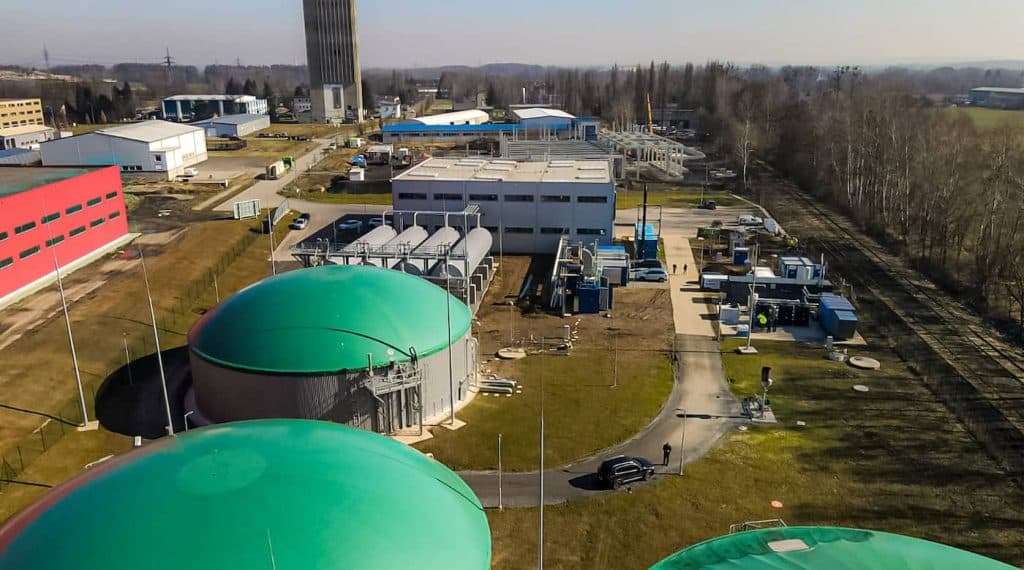
Gas Infrastructure Europe (GIE), an organisation bringing together representatives of gas transmission system operators, gas storage operators and LNG terminal operators, presented a report on the importance of gas infrastructure in supporting the development of the biomethane market at the end of October. The report assesses the role of biomethane in the gas sector, measures to adapt existing gas infrastructure for biomethane, links with other energy sectors and barriers to market development.
In May 2022, the European Union adopted the REPowerEU plan in response to Russia’s invasion of Ukraine. The plan includes measures aimed at saving energy, producing clean energy and diversifying energy sources, with the main objective of strengthening Europe’s strategic resilience and reducing its dependence on Russian gas. One of the REPowerEU plan’s objectives is to achieve annual biomethane production of 35 billion cubic metres by 2030.
The GIE report assesses the current state of the biomethane market from the perspective of gas infrastructure operators and explains how synergies between natural gas and biomethane can support the development of the biomethane market and achieve the target set out in the REPowerEU plan. It also addresses barriers to its development.
Impacts on gas infrastructure
Biomethane is produced by upgrading biogas and can be used in the same way as natural gas. Its main advantage is therefore that it can be injected into existing gas infrastructure without the need for significant new investment, including transmission and distribution systems as well as storage facilities. Existing natural gas customers also do not need to modify any of their equipment when switching to biomethane.
Biomethane production is most often used directly at the local level in the distribution network. However, if biomethane production expands, with output exceeding local consumption and production plants not directly connected to storage infrastructure, reversing gas flows from the distribution system to the transmission system may be unavoidable, requiring certain investments, according to the GIE report. Demands on gas system operation will also increase. Decentralised production and changes in gas flows will require more flexible network management, while harmonisation of standards for the quality of biomethane injected into the network will also be needed. This particularly concerns oxygen content and odourisation where flows move from the distribution to the transmission system.
Sector integration and importance for the circular economy
Biomethane plays a key role in linking sectors as a flexible, storable and sustainable energy source produced from a variety of feedstocks (agriculture, household waste, wastewater and others). It also contributes to sustainable and secure energy supplies in Europe, as it is based primarily on domestic production in Member States.
It can be used as a flexible, renewable and available energy source in transport, heating or electricity generation, helping to reduce peak electricity demand and lower the required electricity generation capacity and investment in the electricity system. It thus contributes to diversifying gas supply sources and developing the circular economy.
Barriers to market development
The GIE report identifies various barriers to biomethane development, including economic, technical, regulatory and social aspects. It stresses the importance of introducing long-term regulatory frameworks, recognising externalities, and the need for public engagement and education.
From an economic perspective, GIE says consideration should be given to providing incentives similar to those for renewable energy sources, particularly by levelling the conditions for supporting the production and consumption of renewable gases in a manner comparable to renewable electricity.
Technical barriers include the aforementioned gas quality issue and differing waste management practices across EU countries. GIE recommends better planning and management in agriculture and waste management with regard to biomethane production.
As regards the regulatory and legislative environment, establishing a stable regulatory framework with clear conditions for connecting biomethane plants and injecting biomethane into the gas network is crucial. Long-term support schemes and a stable regulatory environment will in turn provide stability for the necessary investments. The ramp-up of biomethane production is also hampered, as in other areas, by very lengthy permitting processes in the EU.
Biomethane in Czechia
In Czechia, three biomethane plants are connected to the gas network, with three more plants planned to be connected by the end of this year. Czechia currently produces around 1.2 million cubic metres of biomethane per year. These figures still fall well short of the government target, which envisages annual biomethane production of 500 million cubic metres in 2030.
A major potential for biomethane development lies in upgrading existing biogas plants, of which there are nearly 600 in Czechia according to data from the Czech Biogas Association. However, in addition to upgrade costs, the costs of connecting to the distribution network and the current subsidy for electricity generation from biogas also present barriers.
According to the Modern Energy Association and other industry representatives, barriers are holding back the development of the biomethane market. Like the GIE report, they see the main obstacles primarily in the absence of a comprehensive state policy, strategic targets, an incentive-based environment and a legislative framework. They stress the need to create a stable and predictable environment for investors, introduce operational support and provide greater incentives for customers to consume this green gas.
The Czech government has prepared a EUR 2.4 billion (nearly CZK 59 billion) programme to support biomethane production. The European Commission assessed the programme under EU state aid rules and approved it on 31 October. The opportunity to receive this support, aimed primarily at small and medium-sized enterprises and renewable energy communities, will remain available until the end of 2025. The government will thus support the construction and operation of new or converted biogas plants for biomethane production in Czechia.
Gas Infrastructure Europe (GIE)
Gas Infrastructure Europe (GIE) is an organisation founded in 2005 that brings together representatives of gas transmission system operators, gas storage operators and LNG terminal operators. GIE is based in Brussels and currently has 70 members from 26 countries. Czechia has two representatives in GIE – NET4GAS and RWE Gas Storage CZ. GIE’s main task is to represent its members and their interests in communication with European institutions during the development of European energy legislation. It aims to seek market solutions that best meet the interests of network users. At the same time, it seeks to promote a stable and predictable regulatory framework that is consistent across the European Union in order to create an environment that facilitates investment. GIE also cooperates with other organisations, notably ENTSOG (the European Network of Transmission System Operators for Gas) and EUROGAS (of which the Czech Gas Association is also a member), as well as associations including the European Biogas Association, GasNaturally and Hydrogen Europe, and also with non-profit organisations and the academic sector.Translation disclaimer
This article is a machine translation of the Czech original and has not yet been fully reviewed. In case of any doubt, please refer to the Czech version.
Sdílejte článek prostřednictvím:
You might also like
22 September 2026, 12:50
22 September 2026, 06:09
21 September 2026, 15:25