10 September 2026, 15:21
Loading...
Germany unveils plan to become global leader in hydrogen market
Daniel Galis
16 June 2020, 06:40
The German government last week presented its long-awaited national hydrogen strategy. On this basis, it aims to invest more than €10 billion in hydrogen over the next three years. Domestic production is expected to increase to 5 GW by 2030 and by a further 5 GW by 2040, although Germany will still be unable to do without imports.
The German government unveiled its national hydrogen strategy at a press conference held on 10 June. The document focuses in particular on supporting green hydrogen, developing the German domestic market and international cooperation. In addition to general assumptions, it contains 38 specific measures through which the government intends to support hydrogen production and use.
“We want to be the global number one in green hydrogen technologies,” said German Economy and Energy Minister Peter Altmaier, adding that the reason was not only economic competitiveness, but above all achieving climate protection targets.
The strategy was approved a week earlier as part of an agreement on a €130 billion economic stimulus package. Under the package, the government intends to allocate up to €7 billion directly to hydrogen research, innovation and market development. It plans to invest a further €2 billion in international hydrogen cooperation. It also envisages additional investments amounting to several billion euros from other government climate protection programmes.
38 steps towards the goal
The plan is divided into two phases. Until 2023, it focuses on development, identifying new opportunities and innovations, and creating a functioning domestic market. From 2023, the focus will primarily be on consolidating it, while main attention will be paid to the European and international dimensions of hydrogen trade.
Key sectors in which hydrogen use should receive the greatest support have also been identified. In general, these are sectors where its use is already close to being economically viable, as well as those where decarbonisation cannot be achieved by other means. Specifically, these are primarily aviation, heavy transport, the chemical industry and mechanical engineering.
A programme of carbon contracts for difference will therefore be introduced to provide financial support for switching to hydrogen in these sectors. In aviation, the government is considering quotas of at least 2% for the use of renewable fuels.
Creating a 25-member national hydrogen council comprising representatives of business, academia and civil society will also be crucial for implementation. It will serve as an advisory body to the government commission responsible for implementing the strategy.
Foreign partners will be essential
German hydrogen demand is forecast to increase to 90 to 110 TWh by 2030. At the same time, the strategy identifies that Germany has limited capacity to produce electricity from renewable sources and the associated green hydrogen. Nevertheless, domestic production is set to increase to 5 GW by 2030 and up to 10 GW by 2040. However, this would still correspond to only 28 TWh. Germany will therefore remain a significant energy importer in both the medium and long term.
At the European level, it therefore envisages increased cooperation and expects a Europe-wide hydrogen market to be created over the next ten years. To develop it, it wants to use, like EU representatives, among other things the existing European gas infrastructure. Hydrogen will also be one of the key topics of the German presidency of the Council of the European Union in the second half of 2020. As part of cooperation with third countries, it plans to use and develop existing energy partnerships.
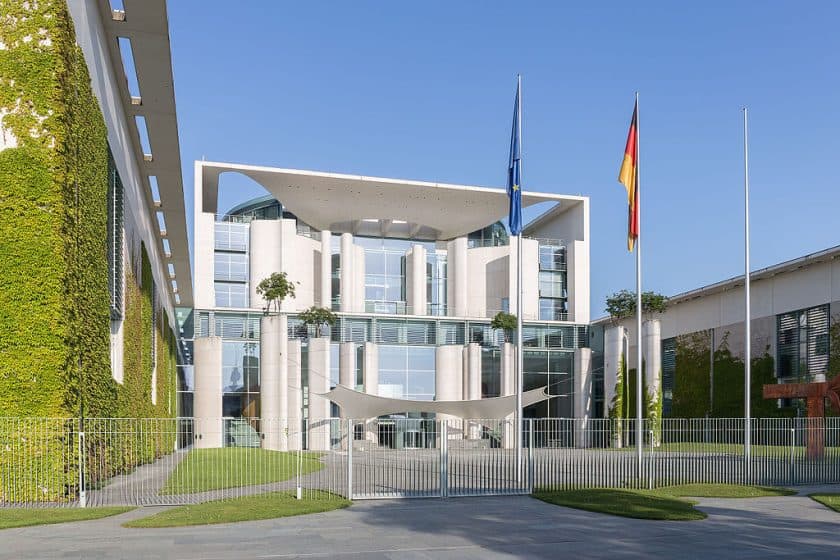
Featured photo: German Federal Chancellery, author: Ansgar Koreng, Wikimedia Commons
Translation disclaimer
This article is a machine translation of the Czech original and has not yet been fully reviewed. In case of any doubt, please refer to the Czech version.
Sdílejte článek prostřednictvím:
You might also like
10 September 2026, 10:37
9 September 2026, 15:05
9 September 2026, 13:24