23 October 2026, 14:38
Loading...
World's most widely used renewable source: Hydropower plants as an important source in Czechia and worldwide
Vladimír Wagner
27 August 2018, 18:26
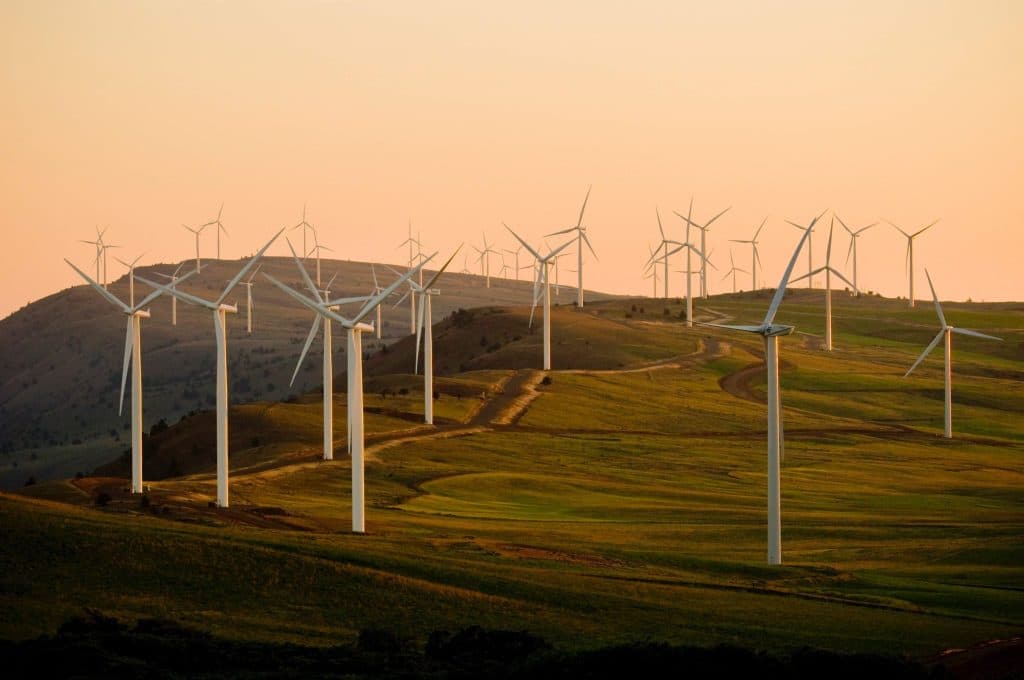
Hydropower plants are the most important low-emission sources. There are countries that obtain more than 50 % of their electricity needs from them. They are being built intensively, mainly in developing countries. They are an important means of grid regulation and, in the form of pumped-storage plants, also of energy storage. This also applies in the Czech Republic.
This consideration of the potential of hydropower is part of a series of articles on the development and prospects of global, and especially Czech, electricity generation. Previous parts of the series examined the potential of individual low-emission sources (nuclear sources, wind power and photovoltaic plants), the various pathways that can be used for the transition to low-emission electricity generation, and scenarios for the direction of the power sector in Czechia. We will now take a more detailed look at hydropower.
Hydropower plants were among the first sources of electricity to be used. The first was built by T. A. Edison in Appleton as early as 1882, followed by Nikola Tesla's plant at Niagara Falls. Today, they are the renewable sources with the largest output worldwide. Their enormous advantage is that they can range from small decentralised sources with capacities from kilowatts to 10 MW to gigantic facilities with capacities of several gigawatts. Hydropower sources use the kinetic and potential energy of water. There are run-of-river and storage hydropower plants. Run-of-river plants use the natural flow of a river, while storage plants are based on retaining water using a dam. While run-of-river plants most often operate in baseload mode, the output of storage plants can be regulated. Dams are also often used for a range of other purposes. They are sources of water, provide flood protection and serve recreation.
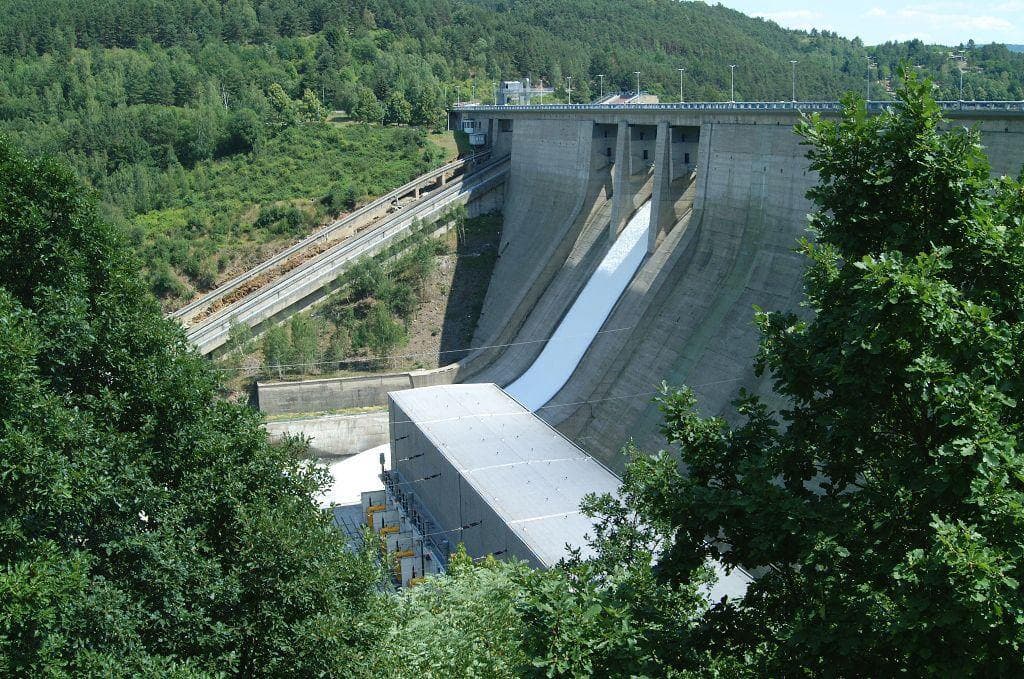
The device that, together with a generator, makes it possible to transform the pressure and kinetic energy of water into electricity is a turbine. There are a number of types. According to the way energy is transferred, they are divided into reaction and impulse turbines. In reaction turbines, the pressure energy of water is converted during its passage through the unit into the kinetic energy of the runner. The water pressure also changes in the process and is therefore lower downstream of the turbine. Examples include Francis and Kaplan turbines. Francis turbines are designed for medium and higher flows and heads. They are among the most widely used types, particularly for large plants and pumped-storage plants. Kaplan turbines are used primarily for high flows and low heads. In impulse turbines, the pressure energy of water is converted in the distributor into the kinetic energy of water, which is then transformed into the kinetic energy of the turbine runner. Water pressure is the same upstream and downstream of the turbine. An example is the Pelton turbine, which is suitable for sites with high head and low flow. Continuous technological development in this field helps achieve high utilisation efficiency and optimal turbine operation under given conditions. In recent years, increasing emphasis has been placed on faster and better output regulation capability.
Hydropower plants and their superlatives
Today, hydropower plants are the most important low-emission and renewable source. They supply almost 17 % of global electricity and around 70 % of renewable electricity, and their further significant expansion is planned. There are countries that generate more than 50 % of their electricity from hydropower. These include Norway, where the figure is even over 90 %, Paraguay, Brazil, Canada, Venezuela and Austria. Sweden and Switzerland also have a substantial share among European countries. Cascades of dams and hydropower plants are being built on major rivers.
China has the largest absolute electricity generation from water. The country is also home to the world's largest hydropower plant, Three Gorges on the Yangtze River, with a capacity of 22,5 GW. It uses 32 main Francis turbines rated at 700 MW and two small ones rated at 50 MW. It has gigantic dimensions. The dam is 185 m high, 115 m wide at its base and 40 m wide at the crest, and 2335 m long. The reservoir is 600 km long, has an area of 1084 km2 and a volume of 39,3 km3. Construction began in 1994 and was completed in 2012. It supplies more than 90 TWh of energy annually.
The second-largest plant is Itaipu on the Paraná River, on the border between Brazil and Paraguay. It was completed through cooperation between Brazil, Paraguay and Argentina in 1982 and began supplying electricity in 1984. Its total capacity of 14 GW is provided by 20 Francis turbines rated at 700 MW. It generates around 90 TWh of electricity annually.
Third is another Chinese hydropower plant, Xiluodu. Construction began in 2005 and was completed in 2014. Its total capacity of 13,86 GW is provided by 18 Francis turbines rated at 770 MW.
Large plants are currently being built mainly in developing countries, where they often enable a rapid increase in electricity generation and meet growing needs. However, a substantial share of electricity generation is also associated with small plants. Their decentralised nature and often their proximity to the place of consumption are very positive features. With the growing share of wind and photovoltaic sources, the ability to rapidly change output and participate in grid regulation is becoming increasingly prominent. In this respect, Europe relies heavily on Norway and its development potential.
Hydropower plants in the Czech Republic
The first hydropower plants appeared in Czechia as early as the end of the 19th century. At the Podskalí mill in Písek, a waterwheel drove three dynamos. At the beginning of the 20th century, Prague had two hydropower plants, at Těšnov and Štvanice. The country's largest hydropower plants are the pumped-storage plants Dlouhé Stráně, with a capacity of 650 MW, and Dalešice, with a capacity of 480 MW, which will be covered in detail in the next part of the article. Another is Orlík, with four Kaplan turbines and a total capacity of 364 MW, which has by far the largest share of electricity generation from water. The Slapy hydropower plant has three Kaplan turbines and a total capacity of 144 MW, while the Lipno plant has two Francis turbines with a combined capacity of 120 MW. Lipno, Orlík and Slapy are all part of the country's best-known dam system – the Vltava cascade. It has nine dams, with plants on them having a combined capacity of 750 MW.
At the end of 2016, Czechia had a total of 9 large conventional hydropower plants above 10 MW, with a combined installed capacity of 753 MW, and 1614 small hydropower plants, with a combined capacity of 348 MW. Generation is divided roughly equally between large plants and small plants below 10 MW. In 2015, a total of 1795 GWh was generated from water, of which small hydropower plants generated 1002 GWh. This also shows how important small hydropower sources are. Moreover, these sources are mostly located at the point of consumption and can take advantage of decentralised generation.
Pumped-storage hydropower plants
Pumped-storage plants are a specific type of hydropower plant. They must have two reservoirs, an upper and a lower one. The upper reservoir can also have inflows, but can also be purely artificial storage, as is the case, for example, at Dlouhé Stráně. In the case of mixed storage, the upper and lower reservoirs may be on different rivers. This is the case, for example, at the existing Slovak pumped-storage plant Dobšiná, or could be the case with the proposed Lipno-Danube project.
The reservoirs are connected by large-diameter penstocks. They operate by pumping water from the lower reservoir to the upper reservoir when electricity is in surplus and prices are low, then generating electricity through water flowing from the upper reservoir to the lower one when it is scarce and prices are high. This is one of the most important and efficient methods of energy storage in the electricity system. Their role in grid regulation is also becoming increasingly important.
Older pumped-storage plants had efficiencies of 50 % to 65 %, while new ones achieve values of between 70 % and 84 %. Increasing efficiency is aided by the gradual improvement of the machinery used for pumping and electricity generation. Even more important at present are improvements in the flexibility of switching between pumping and generation. This is due to increasing requirements for pumped-storage plants to be used for rapid regulation as well. The service life of such facilities is very long, 40 to 60 years, and with high-quality maintenance and necessary refurbishment, even one hundred years.
A specific type is the seawater pumped-storage plant, which pumps water from the sea. It therefore requires only an upper reservoir for operation. Currently, the only such plant is on the Japanese island of Okinawa, although it is no longer operated commercially. The upper reservoir of the Okinawa Yanbaru pumped-storage plant is 150 m above sea level.
The first pumped-storage plants appeared in Italy and Switzerland in the 1890s. Reversible turbines began to be used in the 1930s. There are hundreds of pumped-storage plants worldwide, 61 of which have capacities greater than 1000 MW. Total global pumped-storage capacity exceeds 150 GW. The largest is the Bath County pumped-storage plant in the US, with a capacity of 3,0 GW, followed by two Chinese plants, Guangdong and Huizhou, both with a capacity of 2,4 GW, Japan's Okutataragi with a capacity of 1,9 GW, and the US Ludington plant with a capacity of 1,9 GW. Under construction are China's Fengning with a capacity of 3,6 GW, Japan's Kannagawa with a capacity of 2,8 GW, and Ukraine's Dniester pumped-storage plant with a capacity of 2,3 GW. These plants are already partly operational and will reach the stated capacities after completion.
Pumped-storage hydropower plants in the Czech Republic
In Czechia, the first pumped-storage plant was Černé jezero, built by Škoda Works Plzeň at Hojsova Stráž in the Šumava mountains. It had a capacity of 1,5 MW, and use of pumping was restricted in 1960. The second was the Pastviny plant. It was commissioned in 1938, but was later converted into a conventional run-of-river plant. Three large pumped-storage plants were then built successively and are currently in operation in Czechia: Štěchovice II, Dalešice and Dlouhé Stráně.
The Štěchovice pumped-storage plant is south of Prague in the Central Bohemian Region on the Vltava River. It was commissioned in 1947 and completely rebuilt in the 1990s. The original upper reservoir at Homole, with a volume of 500 000 m3, and a large part of the original steel penstocks were retained. Two generating units were replaced by one FR-180 Francis reversible turbine from ČKD Blansko, located 45 m underground. Total capacity is now 45 MW.
The Dalešice pumped-storage plant was built in connection with the Dukovany nuclear power plant and is part of its complex southeast of Třebíč. The entire system of water reservoirs and plants was built between 1970 and 1978. It consists of the upper Dalešice reservoir, with a volume of 127 million m3, and the Mohelno balancing reservoir. The Dalešice plant is pumped-storage, while the Mohelno plant is run-of-river. It uses four reversible Francis turbines and, following refurbishment in 2007, has a capacity of 480 MW. Its capacity is sized to replace one unit of the Dukovany nuclear power plant in the event of an outage. Full output can be reached from standstill in just 55 seconds, making it the fastest-starting pumped-storage plant in Czechia.
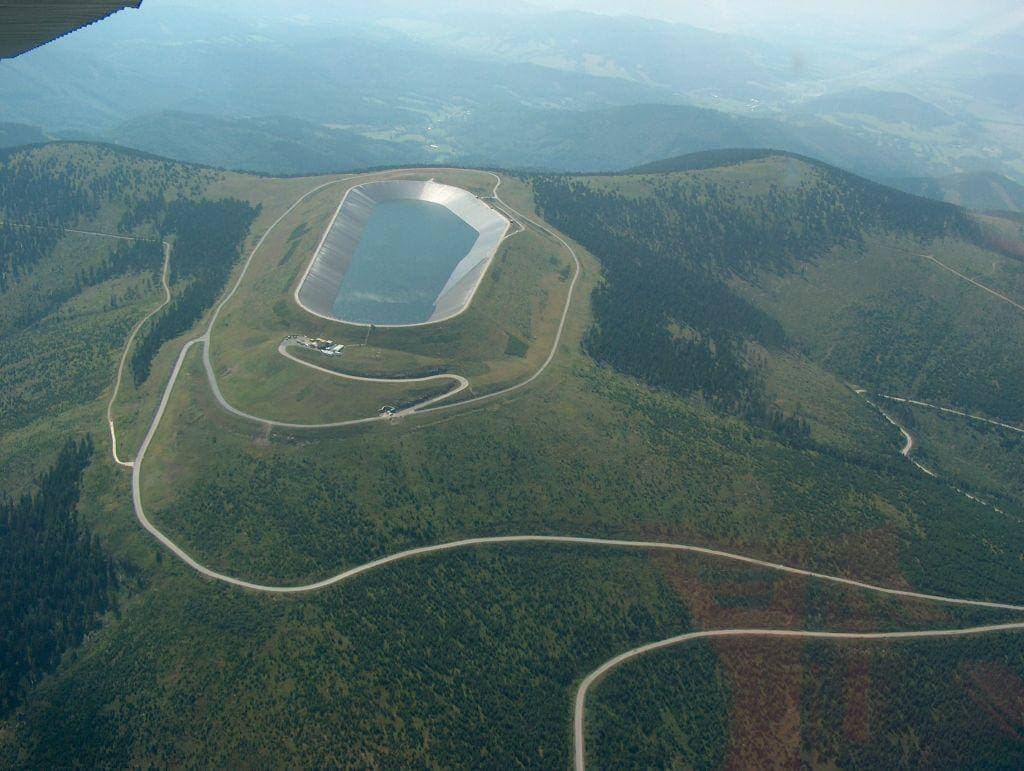
The last and largest plant is Dlouhé Stráně, located in northern Moravia in the Hrubý Jeseník mountains. To integrate it into the surrounding landscape as environmentally sensitively as possible, all operating equipment is located underground. Construction began in 1978, but the project was suspended in the 1980s. Its continuation was decided in 1989, and it was commissioned in 1996. The upper reservoir has a total volume of 2,72 million m3 and is at an altitude of 1350 m atop Dlouhé Stráně mountain. The lower reservoir has a total volume of 3,4 million m3 and is located on the Divoká Desná stream. The cavern with two reversible Francis turbines is connected to the upper reservoir by two penstocks with a diameter of 3,6 m and lengths of 1547 m and 1499 m, and to the lower reservoir by two tunnels with a diameter of 5,2 m and lengths of 354 m and 390 m. The turbines at this plant are Europe's largest reversible turbines, with a capacity of 325 MW in turbine mode and 312 MW in pumping mode. The entire volume of the upper reservoir can be pumped up in seven hours. They can reach full output in less than 100 seconds and supply energy for a full six hours.
The newest pumped-storage plant is experimental and research-oriented. It is located underground at a depth of 600 m in the Jeremenko mine in Ostrava. It began operating in June 2015. Its capacity is only 650 kW. Its advantage is the large height difference between the upper and lower reservoirs; its disadvantage is their relatively small volume and the fact that the water is saline. The plant must therefore use components sufficiently resistant to salt. It was built here because mine water from the entire Ostrava coalfield area is pumped from the Jeremenko mine underground workings, so there is an adequate supply of water. The water must be pumped here and kept at a given level. It is pumped mainly when there is a surplus of electricity, and when electricity is scarce, some of the pumped water that accumulates in the upper reservoir is released through a 580 m-long pipe onto a Pelton turbine. Other deep mines also in principle offer possibilities for such storage facilities. These so-called deep-mine pumped-storage plants have been considered since the 1970s, but their practical industrial deployment cannot be expected soon.
The total capacity of pumped-storage plants in Czechia is therefore 1175 MW, and their use has increased recently as the share of photovoltaic and other fluctuating sources has grown. In 2015, their annual electricity generation exceeded 1250 GWh. Consideration is therefore being given to the possibility of building further such facilities.
There are several options. Černé jezero could return to pumped-storage operation, although its capacity is only 1,5 MW. It is also being considered that Orlík could operate as a pumped-storage plant. ČEZ considered this option and commissioned an environmental impact study in 2013, which showed minimal negative impacts. This is a project that would be relatively easy to implement and would cost up to a few billion Czech crowns.
At the other end of the spectrum is the Lipno–Danube pumped-storage project. This would be an international project, but one bordering on megalomania, with costs in the tens of billions of Czech crowns. At the same time, all environmental impacts of its construction and operation on Lipno's ecological and tourism functions would need to be thoroughly analysed. These have not been sufficiently well examined. The system could improve water management on the Vltava, Elbe and Danube, but it could also have a number of negative impacts. The upper reservoir would be Lipno on the upper Vltava, at an altitude of just over 700 m, while the lower reservoir would be Austria's Aschach dam on the Danube, at an altitude of around 450 m. The connecting canal would need to be around 27 km long. The plant would have a capacity of 1000 MW, provided by four reversible Francis turbines rated at 250 MW each. Its advantage would be that, thanks to the large volume of the reservoirs, it would enable relatively long cycles lasting several days. This would allow greater use in covering fluctuations in wind sources, which do not have regular daily cycles.
In 1978, the Energy Research Institute in Prague prepared a study assessing the potential for construction of pumped-storage plants in Czechia. This was during the completion of Dalešice and at a time of plans for intensive development of nuclear power. Twenty sites were proposed, with a combined capacity of 12 000 MW and the potential to store up to 20 000 GWh annually through pumping. These included Bradlo Byčí Skála, Cukrová Bouda, Český Krumlov II, Hardegg, Hříměždice, Křivoklát-Červený Kámen, Labská, Raspenava, Rejštejn, Sendráž, Skuhrov, Slavíč, Spálov, Světlá hora, Šumný Důl, Vilémov and Zleb. However, it must be said that most of them are currently unfeasible, not least from an environmental perspective.
In practice, only six of these sites are currently being considered. The most promising is Slavíč near Frýdek-Místek, close to the Morávka reservoir in the Beskydy mountains. Its capacity could be as high as 1124 MW. However, due to its size, it would be too costly as a one-off investment (around 30 billion Czech crowns). In addition, local residents and the Beskydy Protected Landscape Area Administration have taken a highly reserved stance towards it.
Šumný důl in the Ore Mountains could have a capacity of 880 MW. The lower reservoir would have a dam between 50 and 90 m high. The reservoir itself would inundate 40 ha and hold 15 million m3 of water. The upper reservoir would be at an altitude of 900 m between Studenec and Loučná hills.
The upper reservoir of the Spálená pumped-storage plant would be on Spálený vrch mountain, at an altitude of 1313 m. This is only slightly lower than the altitude of the upper reservoir at nearby Dlouhé Stráně. As at Dlouhé Stráně, the upper reservoir would be excavated in the mountain and the lower one would be constructed as a dam. The problem is that it would be directly in the centre of the Jeseníky mountains, in an ecologically highly valuable area, and another large pumped-storage plant is already nearby.
Another option could be the Červená jáma site in the Ore Mountains, where a facility with a capacity of 674 MW could be built, or Smědavský vrch in the Jizera Mountains, with a capacity of 620 MW. The latter could also help retain water and provide flood protection.
The last of the six is Velká Morava in the Králický Sněžník massif in the Jeseníky mountains, with planned capacity of 536 MW. The biggest problem with all projects is that they are to be located in ecologically highly valuable mountain areas and would significantly affect other uses, whether ecological or tourism-related, in the given region. This is why they face opposition from local residents and the administrators of the relevant protected areas.
It is also worth mentioning that, after former mining pits in lignite regions have been flooded, they are being considered as potential lower reservoirs for pumped-storage plants.
Risks associated with hydropower sources
Like other energy sources, hydropower plants have their risks in addition to many advantages. Large projects in particular have significant environmental impacts and risks. Even during construction, they often result in the need to relocate large numbers of residents. At the aforementioned largest hydropower plant, Three Gorges, this affected around 700 000 people. It is precisely the dramatic impact on residents' lives and the environmental effects that make large hydropower projects highly controversial. The environmental impacts of construction can be positive as well as negative, and some may be assessed very differently by different parts of society. In addition, estimates of future environmental impacts are often problematic and inaccurate.
Large hydropower plants and dams currently under construction can also serve as examples. One is the Ilisu hydropower plant in southeastern Turkey, with a capacity of 1,2 GW. This is provided by six Francis turbines rated at 200 MW each. Construction of the dam on the Tigris River began in 2006 and was completed in February 2018. Its reservoir began filling with water in mid-2018. The number of people relocated here is estimated at more than 60 000. The most problematic issue is the flooding of part of the ancient city of Hasankeyf, which is of great historical value.
A second controversial project nearing completion is the Grand Ethiopian Renaissance Dam (GERD). This is a dam on the Blue Nile that will very strongly affect the hydrology of the entire Nile and thus neighbouring Sudan and Egypt. Construction began in 2011 and the plant was intended to have a total capacity of 6,45 GW. Electricity generation is to be provided by 16 Francis turbines rated at around 400 MW. At the beginning of 2018, the dam was 66 % complete and trial operation of the first turbines was being prepared.
A third example is Brazil's Belo Monte plant on the Xingu River. Once completed, it is intended to be Brazil's second-largest hydropower plant and the world's fourth-largest. Its capacity will be 11,2 GW, provided by 20 Francis turbines rated between 550 and 611 MW. The dam will have significant social impacts on indigenous communities living around the river and on the entire local ecosystem of this part of the Amazon rainforest. Construction of the dam began in 2011. It is estimated that around 20 000 people will have to be relocated. The first electricity was generated in 2016, and further parts of the hydropower plant have been commissioned gradually since then. Partly due to opposition to this development, Brazil is considering changing its approach to using hydropower plants for electricity generation. It should be recalled that Brazil gets between 70 % and 80 % of its electricity from this source.
The way hydropower facilities are operated and what priorities are set is also important in these cases. This is crucial, for example, in the case of the Ethiopian dam, which, in the absence of agreement and a compromise approach, could deprive Sudan and Egypt of a substantial part of their water and cause them not only environmental problems. Environmentally responsible operation should also be a priority for small plants on streams. Electricity generation should to a considerable extent be subordinated to the needs of an environmentally favourable regime on the watercourse it uses.
It is precisely the environmental and social impacts of large hydropower projects that mean they are currently being built in Europe only to a very limited extent, and their projects face considerable opposition.
Another risk is the possibility of a disaster associated with a dam breach. A list of serious accidents from 2000 gives a total of 147, of which 26 were in Europe. Since then, around 30 further similar incidents have occurred. Europe's worst disaster was the Vajont dam accident in Italy in 1963, which claimed around 2000 lives. The largest catastrophe of all was the destruction in 1975 of a cascade of reservoirs on the Ru and Hong rivers, including the Banqiao and Shimantan dams, where estimated fatalities range from 80 000 to 200 000. Around 11 million people lost their homes. In 1979, a major disaster occurred in India. Estimates of fatalities from the Machchu-2 dam failure vary widely, but it was certainly several thousand. More recently, the collapse of a dam being built in Laos by Xe-Pian Xe-Namnoy can be mentioned. In this case, it was a dam intended predominantly for electricity generation. It forms part of a system that uses the wealth of Laos's water-rich, fast-flowing rivers to generate electricity for the economically rapidly developing surrounding countries. The accident occurred on 23 July 2017. So far, 36 deaths have been confirmed and 98 residents are missing. A total of 6600 people lost their homes.
Conclusion
Hydropower plants provide the majority of renewable electricity. Large to gigantic dams account for a substantial part of this. Their very rapid expansion can be expected to continue, particularly in emerging and developing countries. This is driven by pressure to increase electricity generation while reducing emissions, not only of carbon dioxide. In developed European countries and the US, by contrast, a greater number of such projects cannot be expected precisely because of their environmental and social impacts. There remains potential there for building decentralised small-scale facilities. An exception could be the construction of pumped-storage plants, which could help with energy storage. An example is the proposed project to convert the system at the Hoover Dam in California into a pumped-storage plant that would help smooth the daily generation profile caused by the high share of photovoltaic sources in this US state. Economics will often be decisive here, running into the issue that the most advantageous operating regime is to cover daily peaks and troughs in electricity consumption and generation when there are sufficiently large price differences. This corresponds to complementing nuclear sources (a night-time generation surplus and daytime consumption maximum) or photovoltaic sources (daytime overgeneration and a night-time generation shortfall). The regime is different when complementing wind sources, where favourable or unfavourable conditions for electricity generation can last for several days. This is also why pumped-storage projects in Germany and Austria have so far been shelved for economic reasons.
The situation in Czechia is similar to that across developed Europe. Apart from small hydropower plants, there is some potential for the construction of further hydropower facilities in the form of large pumped-storage plants, but almost all potential projects are in ecologically valuable areas and therefore entail substantial environmental risks. In principle, the conversion of Orlík to enable pumped storage is probably closest to implementation. Here, everything depends primarily on the economic situation created by developments in the energy sector in the region. Going forward, support for small hydropower plants is important, while for large projects it is crucial to have projects prepared with thorough technical and environmental analysis. If energy-sector development takes a direction that requires these facilities, their construction should proceed. However, it must be borne in mind that work needs to start sufficiently early, because preparing and building a larger hydropower facility is a long-term undertaking. At the same time, potential suitable sites need to be safeguarded in land-use plans so that facilities for other uses are not built in areas that would need to be inundated by a hydropower project.
Note:
The 1978 study on potential sites for pumped-storage plants can be found in the thematic section of CzechIndustry 4, 2014, pp. 35–68
Written for oEnergetice and Osel.
Note: A book by a collective of authors, “Czech energy at a crossroads”, has just been published. It was written on the basis of a study prepared for the Czech Chamber of Commerce and follows on from the book “Prospects for Czech energy”. It examines the changes that have occurred since the adoption of the update to the state energy policy in Czechia and in its near and more distant surroundings. It highlights risks that are emerging and rapidly approaching the Czech energy sector, partly as a result of inaction. It shows the options for addressing these risks and ensuring efficient, environmentally sound and sustainable energy for Czechia. A more detailed publication, analysing and presenting global and Czech energy systems in a more comprehensive scope and with a longer-term vision, is being prepared within the Academy of Sciences.
Translation disclaimer
This article is a machine translation of the Czech original and has not yet been fully reviewed. In case of any doubt, please refer to the Czech version.
Sdílejte článek prostřednictvím:
You might also like
23 October 2026, 11:01
23 October 2026, 06:34