Farewell to a giant: RK 5000 bucket-chain excavator from ČSA mine heads for scrap after 43 years

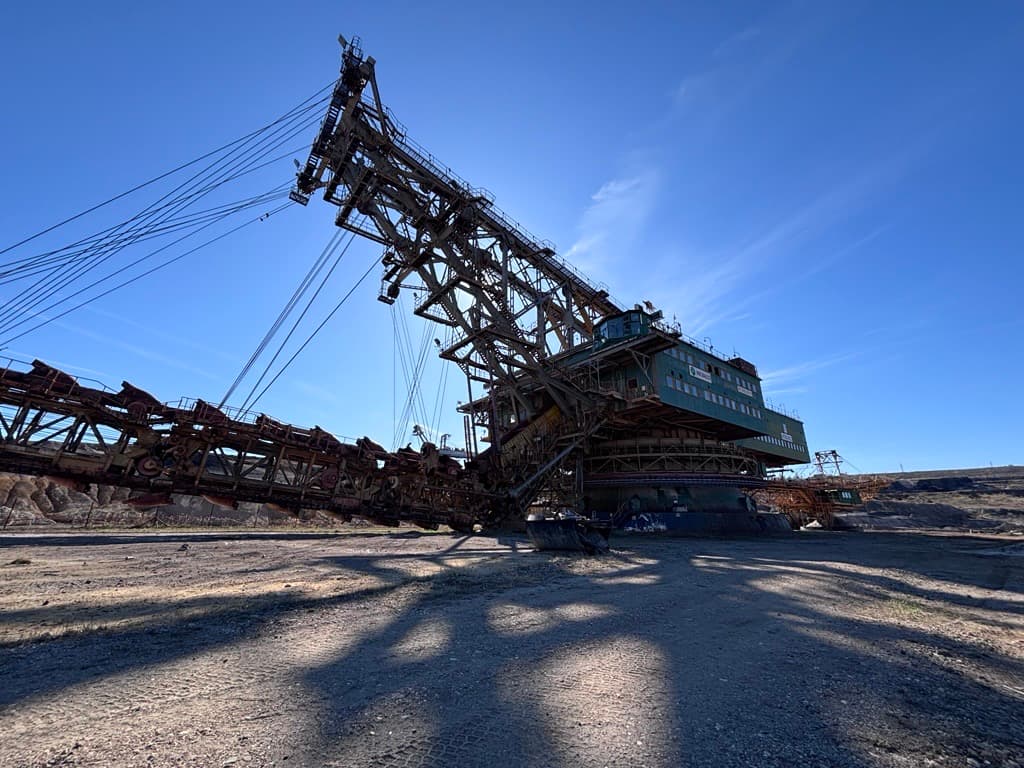
The RK 5000 bucket-chain excavator was considered a technical marvel in its day and proof of the exceptional standard of Czechoslovak engineering. This massive colossus standing at the foot of the ČSA mine is one of two units ever built worldwide, and the only surviving one still in working order. Due to its size, the Czech Republic's largest excavator had to be assembled directly at the ČSA mine. It is now marking 43 years of existence, but will be sent for scrap in the coming months.
From the outset, the excavator was intended to mine overburden directly above brown coal seams, removing overlying rock with high hardness and varied grain sizes. Assembly, overseen by engineers from the then VÍTKOVICEPRODECO company, took almost three years. The excavator was such a success that, in the early 1990s, consideration was even given to producing an even larger excavator designated RK 5000.1, which would have surpassed its predecessor in technical reliability and ease of maintenance. Plans to build this machine ultimately remained only on paper [1].
Technical specifications of the excavator
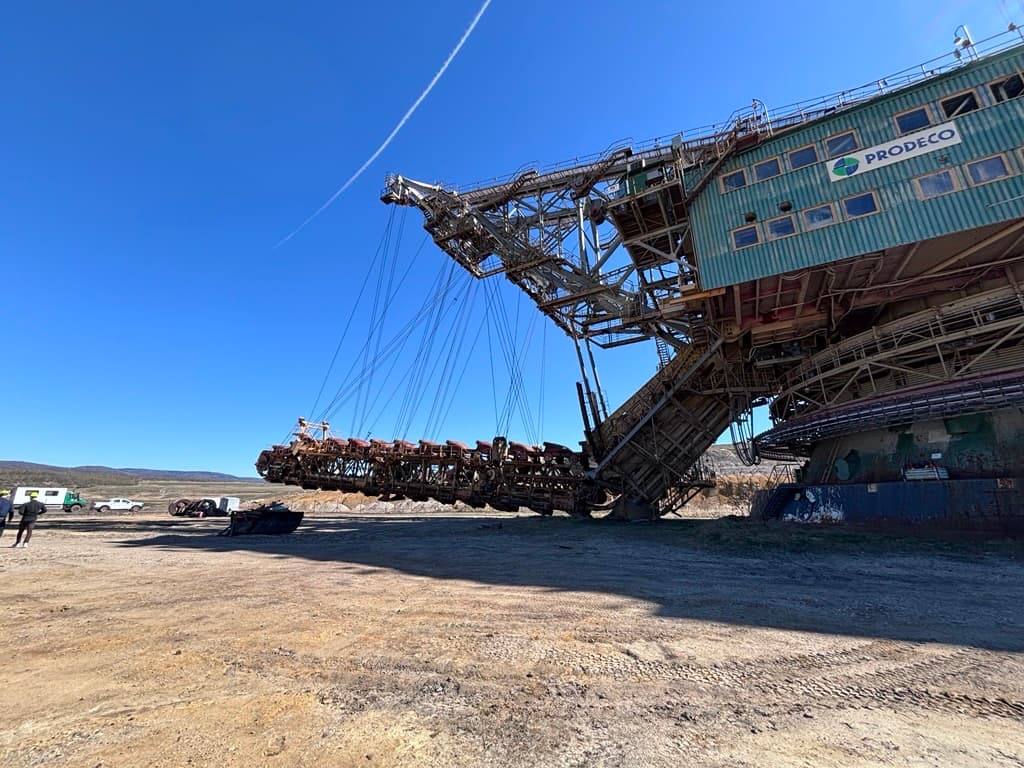
With a weight of around 5 500 tonnes and dimensions of 157 metres in length and 35.6 metres in height, it is clearly no small machine. To put this into perspective, it is the length of one and a half football pitches and the height of a twelve-storey apartment block. It is therefore astounding that this marvel of Czechoslovak engineering was able to move through the ČSA mine without major problems from 1983 onwards. Here you can view a technical drawing of the RK 5000 excavator.
Movement is provided by two walking (inter-ring) hydraulic undercarriages, with the main undercarriage having a diameter of 33 metres and the connecting bridge undercarriage measuring 10 metres. Its average walking speed was around 30 metres per hour.
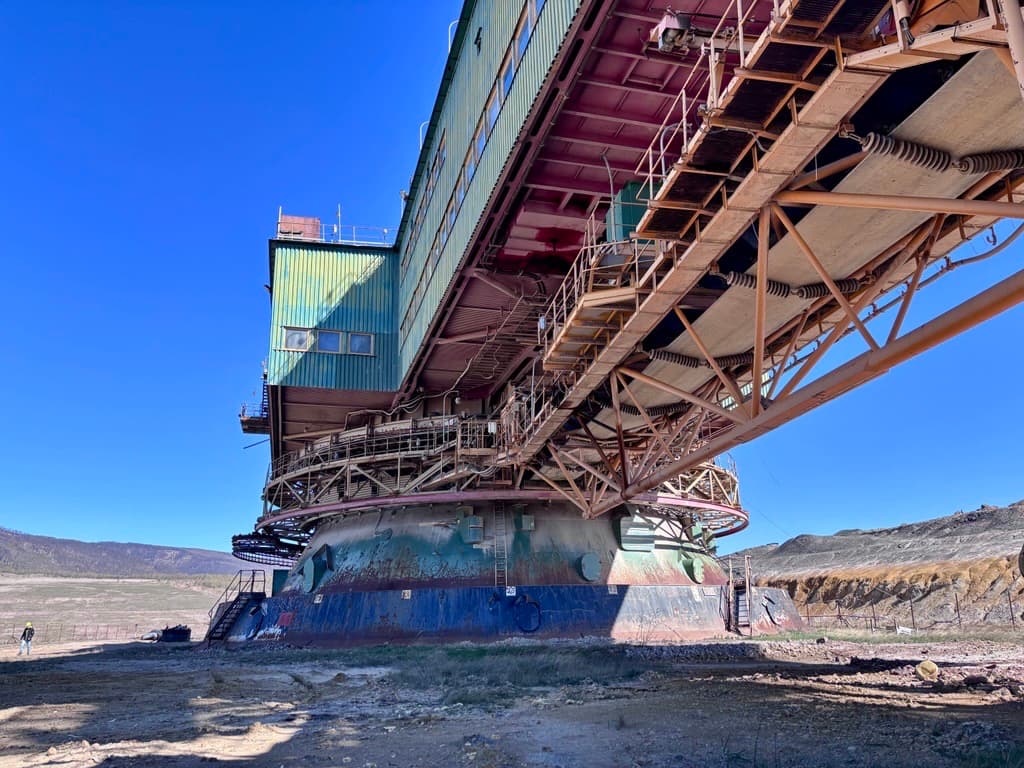
At the heart of the machine are two 1.6 MW electric motors with gearboxes the size of a small passenger car. These huge electric motors are among the excavator's most interesting technical components. The electrically driven bucket chain consists of 38 buckets, each with a capacity of 3.6 m³. The chain is nearly 140 metres long and weighs around 230 tonnes. The resulting force transmitted to the chain reaches up to 324 tonnes, enabling work even in exceptionally demanding geological conditions.
Under standard conditions, the RK 5000 excavator achieved a theoretical output of up to 4 450 m³ of excavated material per hour. During its operating life, which ended in 2016, the machine removed almost 154 million m³ of overburden and logged approximately 91 000 operating hours. This corresponds to around 10.5 years of continuous mining, an exceptional figure for heavy machinery.
Costly preservation and relocation
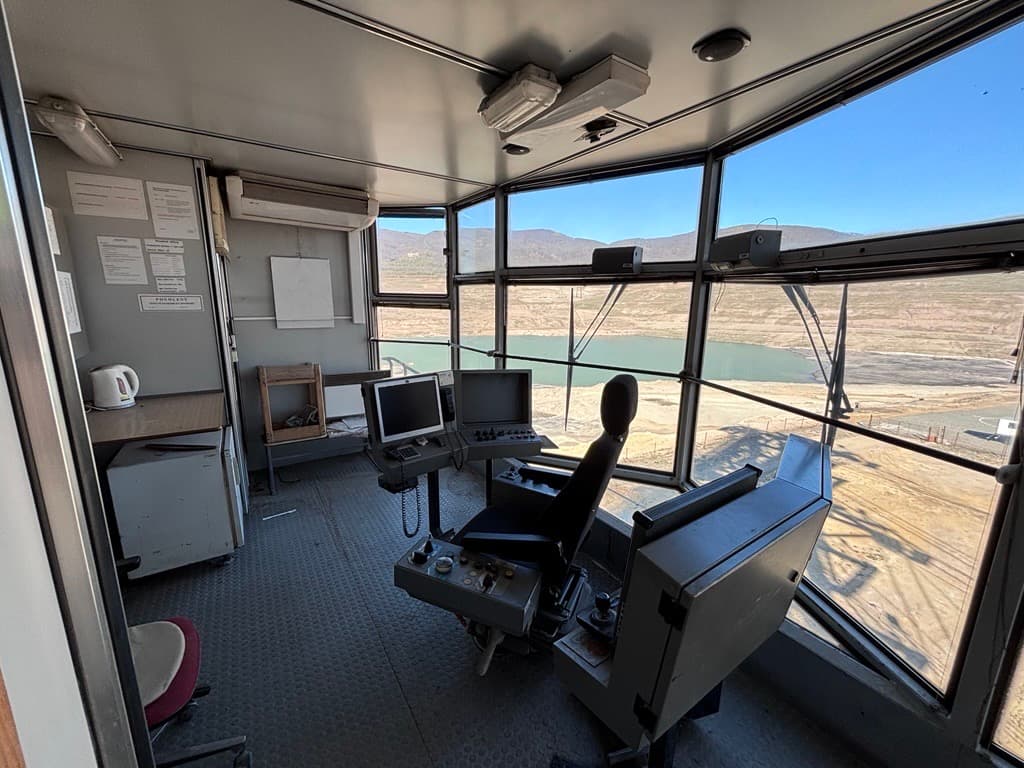
The restriction of overburden mining at the ČSA mine in 2016 left the bucket-chain excavator without work. Since then, it has been merely a reminder of the days when coal mining was in full swing. Over the years, there were repeated efforts to preserve the machine as a technical monument and make it accessible to the public even after mining activity had definitively ended. Beyond its symbolic significance, there were also considerations that the RK 5000 could become a major tourist attraction and one of the symbols of the transformation of the mining-affected landscape in the Ústí Region.
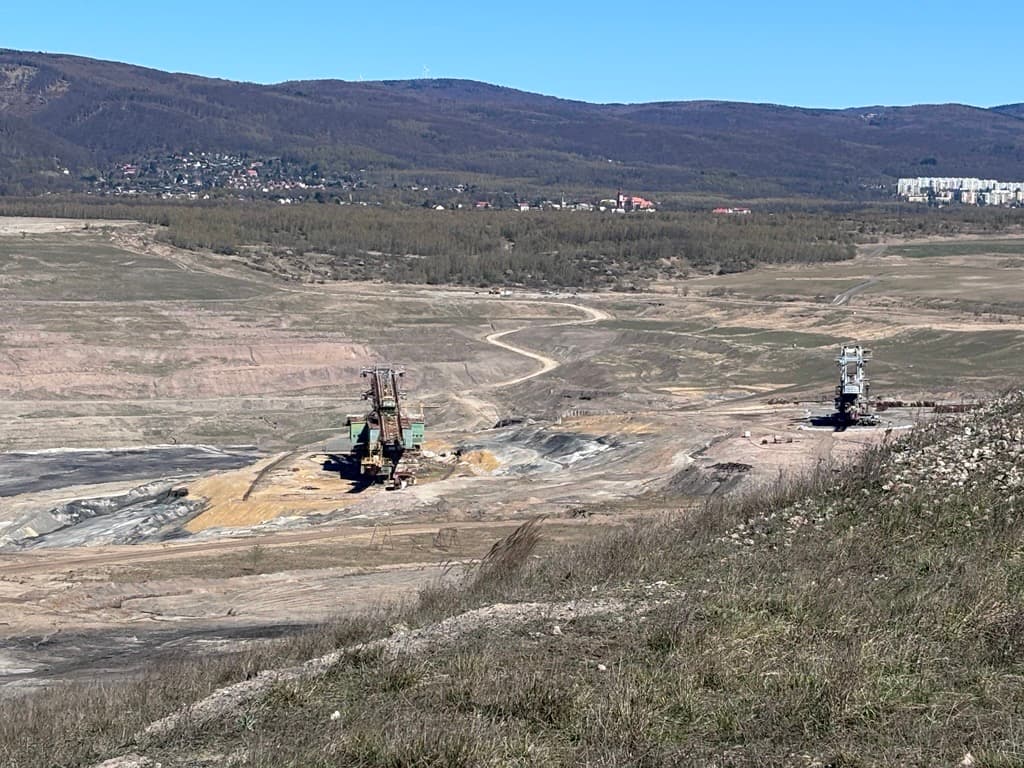
As part of the preservation effort, relocating the excavator to a more suitable site was discussed. The move would have made it possible to preserve the machine outside the future flooded area and keep it accessible to the public. The excavator was to be moved along a pre-prepared transport route, but this would have required extensive earthworks and stabilisation measures to ensure that the gradient during the move did not exceed five percent. The photograph below shows the terrain across which the excavator would have had to travel to the edge of the future flood zone.
According to estimates, the relocation itself, including preparations, geotechnical reinforcement and assembly work, would have taken several months and required hundreds of millions of crowns. The issue of the machine's safety and long-term maintenance was also a major obstacle.
Despite the interest of experts and regional initiatives, costs and technical risks ultimately outweighed the realistic possibilities for implementation. Feasibility studies commissioned by the Ústí Region through a working group comprising experts, local authorities and the equipment's owner confirmed that relocation would be exceptionally demanding, financially inefficient and difficult to justify in terms of long-term sustainability.
A legacy that will endure
The RK 5000 is still regarded as one of the largest bucket-chain excavators ever operated in the Czech Republic. Although it is no longer in active operation, its significance has not faded. Thanks to interest from both experts and the general public, a virtual 3D tour was created as part of the Coal Safari project, allowing visitors to explore the machine in detail, including its interior. You can find the excavator's virtual tour at this link.
The RK 5000 thus remains not only a symbol of northern Bohemia's industrial strength, but also a reminder of an era when major technical projects were designed with an emphasis on robustness, long service life and challenging the status quo.
Sources:
[1] MONI, Vlastimil. Podkrušnohorští dinosauři. Most: VUHU, 2026. ISBN 978-80-904460-4-5.