10 September 2026, 15:21
Loading...
Czech wind sector welcomes recent EU steps, but targets at risk
Daniel Grecman
28 October 2023, 08:31
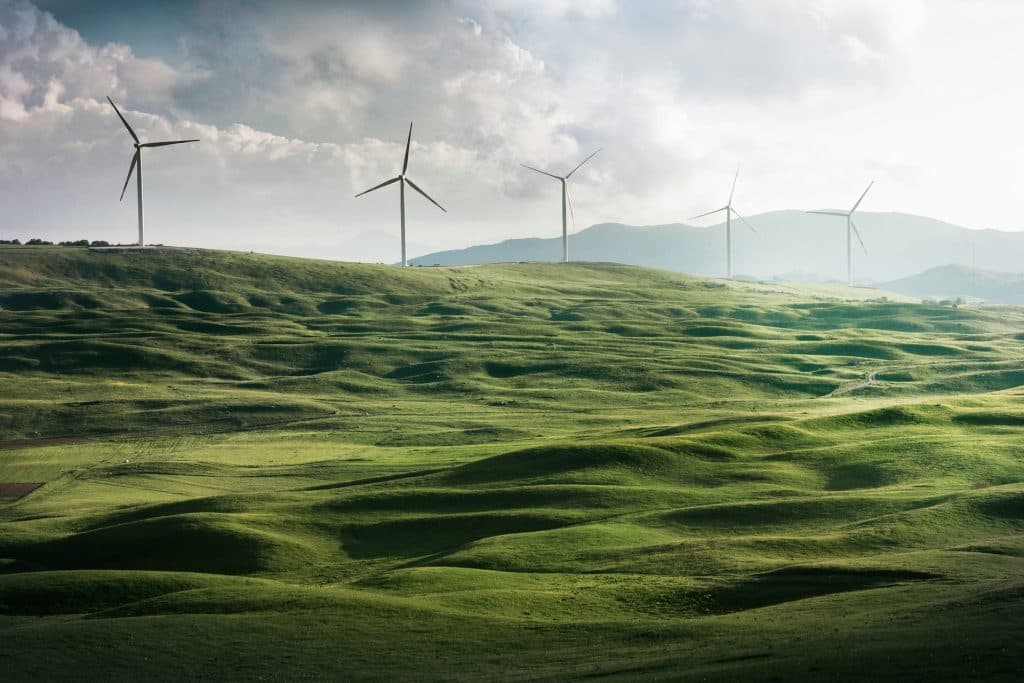
Representatives of the wind industry welcomed a series of measures by the European Commission (EC) and the EU aimed at accelerating the development of renewable energy sources (RES), as well as a plan to increase financial support for wind power plants. However, both may be coming too late to meet the EU’s highly ambitious climate targets set for 2030. A prime example is wind power auctions in Czechia, where the third-ever auction has already taken place, yet it once again produced a poor result. European manufacturers are also under strong pressure from Chinese competition, while at least one company is in serious financial difficulty.
In mid-September this year, the European Parliament approved the revision of the Renewable Energy Directive (RED III). The Council of the EU endorsed the directive shortly afterwards. The revised directive raises the targeted share of RES in gross final energy consumption by 2030 from 32 % to 42.5 %. One of the most important parts of the revision concerns so-called acceleration zones (also referred to as go-to zones).
With the implementation of the directive and the introduction of acceleration zones, permitting processes should be shortened to 1 year within acceleration zones and 2 years outside them. However, Czechia has long struggled with implementing European directives. The LEX RES II amendment to the Energy Act had still not passed the entire legislative process at the time of writing. This is despite community energy having long been a priority of the current government. Czechia faces sanctions from the EC over the late implementation, with the original deadline having been June 2021.
Czechia has also fallen significantly behind in other areas of modern energy. It launched its first auction for renewable energy sources, including wind power plants, in the second half of 2022. By comparison, coal-heavy Poland held its first auction as early as 2018, demonstrating that Czechia did not enter this decade in a good state in terms of up-to-date energy legislation. Will the implementation of RED III be different? Member states have 18 months to implement the directive. Transposition is nevertheless important for all EU member states, as development is stalling everywhere.
EU and member state ambitions do not yet match reality
As wind industry representatives further state, the EU needs to have approximately 111 GW of offshore wind power installed by 2030 to meet its new targets. To achieve this, construction would have to accelerate to ten times the current pace. This corresponds to 12 GW/year.
Onshore wind development is also stalling. European turbine manufacturers and suppliers face both a considerable increase in production costs due to high energy prices and other inputs, as well as problems with the technology itself.
Siemens Energy AG is probably facing the greatest difficulties. In the middle of the year, we reported that problems at Siemens Gamesa had caused Siemens Energy AG’s share price to fall by approximately 40 %. This week, Siemens shares experienced another similar freefall. However, the company’s problems do not end there – it is seeking EUR 15bn from the German state.
Support for the sector is therefore arriving at a time when many European players in the industry are already facing serious difficulties, including due to Chinese competition. Can the EU reverse the situation and prevent a repeat of what happened with photovoltaic components? The situation thus has two main dimensions: whether wind technology can be installed in the required volume and timeframe, and who will supply that technology.
Czechia is struggling to develop wind power, climate plan figures may remain only on paper
Czechia is meanwhile trying to catch up on what it neglected in the previous decade. So far, however, it has not succeeded. Even the third-ever auction for wind power plants was far from fully subscribed. Auction support was awarded to 4 projects with a total installed capacity of 24.8 MW. A total of 60 MW was being tendered.
The figures in Czechia’s climate plan state that 1.5 GW of wind power plants should be installed in the country by 2030. This means that approximately 1.2 GW, or 1 200 MW, needs to be built.
Under the current legislative conditions, however, the figure appears likely to remain only on paper.
Translation disclaimer
This article is a machine translation of the Czech original and has not yet been fully reviewed. In case of any doubt, please refer to the Czech version.
Sdílejte článek prostřednictvím:
You might also like

10 September 2026, 10:37
9 September 2026, 15:05
9 September 2026, 13:24