22 September 2026, 14:20
Loading...
Planned Czech acceleration zones for renewables could reduce construction costs
Jakub Musil
12 November 2024, 06:40
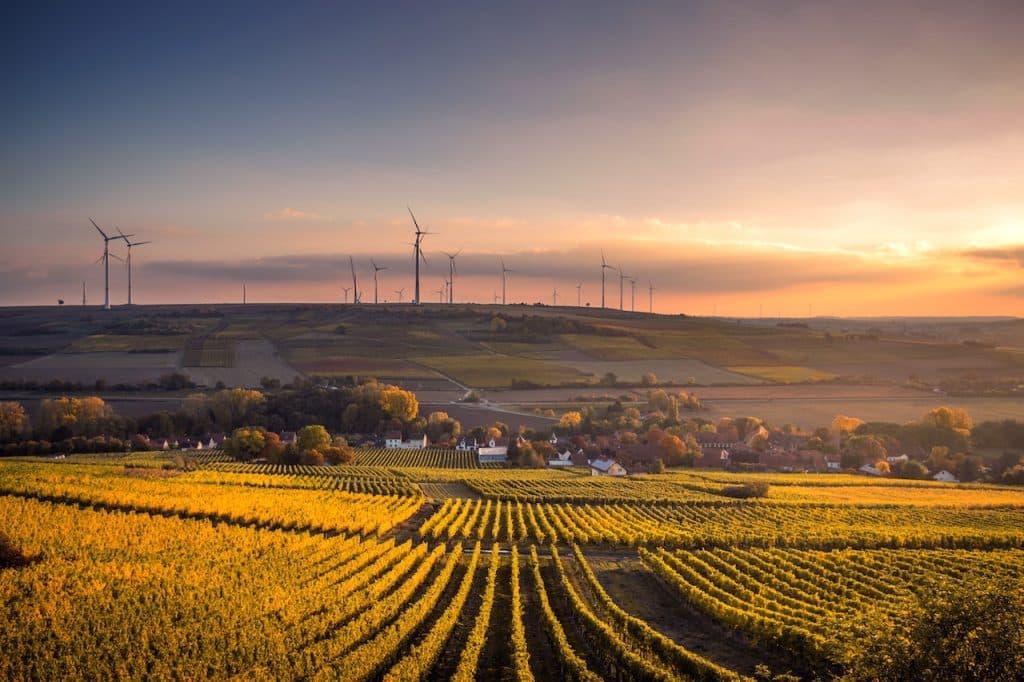
Acceleration zones being prepared by the Ministry of the Environment are intended to designate areas where the permitting process for power plant construction should take less than 12 months. In addition to speeding up renewable energy deployment, simpler permitting procedures could also reduce the cost of building new generation capacity.
The Ministry of the Environment (MŽP) is preparing to introduce so-called acceleration zones. These are expected to increase the pace of construction of new renewable energy sources (RES) and help achieve targets for the share of renewables in final energy consumption. At the end of October, the MŽP presented a methodology for identifying acceleration sites suitable for renewable energy development. Under the proposal, permitting for new renewable energy facilities in these locations should take less than one year.
Lengthy permitting procedures are particularly problematic for wind power plants (WPPs), which currently take up to 10 years, according to Štěpán Chalupa, chairman of the renewable energy chamber. However, lengthy permitting procedures are not a purely Czech problem. A study by Switzerland's University of St. Gallen showed that local WPP developers also face issues such as lengthy permitting procedures, inconsistent conditions for construction permits and public opposition to WPP construction. The study also showed that these issues increase the cost of building new WPPs and the levelised cost of electricity (LCOE) they generate.
Levelised cost of energy (LCOE) is a metric that makes it possible to compare the economic competitiveness of different energy sources. It is calculated as the ratio of all costs associated with the construction, operation and decommissioning of a power plant (including any fuel purchases) to the amount of energy the plant produces over its lifetime. In Europe, it is most commonly expressed in EUR/MWh. Prices do not include subsidies or emissions allowance prices. Source: Facts about Climate.
Impact of permitting procedures on WPP construction costs
According to the study, lengthy and complicated permitting procedures can affect WPP construction costs in several ways:
- In addition to the wages of employees working on permitting procedures, costs are also increased by, for example, legal services for dealings with authorities and litigation.
- The duration of permitting procedures increases financing costs, as it extends the period over which costs incurred during project preparation accrue interest (the cost of capital or debt used to finance project preparation).
- Changes to project parameters, such as reducing the number of turbines, can lead both to the need to redesign projects and to lower economies of scale.
- Lastly, costs are indirectly increased by risks associated with uncertainty that regulatory conditions may change between the start of preparation and the commissioning of a new WPP. Examples include changes in support for renewable energy sources, which may affect a project's economics. While these risks are not directly reflected in WPP construction costs, they may result in a higher cost of capital or debt needed to finance development, through which investors are compensated for the risks.
According to the study, the above-mentioned impacts of permitting procedures can increase the LCOE of small wind farms (5-10 turbines) by almost 32 %. The Swiss study therefore indicates that introducing acceleration zones could have a noticeable impact on both wind power plant construction costs and the price of electricity generated by them in Czechia.
The effects resulting from lower costs for building new WPPs could be numerous. Lower costs could provide additional incentive for investors to build new WPPs or, for example, lead them to seek lower operating support, which they compete for in auctions announced by the Ministry of Industry and Trade.
Translation disclaimer
This article is a machine translation of the Czech original and has not yet been fully reviewed. In case of any doubt, please refer to the Czech version.
Sdílejte článek prostřednictvím:
You might also like
22 September 2026, 12:50
22 September 2026, 06:09
21 September 2026, 15:25