11 October 2026, 08:24
Loading...
Commission to give European industry more free emissions allowances than expected

Marek Kršák
14 May 2026, 07:12
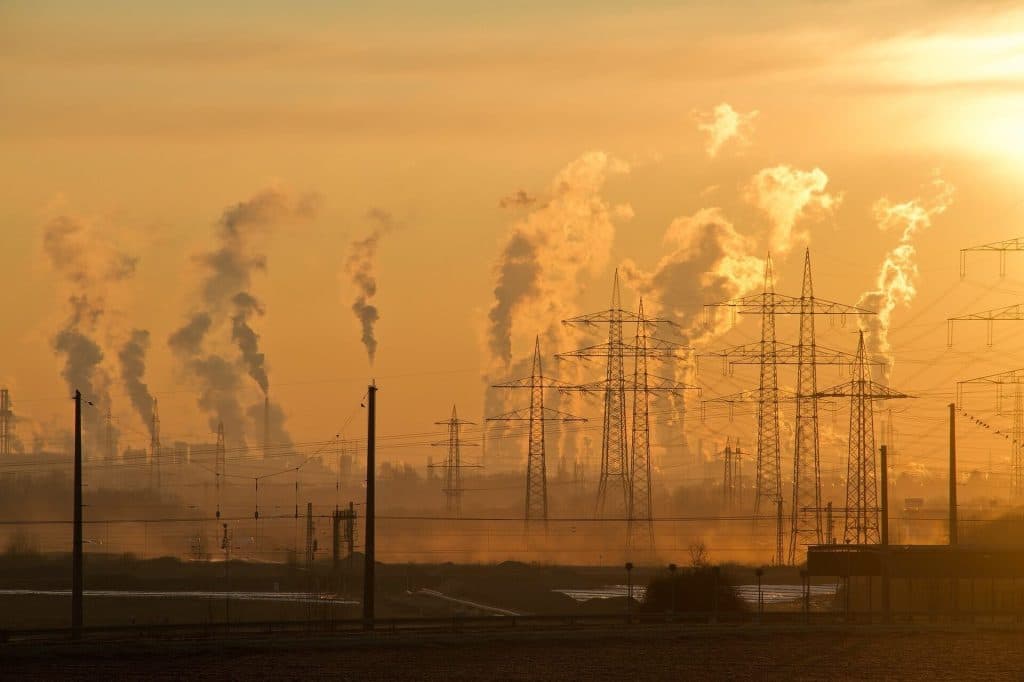
The European Commission has previously said it is preparing a proposal to amend the emissions trading system under the EU ETS. It has now published a document that is open for feedback and available to anyone who wishes to comment on the proposal. The proposed changes should help industry by providing more free CO₂ allowances. Europe is taking this step to mitigate the impact of climate policies on carbon-intensive sectors, which have also recently been struggling with significant competitiveness challenges.
The key change is an update to the so-called benchmark values used to determine the volume of emission allowances allocated free of charge to European industry. Under the new proposed benchmark values, industry will continue to receive free allowances covering an average of approximately 75% of its emissions.
The Commission is responding to industry concerns by making full use of the available legal flexibility. In practice, this means the Commission has opted for a more moderate percentage reduction in free allowances for the 2026–2030 period. This results in higher benchmark values, with a financial impact of approximately EUR 4 billion.
Since supporting the transition to industrial electrification remains a goal, the Commission is maintaining its updated approach, which includes indirect emissions from electricity consumption for 14 product benchmarks.
The EU ETS benchmark values for 2026–2030 will be adopted through an implementing act. Following a four-week public consultation launched on 11 May and an assessment by EU member states in the Climate Change Committee, the Commission will adopt the benchmark values by the end of June.
Pressure to ease the rules
Among the main reasons for the more gradual reduction in the volume of emission allowances is concern that production could potentially move from the EU to countries with less stringent climate regulations. Since European companies face higher costs for purchasing emission allowances than competitors in, for example, the US or Asia, less stringent rules could help strengthen their position in the global market and boost the competitiveness that has long been called for.
Also worth noting is the significant pressure from industry in some member states (particularly Germany and Italy), which warn that high emissions allowance and energy prices could lead to a decline in production and investment in Europe.
A comprehensive EU ETS review is within reach
The EU ETS is a key tool for reducing emissions and implements the principle that companies must buy allowances for every tonne of CO₂ they produce. The original proposal envisaged gradually limiting free allowances and phasing them out entirely around 2034.
The current proposal, however, signals a slowdown in this process, reflecting efforts to align climate goals with economic realities. The European Commission plans to adopt a revised proposal on the allocation of emission allowances in July.
The update to the benchmark values for 2026–2030 is required under the Emissions Trading System Directive. It complements the proposed change to the ETS Market Stability Reserve, which was put forward on 1 April and will adapt the reserve and better equip it to respond to future market developments, including a potential supply shortage in the coming decades. Together, these measures will help support the competitiveness and decarbonisation of EU industry while further strengthening the stability and predictability of the EU carbon market.
These measures should also be viewed in the broader context of the EU ETS review scheduled for July 2026, which aims to ensure the system is fit for the future and continues to support European industry in its transition to decarbonisation.
Translation disclaimer
This article is a machine translation of the Czech original and has not yet been fully reviewed. In case of any doubt, please refer to the Czech version.
Sdílejte článek prostřednictvím:
You might also like


10 October 2026, 13:19

10 October 2026, 07:37

10 October 2026, 07:02