EU ETS allowance surplus falls, but over 190 million to be withdrawn

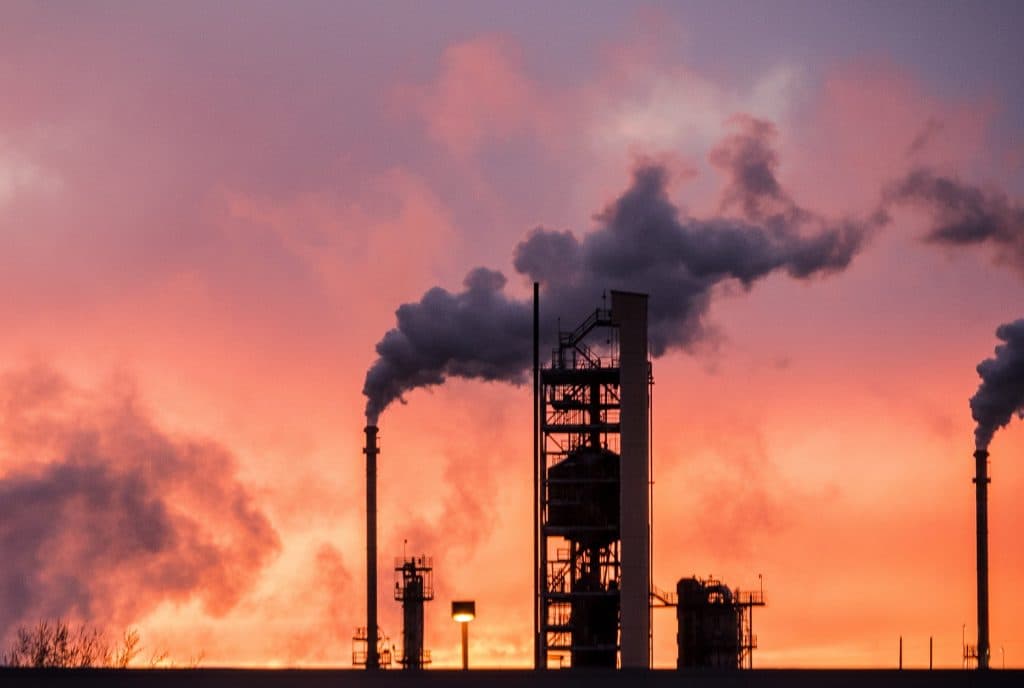
The surplus of emission allowances on the EU ETS market, corresponding to the number of allowances in circulation, fell by nearly 11 % year on year to 1.023 billion allowances. Under the rules of the so-called Market Stability Reserve (MSR), despite this decline, more than 190 million allowances are to be withdrawn from circulation. The European Commission announced this in a press release.
The European Union decided to establish the MSR in 2015, at a time when emission allowance prices were well below 10 EUR/t CO2 and the EU was seeking a way to raise their price to a level that would incentivise operators of installations covered by the EU ETS to implement decarbonisation measures.
Despite the sharp rise in allowance prices in recent years, this mechanism continues to be used. At the beginning of April this year, however, the European Commission proposed at least a partial adjustment to the rules, under which allowances placed in the reserve should not be invalidated if their number exceeds 400 million. Instead, these allowances should be retained as a reserve for the future. However, the proposed amendment has not yet entered into force.
Coalition of countries calling for EU ETS review grows
The European Commission has also promised a comprehensive review of the EU ETS, for which it is due to present a proposal this July. It is responding to growing pressure from selected member states, including Czechia, which point to the need to protect heavy industry from costs associated with carbon emissions.
Besides Czechia, the coalition of member states calling for a review of the system includes Poland, Romania, Bulgaria, Greece, Slovakia, Hungary and Italy.
Czech Minister of Industry and Trade Karel Havlíček said at the end of May that a coalition of ten countries is taking shape which is well aware that the situation is serious.
"Essentially, we can say that France and, surprisingly, Spain can now also be included in the broader coalition, because they themselves are putting forward a non-paper that takes a somewhat different direction, but essentially represents a position that partly suits us," Havlíček said.
Translation disclaimer
This article is a machine translation of the Czech original and has not yet been fully reviewed. In case of any doubt, please refer to the Czech version.