
28 October 2026, 15:10
Loading...
Top 10 Czech energy stories from the past week
oEnergetice.cz
12 May 2024, 20:51
1. UK climate targets are unachievable, Supreme Court rules

The United Kingdom’s progress on climate policy has suffered another setback. It came on Friday, May 3, when the Supreme Court issued a ruling that the new action plan may not be deliverable. The reason is that the individual measures cannot be implemented using existing technologies, and ministers were not informed that the action plan was too ambitious and unattainable. Reuters reported.
The UK Supreme Court’s ruling states that the carbon budgets set by the government in 2023 to meet the target of net-zero greenhouse gas emissions by 2050 were allegedly calculated without specific measures to ensure they could be achieved. This means the country will have to submit a new plan for the second time.
2. Germany expects thousands of kilometres of new power lines to be approved following faster processes
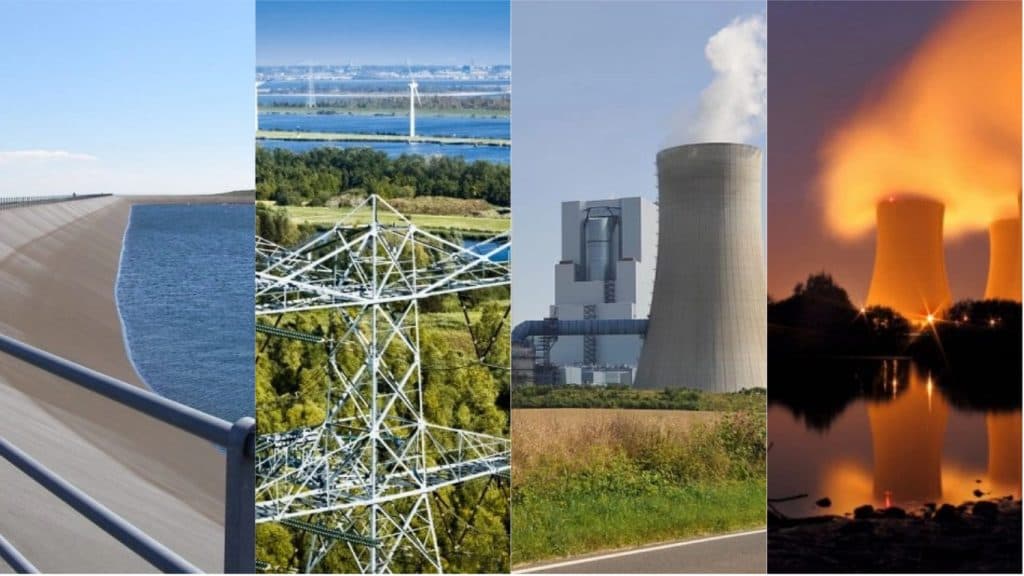
Germany’s network regulator expects a significant increase in approvals for transmission lines this year and next, paving the way for faster construction. This is expected to result from changes to the legislative processes for approving and building new lines, which are intended to significantly reduce bureaucracy. The development of the transmission network is key to transforming Germany’s energy sector.
Germany’s network regulator (BNetzA) expects approvals for transmission lines to accelerate significantly, according to internal documents seen by the news magazine Der Spiegel. According to Der Spiegel, BNetzA expects more than 1 870 kilometres of new transmission lines to be approved this year and around another 1 600 kilometres next year.
3. Scientists oppose construction of a small hydropower plant on the Vltava near Český Krumlov
Scientists from the Biology Centre of the Czech Academy of Sciences in České Budějovice oppose damming the Vltava River below the ruins of Dívčí Kámen in the Český Krumlov area. A private investor is preparing to build a small hydropower plant there. The scientists said the project could have a range of adverse impacts and lead to a decline in rare plant and animal species. Daniela Procházková, a spokesperson for the Biology Centre, informed the Czech News Agency (ČTK).
“It needs to be stressed that human-caused changes, such as the construction of weirs or hydropower plants, the construction of wastewater treatment plants, or the discharge of waste from a campsite, have negative impacts on biodiversity, including endangered species on the Red List and those in the Natura 2000 network. These species are very likely to become locally extinct, for example, because of raised water levels upstream of a weir, increased nutrient inputs, a lack of oxygen, or the loss of microhabitats such as rapids due to a lack of water,” said Vojtěch Kolář of the Biology Centre’s Institute of Entomology and the Faculty of Science at the University of South Bohemia.
4. Achieving Germany’s green ambitions will require hundreds of billions of euros by the end of the decade

Germany has set highly ambitious targets for developing renewable energy sources, one of the main tools for decarbonising the economy. According to an analysis by the BDEW association and EY, meeting them will cost the country 721 billion euros by the end of the decade alone. Overall, investments worth billions should help the country reach an 80% share of renewable energy sources in electricity consumption and its target of cutting emissions by 65%.
Almost half of the several-hundred-billion-euro total, or 353 billion euros, is expected to go towards increasing installed renewable capacity. The analysis also expects significant investment in strengthening the transmission and distribution networks, amounting to 281 billion euros by the end of the decade.
5. Temelín modernises diesel generators, invests CZK 17 million
The Temelín nuclear power plant has completed the modernisation of the first of its eight diesel generators, which serve as backup power sources. This year, ČEZ plans to complete work on half of Temelín’s eight diesel generators, with the rest to be modernised next year. The investment totals CZK 17 million. The work will help ensure the South Bohemian nuclear plant can operate for at least 60 years, Temelín spokesperson Marek Sviták said in a press release to the Czech News Agency (ČTK).
The modernisation involves replacing internal components of the control cabinets and installing new software. Work has been completed on one of the three diesel generators at Unit 1. “This year, while the plant is operating, we will upgrade one of the two diesel generators shared by both units, and we plan to modernise the other two during the outage at Unit 2. The reason is to ensure the system remains maintainable in the long term and that spare parts are available,” said Temelín director Jan Kruml. According to ČEZ board member Bohdan Zronek, the energy company has invested more than CZK 31 billion in modernising Temelín since it began operating.
6. Ember: EU is beginning to get on track to meet REPowerEU targets
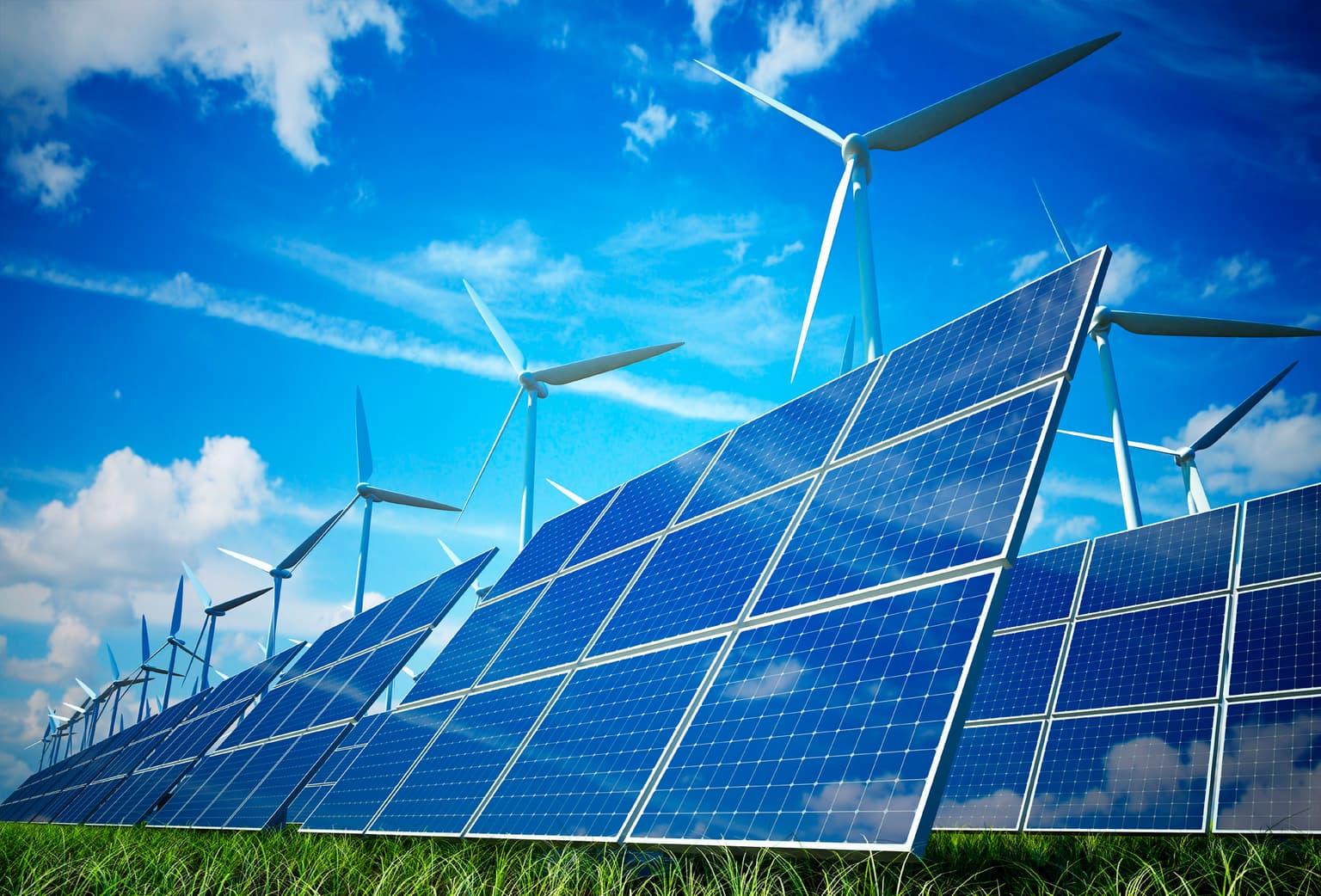
According to an analysis by think tank Ember, the EU is beginning to get on track to meet its highly ambitious 2030 targets for green electricity generation under the broader REPowerEU plan. The analysis notes the progress already made in renewable energy, particularly in recent years. Specifically, it highlights the development of solar and wind power plants across the EU, which together recorded the largest year-on-year increase in generation in history. Despite this progress, the EU must further accelerate renewable development to meet its targets.
Under the REPowerEU plan, the EU’s target for 2030 is for renewables to account for 72% of total electricity generation. Last year, the share exceeded 40% for the first time, reaching 44% on the back of record year-on-year increases in solar and wind generation. Compared with 2022, wind generation increased by 55 TWh (+13%), while solar generation rose by 36 TWh (+17%).
7. Construction of biomass boiler in Brno delayed by a year due to asbestos

Construction of a biomass boiler costing CZK 2.4 billion, which Teplárny Brno had planned to start using this autumn, is a year behind schedule. The delay is due to the unexpected discovery of asbestos during demolition work and the subsequent removal of the hazardous material. Petr Fajmon, managing director of the municipal company, told the Czech News Agency (ČTK) in response to a query.
“Asbestos was found during demolition work at the site of the new boiler in August last year. Surveys of the entire site were then carried out and samples taken. Once the extent and location of the asbestos had been determined, work began to remove it in accordance with the prescribed conditions and under the supervision of public health officials,” Fajmon said.
8. Permitting for new nuclear units in Czechia likely to be accelerated
Permitting for the construction of new nuclear units and small modular reactors in Czechia is likely to be accelerated. This is provided for in a draft amendment to the Atomic Act approved by the government today. The legislation will help speed up the construction of small modular reactors while maintaining safety standards, Prime Minister Petr Fiala (ODS) said at a press conference after a cabinet meeting. The bill must still be considered by Parliament.
“The law will speed up the construction and deployment of small modular reactors by shortening and simplifying permitting for new energy sources, responding more flexibly to technological developments, and making it easier to introduce new technologies,” Fiala said.
9. Severní energetická suspends mining at the ČSA mine, lays off around 500 workers

Severní energetická is suspending brown coal mining at the ČSA mine in the Most area. It will lay off around 500 employees. A decision on ending operations will be made in the coming months. Eva Maříková, spokesperson for the Sev.en Česká energie group, told the Czech News Agency (ČTK). The company is due to announce details today.
The mining company had expected the ČSA mine to close between 2024-2026. Mining at the ČSA mine has been gradually scaled back since 2015, when the government decided to maintain the mining limits in the area. If coal is needed to generate electricity or heat during the winter, the company is prepared to partially resume operations, using employees from another active mine in the group.
10. Bloomberg: Russia’s wartime economy is depriving the oil industry of workers

Russia’s oil and gas industry is vital to financing the country’s invasion of Ukraine, providing the Kremlin with funds to continue the fighting. However, the industry is struggling with a labour shortage as Russia’s economy is fully mobilised for the war effort, exacerbating a long-term demographic crisis, Bloomberg reported.
Energy companies, which have traditionally paid employees well, are now having to compete for workers with the Russian army and weapons manufacturers, analysts and recruiters working with the sector have warned. The signing bonus alone for a soldier fighting in Ukraine can be almost equivalent to the annual salary of an average worker in the oil or gas sector.
Topic
New gas package – Part 1: From natural gas to hydrogen networks
The European Parliament has approved a package designed to facilitate the uptake of renewable and low-carbon gases. The measures focus on regulating infrastructure and trade in hydrogen and decarbonised gas, which will gradually replace fossil natural gas.
Key points of the gas package
Energostat: electricity generation in Czechia
Energostat: electricity generation in Germany
T
Translation disclaimer
This article is a machine translation of the Czech original and has not yet been fully reviewed. In case of any doubt, please refer to the Czech version.
Sdílejte článek prostřednictvím:
Topics:Energy Weekly
You might also like

28 October 2026, 13:08

28 October 2026, 11:10

28 October 2026, 09:08
