10 September 2026, 15:21
Loading...
Can Europe attract solar component manufacturers? China has so far dominated the market
Daniel Grecman
7 October 2023, 18:12
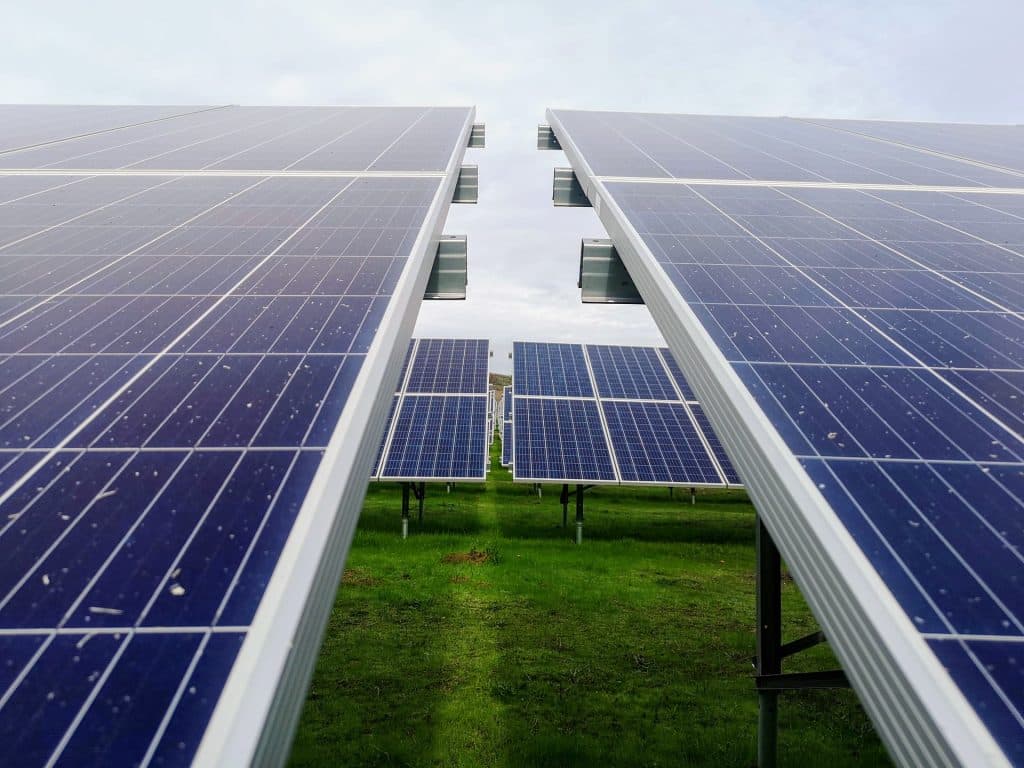
Over the past decade, the mining and processing of materials needed to manufacture photovoltaic system components, as well as the production of the components themselves, has shifted from Europe, Japan and the US to China. Looking at the investments made over this period, it is easy to see why. China invested around 50 bn EUR across the entire supply chain. More than ten times as much as the EU. In its plans, the EU is aiming to increase its own production, but does it have a chance of succeeding?
China’s strategic investments
As we reported earlier, Chinese exports of photovoltaic panels to Europe have almost quadrupled in just the past 5 years. Their value exceeded 20 bn EUR last year, and 9 out of 10 panels imported into Europe came from China.
Current estimates suggest that, partly as a result of its dominant market position in the production and processing of polycrystalline silicon, China can manufacture a photovoltaic panel for up to a third less than its European competitors.
According to recent reports, Europe has 40 GWp of panels in storage, and data from this year indicate that inventories will continue to grow substantially. As a result, the price of panels, which stood at around 0.30 USD/Wp last year, has fallen to the current 0.15 USD/Wp. This is good news for developers, but not for panel producers.
Europe’s dilemma
Last month, industry association SolarPower Europe warned European officials that record-low prices are beginning to undermine the EU’s strategic plans for partial self-sufficiency in the production of photovoltaic system components.
“Right now, we risk losing a strategic industry in Europe, precisely at a time when the energy transition requires diversification and the revival of Europe’s solar manufacturing sector,” SolarPower Europe said in its report.
But does the EU have a chance of reversing this situation? China has already built its vast manufacturing capacity and controls the market for raw materials. Europe, by contrast, faces lengthy permitting procedures and high energy prices, which are unlikely to fall in the foreseeable future due to the high price of emissions allowances and natural gas. Considerable resources, namely investment and operating subsidies, would therefore have to be allocated to support new manufacturing capacity.
A similar situation exists in the electric mobility sector, where the EU is beginning to investigate Chinese state subsidies for the sector. According to European Commission President Ursula von der Leyen, these subsidies distort the market.
However, introducing an import tariff or a similar instrument could trigger a trade war between China and the EU. One of the first sectors affected could then be the market for photovoltaic components, where China, as mentioned above, holds a privileged global position. This could threaten the ongoing energy transition.
Europe recently launched the first trial phase of its carbon border tariff system (known as CBAM), under which emissions linked to selected imported products will be charged; more here. However, the system does not address the competitiveness of European companies outside the EU’s borders. Subsidies will therefore probably be the determining factor in whether new manufacturing capacity is built in the EU.
On the other hand, at least in the renewable energy sector, photovoltaic panels have a technical lifetime of 25 years or more and, once they are installed in the EU, the energy they produce is independent of further geopolitical developments for that period. Wind power plants are no different, although China is also beginning to gain an advantage over European manufacturers burdened by high energy prices.
Translation disclaimer
This article is a machine translation of the Czech original and has not yet been fully reviewed. In case of any doubt, please refer to the Czech version.
Sdílejte článek prostřednictvím:
You might also like

10 September 2026, 10:37

9 September 2026, 15:05
9 September 2026, 13:24