5 October 2026, 16:20
Loading...
Czechia backs Belgium: countries want blue hydrogen counted towards EU climate targets
Veronika Jurcová
2 March 2026, 10:49
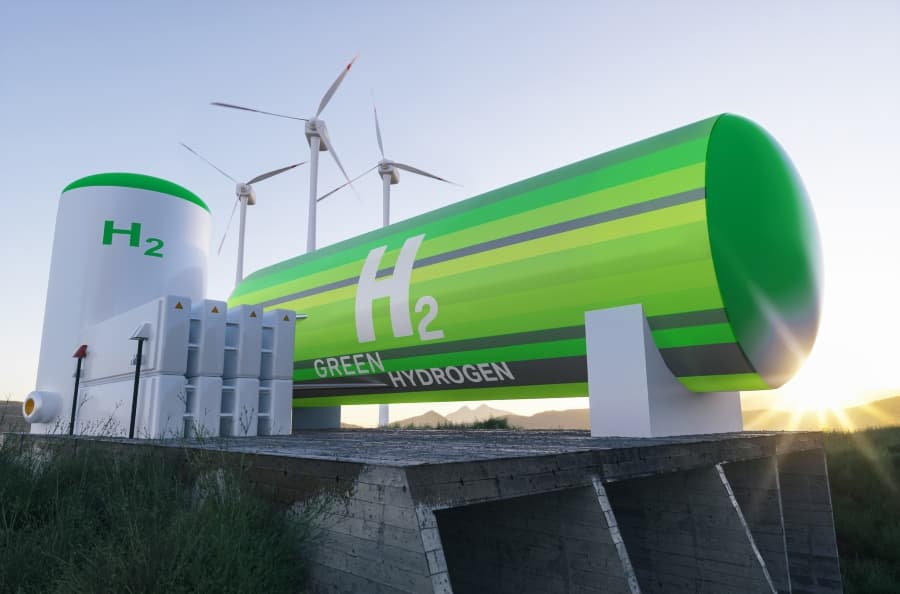
The European hydrogen debate is intensifying. A group of member states led by Belgium is pushing for not only so-called green hydrogen, but also low-carbon hydrogen, including blue hydrogen, to count towards meeting the targets of the RED III Directive. The Czech Republic has joined the Belgian initiative, among others, which is a crucial signal for domestic industry, Argus Media reports.
The RED III Directive requires EU countries to ensure that renewable fuels of non-biological origin (RFNBOs) – in practice, primarily green hydrogen produced through electrolysis using renewable electricity – account for at least 42 % of hydrogen used in industry by 2030, rising to 60 % by 2035. The target is intended to accelerate decarbonisation in energy-intensive sectors such as chemicals and steelmaking.
According to Belgium, however, the current framework is too rigid. A non-paper backed by the Czech Republic as well as Poland, Hungary and Slovakia states that, without adjustments, “significant delays or cancellations” of key decarbonisation projects are at risk. The document warns that countries with limited wind and solar potential face a structural disadvantage, as domestic green hydrogen production remains economically uncompetitive for them and large-scale imports are not viable.
The countries therefore propose that low-carbon hydrogen should also count towards meeting industrial targets. It can be produced, for example, from gas using carbon capture and storage (CCS) technologies.
“Every step that delivers environmental benefits is a step in the right direction,” the Belgian document states.
It says that producing and using low-carbon hydrogen would also speed up the development of infrastructure and the hydrogen market itself.
Other major economies make similar arguments. France and Italy point out that relying solely on green hydrogen could curb investment at a critical stage in the sector’s development and threaten the competitiveness of European industry. They are calling for technological neutrality and greater emphasis on real emissions reductions across the entire production lifecycle.
The European Commission has so far adopted a cautious tone. It acknowledges the need to strike a balance between climate ambition, industrial feasibility and security of supply. In its 2026 work programme, it committed to reviewing the Renewable Energy Directive.
For Czechia, the dispute has a very concrete dimension. Domestic industry is among the most energy-intensive in the EU, and a rapid transition exclusively to green hydrogen would entail high investment costs and put pressure on energy prices.
Translation disclaimer
This article is a machine translation of the Czech original and has not yet been fully reviewed. In case of any doubt, please refer to the Czech version.
Sdílejte článek prostřednictvím:
You might also like
5 October 2026, 15:34
5 October 2026, 13:26