10 September 2026, 15:21
Loading...
EU poses obstacle to German gas power plant tenders
Daniel Grecman
3 September 2023, 08:50
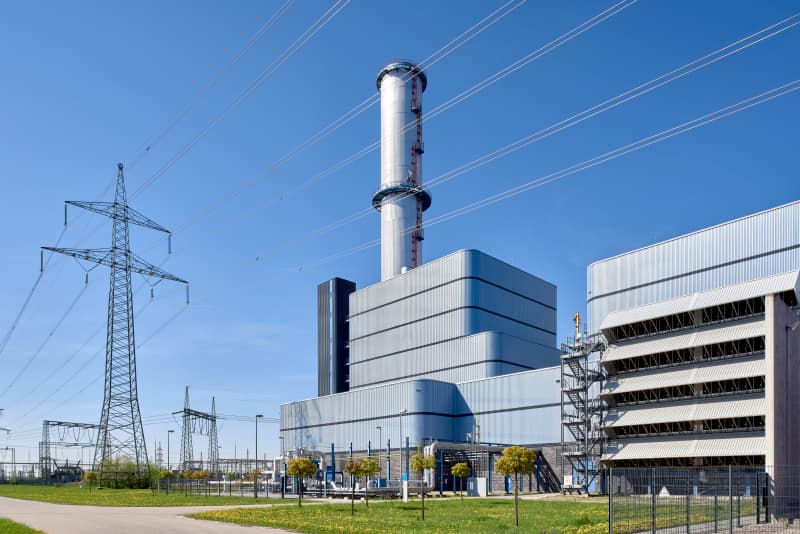
Germany’s plans to launch tenders for new gas-fired power plants are being delayed by EU officials in Brussels, according to sources contacted by foreign energy portal Montel. New gas-fired power plants are needed as a result of the country’s coal phase-out and the loss of dispatchable capacity in the grid. Given the risks and uncertainties associated with the construction and future operation of new large gas-fired units, investors are seeking some form of guarantee. This can be provided, for example, by a capacity mechanism, but industry representatives say negotiating its rules is taking far too long. This is not good news for Czechia, which also needs a capacity market.
Lengthy negotiations over capacity mechanism rules
German grid regulator BNA has recommended building 21 GW of new dispatchable capacity by 2031 to provide an adequate replacement for coal-fired power plants being shut down and safeguard system stability. It should be recalled that Germany’s last nuclear power plants were also shut down this year. However, the planned auctions for the construction of new capacity are being delayed due to negotiations with EU officials over the rules of the capacity mechanism.
The negotiations have reportedly stalled over the issue of state aid needed to build and keep gas-burning power plants in operation, with the plants expected to be capable of burning hydrogen in the future as well.
“These plants need to be financed, but they should be used as little as possible because renewable sources should run as much as possible. However, if they operate infrequently, they will not pay for themselves – which brings us back to the discussion about the capacity market,” says Kerstin Andreae, an industry representative.
As others point out, time is running out quickly. Building a gas-fired power plant typically takes 5-7 years. German representatives therefore say greater pragmatism is needed. They point to the development of hydrogen infrastructure in the US, where various tax breaks are provided for related projects instead of subsidies negotiated at length under EU rules.
What rules can Czechia negotiate?
But back to capacity mechanisms. Their need has long been highlighted in Czechia as well – according to representatives of ČEPS (the transmission system operator), they are essential. Under the decarbonisation scenario, ČEPS’s study concludes that 2.8 GW of dispatchable sources need to be built by 2030. An option discussed recently is to use not only gas-fired power plants, but also coal-fired ones. Sweden proposed an exemption from the rules.
Rapid decarbonisation cannot be achieved solely with renewable energy sources (RES), and the market alone cannot provide signals for the construction of new dispatchable sources with the required capacity. However, Czechia does not yet have capacity mechanisms, raising the question: “Is Czechia able to negotiate them with the European Commission? Can the ambitious pace of RES development be achieved without jeopardising the stability of the power system?”
Moreover, Czechia still does not have an updated State Energy Policy – work on its preparation is only now underway. However, a government analysis calculating the cost of four new nuclear units has been made public.
This is also linked to the debate over the nationalisation of ČEZ, with ČEZ representatives saying that new nuclear power cannot do without state guarantees, while also questioning whether it is an investment suitable for private capital. One thing is certain, however: Czech energy will be transformed from the ground up.
Translation disclaimer
This article is a machine translation of the Czech original and has not yet been fully reviewed. In case of any doubt, please refer to the Czech version.
Sdílejte článek prostřednictvím:
You might also like
10 September 2026, 10:37
9 September 2026, 15:05
9 September 2026, 13:24