
8 November 2026, 13:59
Loading...
How best to transport green hydrogen?

Zuzana Vrbová
12 October 2023, 11:16
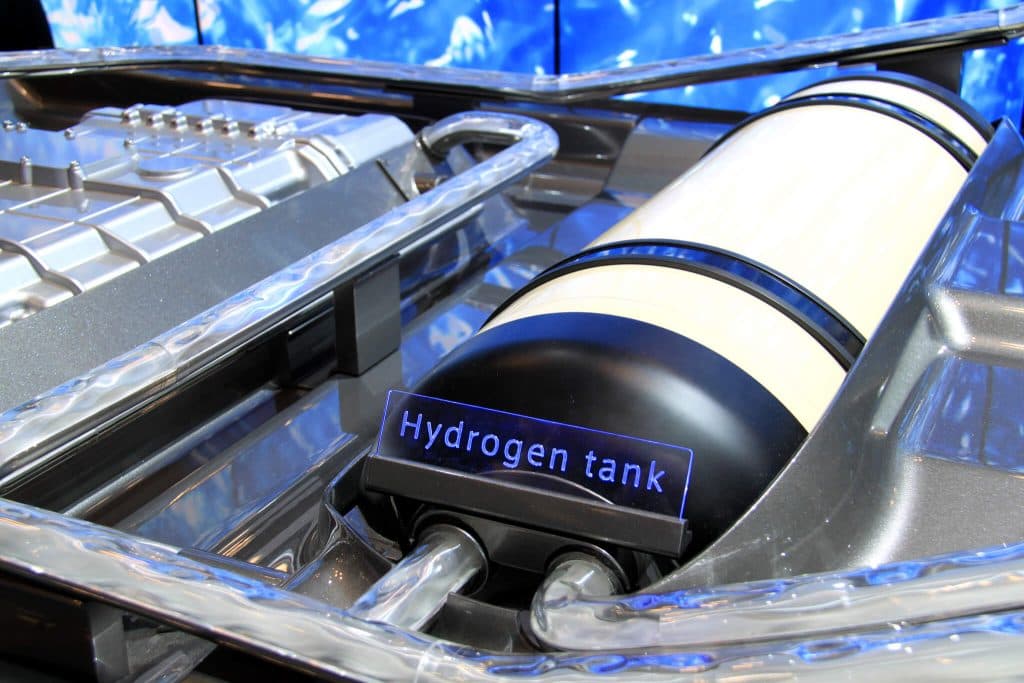
The European Union has ambitious plans for green hydrogen. It wants not only to produce it itself, but also to transport it from countries outside the EU. However, transporting hydrogen and operating storage facilities is no simple matter and is, among other things, highly energy-intensive.
The European Union’s RePowerEU plan sets a target of producing 10 million tonnes of clean hydrogen in Europe by 2030. Imports from countries outside the EU are also expected to reach 10 million tonnes a year by 2030. Although many doubt whether these targets can be achieved, others have begun focusing fully on importing hydrogen into Europe. Choosing which carrier to use is an important aspect of such a project, as Energypost explains.
Costs are key to a project's viability
The cost of transporting hydrogen depends on the size of the project and the distance involved. Larger projects tend to have lower costs, although this is not true of all projects. Distance is a key factor in pipeline transport, with costs rising as distance increases. In maritime transport, terminals account for 70-90% of costs (gasification and storage).
Main transport options
Hydrogen is generally used in gaseous form, but for efficient transport it must be converted into a suitable form and then back into hydrogen. There are four main options for transporting hydrogen: ammonia, liquid hydrogen, liquid organic hydrogen carriers (LOHCs) and compressed hydrogen transported through dedicated pipelines (using the gas transmission system and certifying hydrogen through guarantees of origin are also being considered).
Ammonia is one of the most commonly cited options for transporting hydrogen at scale. It is attractive for projects of different sizes and distances because of its low transport costs. The main cost associated with ammonia is converting it back into hydrogen.
Transporting liquid hydrogen is challenging because it requires cryogenic temperatures (-253°C), which makes it very costly. Liquefaction consumes 30-36% of the energy contained in hydrogen. Liquid hydrogen is a more attractive transport option primarily for larger projects.
Liquid organic hydrogen carriers are petroleum derivatives that can react with hydrogen. They are particularly attractive for smaller projects and do not require expensive technologies.
Dedicated pipelines are another option for transporting large volumes. Operating costs are low, but construction is costly and time-consuming. Europe is planning to build the so-called European Hydrogen Backbone , and regional networks are also planned. Europe continues to work on facilitating rules to make hydrogen transport easier.
If a facility can use a mix of natural gas and hydrogen to generate heat, blending hydrogen into the existing gas network and certifying its use through guarantees of origin is also an option, much as it is for electricity.
Costs are still very high
The main ways to reduce the price of clean hydrogen are economies of scale, which lower costs at every step of the value chain. Greater availability of equipment for producing hydrogen is also important, including equipment for generating electricity from renewable sources.
Hydrogen trading will also be shaped to a large extent by geopolitical relations and political support more broadly. This could lead to the industry relocating to places where renewable electricity can be produced at low cost.
Translation disclaimer
This article is a machine translation of the Czech original and has not yet been fully reviewed. In case of any doubt, please refer to the Czech version.
Sdílejte článek prostřednictvím:
You might also like

8 November 2026, 08:10
7 November 2026, 17:23

7 November 2026, 13:37