
23 October 2026, 14:38
Loading...
German grids will require investments exceeding half a trillion euros by 2045, study says

David Vobořil
9 December 2024, 10:02
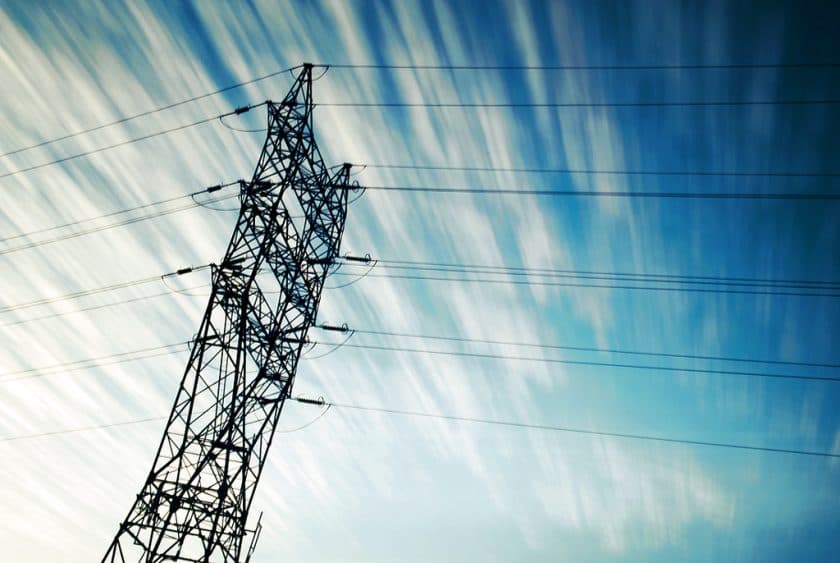
Germany can achieve its climate goals only if its electricity grids are significantly expanded. The country will need to invest around 650 billion euros in its grids by 2045, and annual investment will have to more than double. This is according to a study by the Institute for Macroeconomic Policy (IMK).
“Decarbonising the German economy by 2045 will require a massive expansion of electricity grids and the replacement of existing infrastructure, so that they can accommodate, among other things, the electrification of transport, industry and buildings,” the study says.
Economists estimate the total costs through 2045 at 651 billion euros. In the coming years, investment of around 34 billion euros a year will be needed, more than double the 15 billion euros invested in 2023.
According to the study, the total costs could turn out to be even higher. Risk factors include rising commodity prices, supply bottlenecks for components such as transformers and power lines, and delays in approval procedures.
“Given these uncertainties, accelerating the strategic, coordinated expansion of the grid is essential to achieving Germany’s energy transition goals and ensuring climate-neutral electricity supplies by 2045,” the economists explain.
Underdeveloped transmission system leads to renewable generation curtailment
Bottlenecks in Germany’s transmission system and its single German bidding zone require transmission system operators to take measures to prevent line overloads, costing German consumers billions of euros a year. In 2022, the cost exceeded 4 billion euros, while last year it was around 3 billion euros, despite an increase in the volume of measures.
Germany’s single bidding zone means that, from a market perspective, trading volumes are not restricted by transmission line capacity. Renewable energy generation, especially from wind farms in northern Germany, has to be curtailed because the underdeveloped transmission lines cannot carry the electricity to industrial centres, which are located mainly in the south and west of the country.
Germany curtailed 19 TWh of renewable generation last year, equivalent to around 4% of the country’s total annual electricity generation. As a result, power plants near areas with high electricity demand have to be activated instead of renewable sources.
Germany also plans to significantly increase its installed renewable capacity in the coming years. To meet its target of covering 80% of gross electricity consumption with renewable generation by 2030, the country will need 360 GW of installed wind and solar capacity, according to current plans. That means adding another 200 GW compared with today.
The growing electrification of sectors that still depend on other energy sources, particularly heating and transport, is also likely to increase total electricity consumption over the next few years, and therefore the load that Germany’s transmission system must handle.
Investment in the transmission system
German transmission system operators must draw up a grid development plan every two years. The current plan takes into account the requirements of the Climate Neutrality Act and the political goal of decarbonising the power sector by 2035. It contains three scenarios, which differ mainly in the extent of electrification and the use of hydrogen. Depending on the scenario, gross electricity consumption will rise from 457 TWh in 2023 to between 1080 and 1300 TWh in 2045.
However, the required investment is similar in each scenario, at around 328 billion euros by 2045. Meeting the targets would require a sharp increase in investment in the transmission system in the short term. An average of 19.8 billion euros a year would need to be invested through 2037, followed by around 5.4 billion euros a year, the study says. Compared with the eight billion invested in 2023, this would represent an increase of 150%.
Distribution grids are struggling to keep pace with electrification
German distribution grids are also not sufficiently developed to cope with the increase in electricity demand expected as heating and transport become more electrified. When there was a risk of grid overload, operators often had to refuse connections for heat pumps or electric vehicle charging stations.
In response, the German grid regulator (BNetzA) introduced new rules allowing distribution system operators to temporarily reduce the electricity drawn from the grid by heat pumps and electric vehicle charging stations, but not to switch these devices off completely.
Affected consumers will in return pay lower grid charges, and distributors will not be allowed to refuse or delay connections for new heat pumps or charging stations.

Avacon AG’s distribution grid in Germany. Source: E.ON
Investment in distribution systems
Distribution system operators with more than 100,000 customers are required to publish their grid development plans every two years. This applies to 81 of the 865 operators in total, which together cover around three-quarters of Germany’s distribution grids, given their size.
The IMK study analysed the average costs set out in these plans, taking into account the physical requirements for expanding distribution systems as estimated by the German Association of Energy and Water Industries and the German Electrical and Electronic Manufacturers’ Association. It found that 323 billion euros in investment will be needed by 2045, equivalent to an average of 14.4 billion euros a year, or just over double the amount invested in 2023.
Translation disclaimer
This article is a machine translation of the Czech original and has not yet been fully reviewed. In case of any doubt, please refer to the Czech version.
Sdílejte článek prostřednictvím:
You might also like


23 October 2026, 11:01


23 October 2026, 06:34