
23 October 2026, 11:01
Loading...
MOL chief: I see no reason why we should give up Russian oil

Eduard Majling
7 August 2024, 06:24
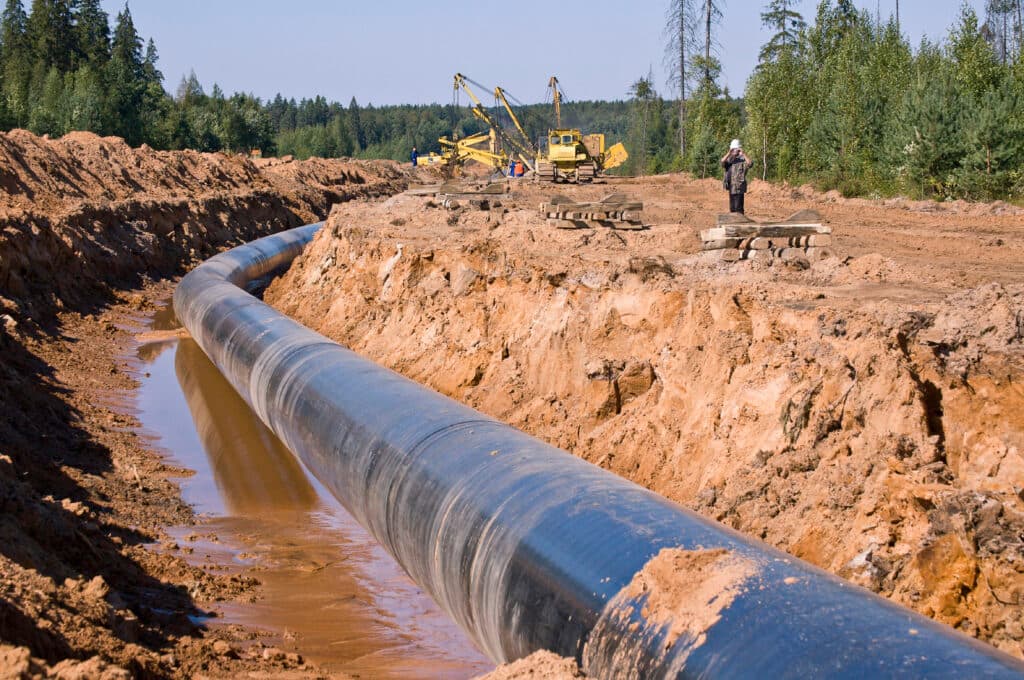
Russian oil deliveries to Central European countries have been a frequent topic of discussion in recent weeks and days. The trigger was Ukraine’s suspension of the transit of oil supplied by Russian company Lukoil, citing sanctions. In addition to Hungarian politicians, the head of MOL, the country’s largest energy company, recently commented on the purchase of Russian oil. Speaking at a recent conference, he said he saw no reason why the country should stop buying it.
Russian oil deliveries to Hungary and Slovakia are currently a major political issue in Europe. Ukraine recently banned the transit of oil supplied by Russian company Lukoil, citing the sanctions imposed. Government representatives from Hungary and Slovakia have strongly protested the move in recent weeks. The European Commission has also become involved in the dispute, proposing that they use an alternative transit route through Croatia, but both countries have rejected the proposal.
The question is what real impact the sanctions and the suspension of oil transported by Lukoil have had on supplies to the countries in question. According to the Ukrainian side, specifically Naftogaz chief Oleksiy Chernyshov, the volume of oil transported through Ukraine in July was the same as in June, at more than 1 million tonnes.
According to Chernyshov, the sanctions have not affected the volumes transported, since oil traders take ownership of the oil at the Russian-Ukrainian border. Reuters reported that Ukrainian sanctions against Lukoil took effect at the end of June, but neither Hungary nor Slovakia began raising concerns about possible supply problems until mid-July.
“They are still receiving the same volumes of oil; only the ownership structure may differ,” Chernyshov said, according to Reuters, without providing further details about the ownership structure.
“MOL, not politicians, will decide where we buy oil”
The European Commission proposed a ban on Russian oil imports into the EU shortly after Russia’s full-scale invasion of Ukraine in 2022. However, the ban applied primarily to seaborne oil deliveries. Member states, including Hungary, Slovakia and Czechia, were granted exemptions for oil imported via pipelines. Most member states, including Czechia, are gradually strengthening their independence from Russian fossil fuels, including oil. However, some critics say efforts are not equally strong everywhere, particularly in Hungary.
“Why exactly should we be giving up Russian oil?”Hernadi asked the audience, according to Reuters, during a panel discussion at a recent conference in Esztergom, Hungary.
Hungarian and Slovak political representatives say alternatives to Russian oil are insufficient. Both countries say Croatia has not invested enough in strengthening its infrastructure, and they also question the capacity of the route there. Last week, the Hungarian foreign minister even said that “Croatia simply is not a reliable transit country,” a claim Croatian politicians promptly rejected.
“It is not politicians, but MOL’s management, who will decide where we buy our oil,” Hernadi said.
Hungary receives around 2 million tonnes a year from Lukoil, accounting for a third of the country’s oil supplies, Reuters reported. Hernadi has so far dismissed the possibility of problems with the country’s oil supplies and described the current debate as political.
“If we decide to stop supplies via the Druzhba pipeline… Hungary will be left with only one supply route. Which is better? Two or one? Which gives us greater security?” Hernadi added, according to Reuters.
Translation disclaimer
This article is a machine translation of the Czech original and has not yet been fully reviewed. In case of any doubt, please refer to the Czech version.
Sdílejte článek prostřednictvím:
You might also like


23 October 2026, 06:34

