Russian gas originally intended for Austria is being bought by other member states

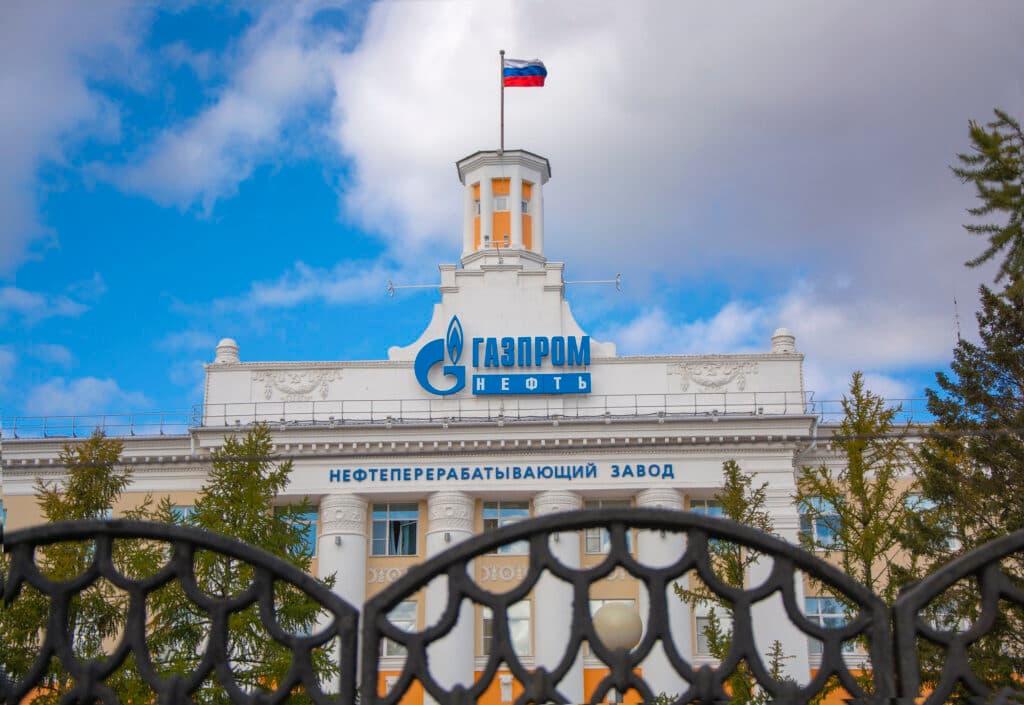
Russian gas originally intended for Austria will ultimately be taken by other European countries. After the recent suspension of Russian gas flows to OMV, neighboring countries are reselling the same amount of natural gas, the Reuters news agency reported. The supply interruption followed OMV’s victory in an arbitration case, with the company set to offset the arbitration award against its claims for payment for gas from Gazprom. Other European gas sellers, probably from Slovakia and Hungary, were quick to seize the opportunity.
Russia, which was one of Europe’s largest gas suppliers before the war in Ukraine, has lost most of its customers on the continent as the EU seeks to reduce its dependence on energy commodities supplied by Russia.
Russian gas continues to flow to Slovakia and Hungary, while some volumes also go to the Czech Republic, Italy and Serbia, which are not directly connected to infrastructure importing Russian gas.
Gazprom stopped supplies to OMV on Saturday after the Austrian company threatened to offset claims against the Russian state-owned firm against its own claims following its recent arbitration victory.
Despite Austria stopping its purchases of Russian gas, total imports flowing into Europe via Ukraine remained unchanged at 42.4 million m3 per day. The state-owned company Gazprom confirmed this directly to Reuters. The volume cited above is roughly the same as on any other day of the year.
This means that the amount of Russian gas being purchased has not changed, pointing to just one conclusion: other market participants are buying Russian gas. Austria previously purchased around 17 million m3 of natural gas from Russia every day.
Slovak state-owned company SPP makes no secret of its preference for Russian gas supplies and is also urging other state-owned companies to buy more, citing reports that there is still “strong demand” for Russian gas in Europe. This is not surprising, as Russian gas remains cheaper than gas from many other sources. This is the main reason why Austria’s volumes quickly found new buyers.
Austria, which has been criticized in the past for its stance on buying cheap Russian gas, says it has sufficient reserves to cover the shortfall and could import gas in the future via alternative routes such as Italy or Germany.
Restricting Russian gas imports
At its peak, Russia supplied 35 % of Europe’s natural gas consumption, but since the start of the war in Ukraine in 2022, Gazprom has lost market share to Norway, the United States and Qatar.
If Ukraine’s predictions prove correct, the remaining volumes of Russian gas flowing to Europe can also be expected to have no future. The transit country has repeatedly stated that it does not plan to continue transporting Russian gas across its territory after 2024. This could pose a fundamental problem for Russia, as Europe remains its largest customer.
The Yamal pipeline, which transported Russian gas to Europe via Belarus, has already been shut down. Russia accused the United States and the United Kingdom of attacking the Nord Stream and Nord Stream II pipelines. It later emerged, however, that Ukrainian entities could also be responsible for the attacks on gas infrastructure.
If Ukraine closes the gas transit route, significant Russian supplies will go only to Hungary, which receives most of its gas through a pipeline running mainly via TurkStream.
Translation disclaimer
This article is a machine translation of the Czech original and has not yet been fully reviewed. In case of any doubt, please refer to the Czech version.




