12 October 2026, 10:27
Loading...
COP30: Global support for nuclear power grows as more countries join

Jiří Puchnar
26 November 2025, 13:07
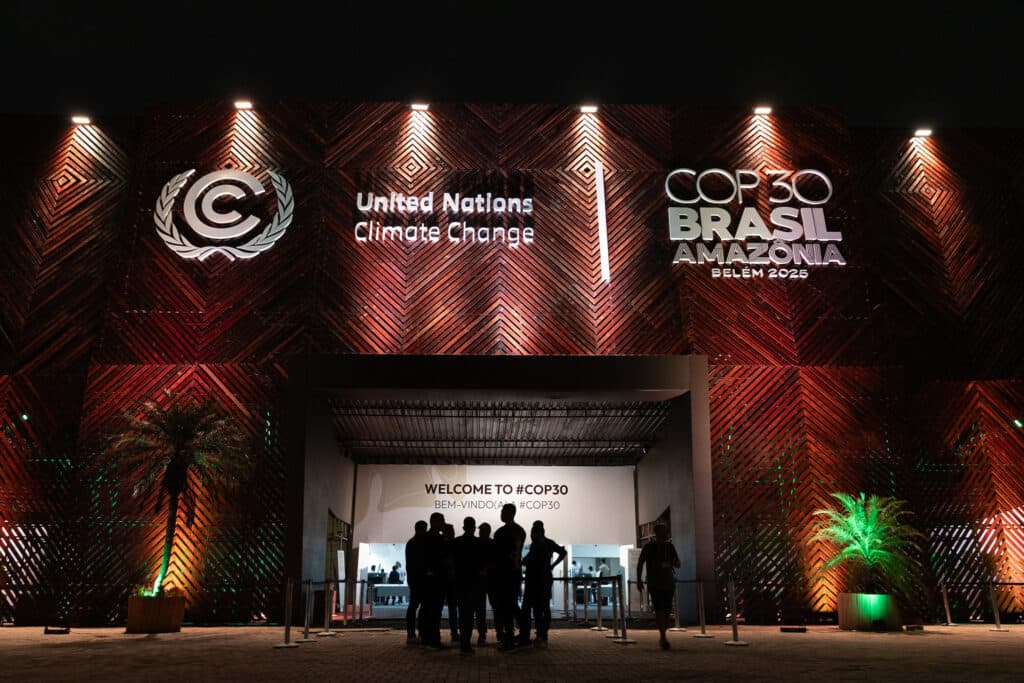
The total number of countries supporting the declaration to triple installed nuclear capacity by 2050 has risen to 33. Rwanda and Senegal joined the initiative during the COP30 climate conference in Belém, Brazil. Support from the nuclear industry and financial institutions is also growing.
Around 440 power reactors with a total installed capacity of almost 397 GWe are currently in operation across 31 countries. More than 70 new units are under construction, which are expected to add approximately 77 GWe. Nuclear power generation reached a record 2667 TWh in 2024.
COP28 ministerial declaration: The initiative’s starting point
During COP28, which took place in Dubai in December 2023, 25 countries backed a ministerial declaration calling for global installed nuclear capacity to be tripled by 2050.
The declaration was signed on 2 December 2023 by representatives of Bulgaria, the Czech Republic, Finland, France, Ghana, Jamaica, Japan, South Korea, Canada, Hungary, Morocco, Moldova, Mongolia, the Netherlands, Poland, Romania, Slovakia, Slovenia, the United Arab Emirates, the United Kingdom, the United States, Sweden and Ukraine. Armenia and Croatia joined them during the summit.
Nuclear power as a tool for achieving climate goals
In the declaration, the signatory states recognize that installed nuclear capacity needs to be tripled to achieve global carbon neutrality / net-zero greenhouse gas emissions "around mid-century" and preserve the possibility of limiting global warming to 1.5 °C.
The declaration also highlights that new nuclear technologies can:
- occupy a relatively small land area and be located where they are needed,
- complement renewable energy sources,
- contribute to decarbonization beyond the power sector thanks to their flexibility.
Support expands at COP29 in Baku
At COP29, held in Baku (Azerbaijan) in November last year, a further six countries backed the declaration to triple nuclear capacity: Kazakhstan, Kenya, Kosovo, Nigeria, El Salvador and Turkey. This brought the total number of countries supporting the goal to 31.
COP30 in Belém: Rwanda and Senegal become new signatories
At the start of the ongoing COP30 conference, Rwanda and Senegal joined the declaration. Both countries have publicly confirmed that they see nuclear power as one way to achieve their long-term energy and climate goals.
Rwanda: A systematic approach to preparing for nuclear energy
Rwanda has been interested in using nuclear energy for several years. In 2018, it signed an intergovernmental agreement with Russia on cooperation in the peaceful uses of nuclear energy. This was followed by two memoranda of cooperation—one on education and personnel training, and the other on developing public support for nuclear power.
The Rwanda Atomic Energy Board, a government agency tasked with coordinating research and the development of national activities related to nuclear energy, was established in 2020. Joining the declaration to triple nuclear capacity is another step in this long-term strategy.
Senegal: A research reactor and SMR under the Senegal 2050 vision
Electricity production in Senegal is now almost entirely dependent on fossil fuels. In the early 2010s, as part of its policy to replace oil in power generation and integrate into the West African Power Pool, the country announced that it was considering building a nuclear power plant. In 2011, however, the president at the time cancelled plans to build one.
The approach has changed in recent years. Deputy Minister of Energy, Petroleum and Mines Cheikh Niana said in his keynote speech at Africa Energy Week in Cape Town last month that the country had begun its "nuclear journey".
"We are first building a nuclear research reactor—the foundation for educating our people, our scientists and engineers in advanced nuclear medicine, agriculture and materials research," the deputy minister said. "At the same time, we are preparing the ground for the future deployment of a small modular reactor as part of our long-term Senegal 2050 vision. This is not a dream—it is a strategic roadmap. We call on our African brothers and sisters to join us, so that Africa does not fall behind but leads the way in global progress," he added.
World Nuclear Association responds to Rwanda and Senegal joining
World Nuclear Association Director General Sama Bilbao y León said of Rwanda joining that the country’s nuclear ambitions strongly resonate with the global effort to accelerate the transition to clean, reliable and affordable energy. Rwanda is a welcome member of the "coalition of the ambitious", she said.
On Senegal, she added that the construction of a nuclear research reactor and ongoing preparations for the future deployment of a small modular reactor under the Senegal 2050 vision demonstrate the country’s commitment to innovation and progress.
She also stressed that the path to tripling nuclear capacity is open, but will require "bold, pragmatic and visionary" leadership. Governments must act immediately and over the long term, she said, while industry must deliver and work with civil society. A cleaner and more stable future with nuclear power is within reach if investment goes into solutions that work and contribute to reliability, innovation and climate responsibility.
Growing support from the financial sector and industry
Banking groups Stifel and CIBC have joined the statement by financial institutions supporting the goal of tripling nuclear capacity. This strengthens the financial sector’s commitment to viewing nuclear power as a key component of clean, stable and secure energy systems.
Major energy consumers Equinix, Fermi America and Circulairity have also expressed their support, alongside new industry partners including Kazatomprom and Nuclearia Energy. All have pledged to support the goal of tripling installed nuclear capacity.
More than 140 nuclear industry companies have now signed the related industry pledge, and 16 major financial institutions have endorsed the goal since September 2024. A growing group of large energy consumers also supports the initiative.
World Nuclear Outlook 2025: Tripling is achievable if governments meet their targets
The World Nuclear Association recently published a preview of its forthcoming World Nuclear Outlook 2025 report, which is due to be released by the end of this year.
The study compiles national nuclear energy targets and plans set by governments through 2050 and assesses them in the context of:
- the continued operation and lifetime extensions of existing reactors,
- the completion of reactor units already under construction,
- the delivery of planned projects.
The report concludes that tripling global nuclear capacity by 2050 is achievable—but only if governments act immediately and consistently deliver on their own national nuclear energy development targets.
Translation disclaimer
This article is a machine translation of the Czech original and has not yet been fully reviewed. In case of any doubt, please refer to the Czech version.
Sdílejte článek prostřednictvím:
You might also like

12 October 2026, 07:40

11 October 2026, 20:09

11 October 2026, 08:24