23 October 2026, 14:38
Loading...
Germany plans to replace coal units by burning forests
Vladimír Wagner
4 April 2021, 09:37
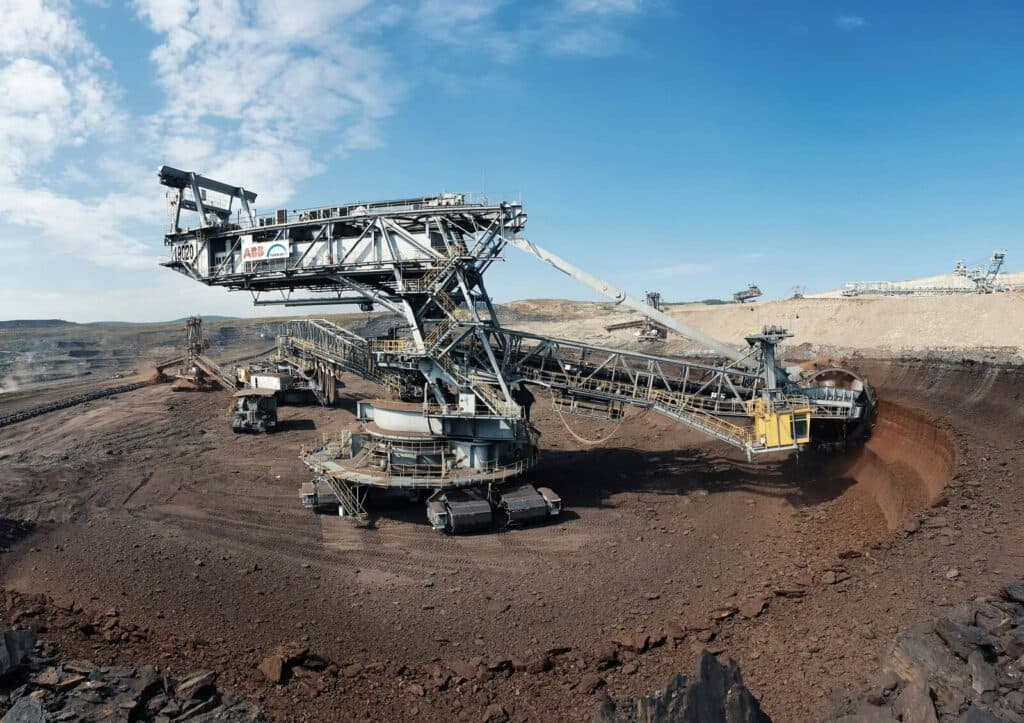
Germany is increasingly considering supporting the conversion of coal-fired power plants to biomass burning. It would thus follow the United Kingdom, Denmark and the Netherlands, which import vast quantities of wood in the form of pellets and burn it to generate electricity. Although the European Union considers this electricity production to be emissions-free and clean, in reality it is an environmental crime.
Four years ago, I warned against the large-scale burning of wood in former coal-fired power plants in Denmark and the United Kingdom. These countries do not have enough forests for such massive-scale burning to generate electricity. Wood pellets or wood in other forms are therefore imported from Russia, northern Europe and the Americas. Even then, I wrote that from an environmental perspective it would become a real catastrophe once Germany joined this trend.
It appears that my concerns are beginning to be realised. Germany will shut down all its nuclear units in 2022. At the same time, pressure to close coal-fired power plants is growing. Their accelerated closure is also driven by the rapid rise in carbon allowance prices, which have exceeded €40 per tonne. Further increases can be expected, and prices of €100 per tonne in the future are not ruled out. This is dramatically increasing the cost of electricity from coal-fired power plants. They may therefore be shut down for economic reasons even earlier than current German plans envisage. The Moorburg power plant, for example, was recently shut down. In principle, they could be replaced by gas-fired units, but their costs will also be strongly affected by the price of carbon allowances. If the price of gas also rises, which may happen as more and more European countries switch to it, the economics of using gas will also become a problem.
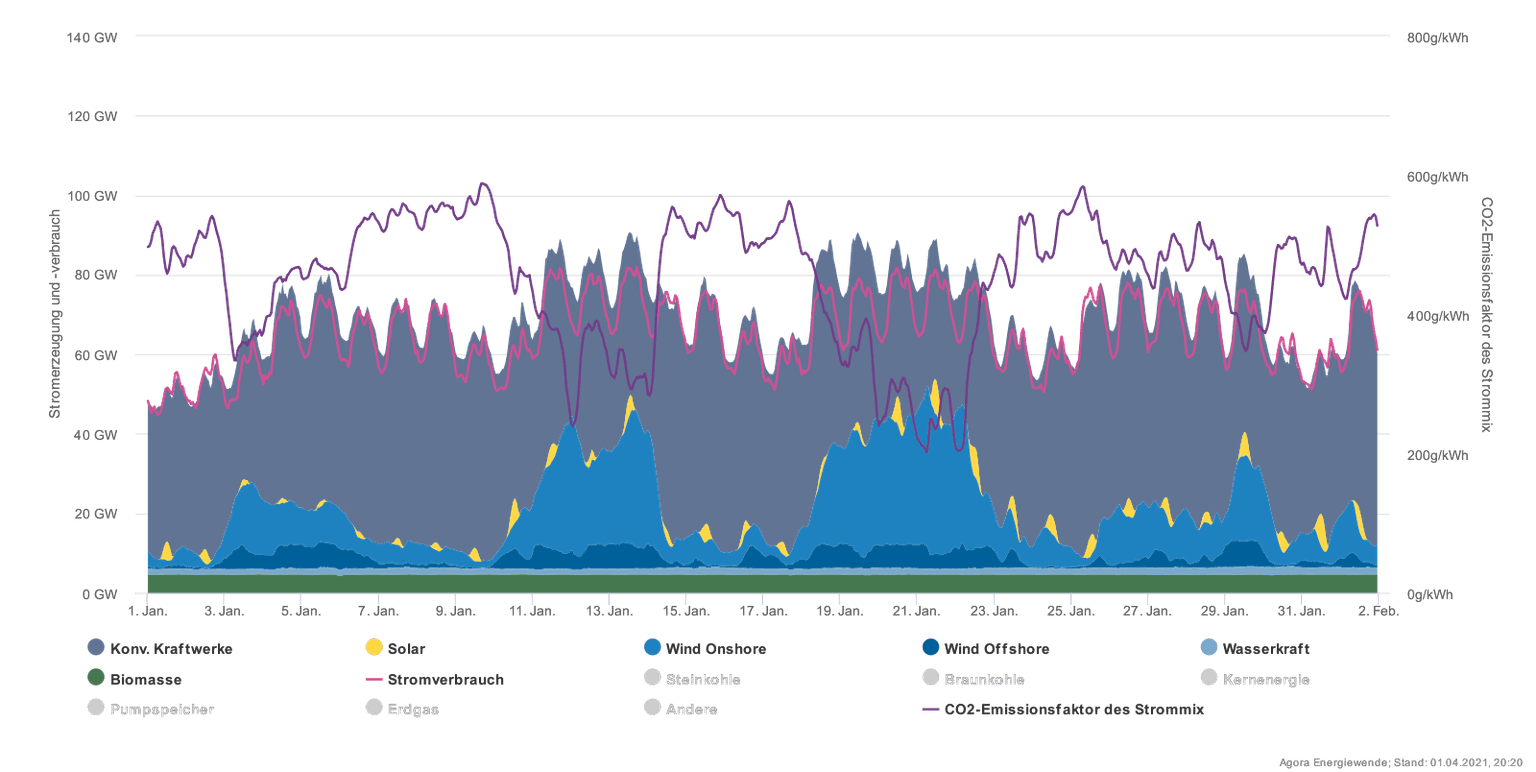
As data from this January shows, for example, several-day periods when the wind blows very little are not exceptional in winter. Solar PV provides almost nothing at such times. Even a further dramatic increase in the installed capacity of these sources will therefore not solve the capacity shortfall during winter inversions. Moreover, Germany is having increasing problems, particularly with building inland wind farms, and in recent years has failed to meet its plans in this area. This year's 8 January showed that the growing capacity shortfall threatens the power grid and risks a blackout.
According to estimates, Germany should turn from a net exporter into a net importer after 2022. It will also begin to have problems maintaining grid security, especially in its southern states. Bavaria will be most affected by the shutdown of nuclear units. Germany is therefore strengthening interconnections with other countries. The question, however, is which of them will have surpluses available for export at critical times. Four major new gas-fired plants are also due to be built in the south, commissioned by the grid operator. One of them is being built by EPH. They will not be financed through sales of the electricity they produce, but will be used exclusively to ensure transmission system security; they will therefore be owned by its operator and paid for through transmission service charges.
Not only experts but also politicians are increasingly realising that Germany may very soon face a critical shortage of capacity to cover periods when there is neither sunshine nor wind. Given the uncertainty surrounding carbon allowance and gas prices, building gas-fired capacity does not make much sense. According to a recent Handelsblatt article, Germany's Economy Ministry is preparing a subsidy programme to support not only combined-cycle gas turbine units but also the conversion of existing coal-fired power plants into biomass-burning facilities. The aim is to ensure sufficient capacity to replace nuclear and coal-fired sources. The support allocation could be on the order of €1 billion.
The advantage of converting to biomass is that it is formally an emissions-free source and therefore does not need to acquire carbon allowances. In reality, however, a power plant burning wood not only produces carbon dioxide emissions but also releases pollutants. The inspiration for this conversion comes precisely from the United Kingdom, Denmark and the Netherlands. Enervis has prepared a study on the possibilities in Germany, estimating that 4 GWe of capacity could be converted to biomass burning. Assuming annual operation of 3500 hours and relatively low conversion costs, the required support would not need to be so high.
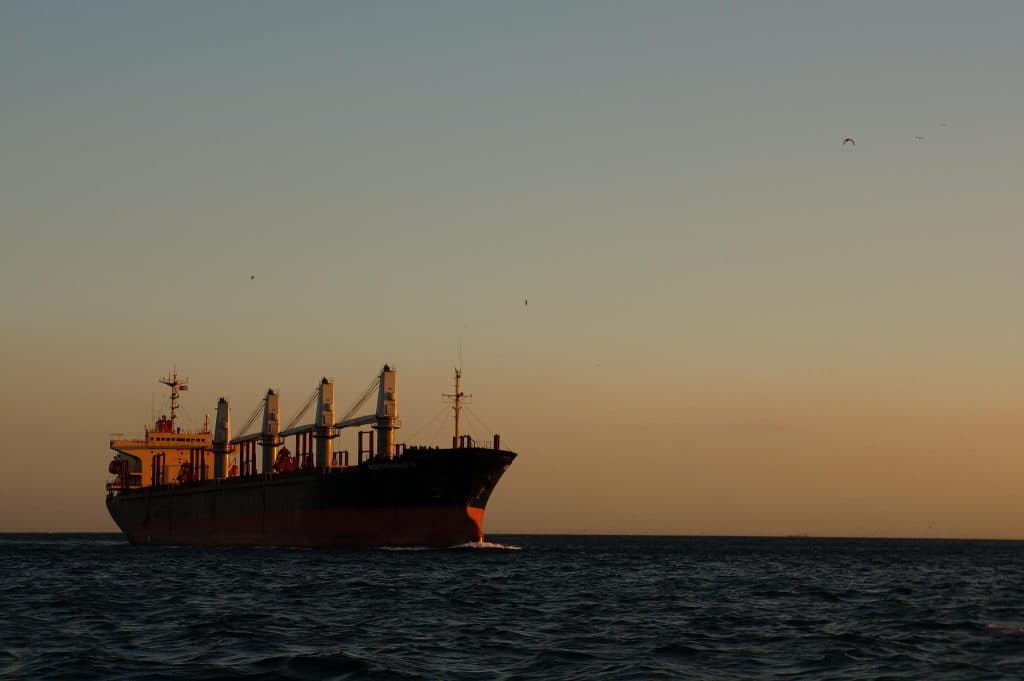
Capacity of 4 GWe corresponds to a British power plant that was also converted to burn pellets. It requires 7.5 million tonnes of pellets per year, representing 15 million tonnes of wood and thus roughly 12,000 km2 of forest (meaning a sustainable area capable of ensuring the stated annual supply). Like the United Kingdom, Germany would have to import the necessary pellets or wood from overseas. Ships carrying pellets would then arrive at German ports instead of ships carrying coal. German advocates of this approach claim that it will involve only “sustainable” biomass and point to the growth of global pellet production. Perhaps it will be “sustainable”, but it will cause great environmental damage and certainly will not be emissions-free. The problem is that other countries are also considering generating electricity by burning wood instead of fossil fuels and nuclear power. This includes Japan, for example, which certainly does not have enough forests and will import pellets from overseas. Interested associations are in fact considering a 15% share for biomass burning in electricity generation by 2050. It is meant to be an important part of the path to carbon neutrality. What massive demand will do to prices and forests, particularly in less developed countries, is not entirely clear, but it is unlikely to be anything positive.
If Germany really moves to large-scale replacement of coal with biomass, it will further highlight the absurdity of the debate in the European Union. The intensive and successful campaign by green activists against nuclear power and for intensive biomass use has led to truly low-emission nuclear sources being replaced by gas-fired and biomass sources. Cutting down forests overseas, transporting them to Europe by diesel-powered ships and burning them in former coal-fired power plants is labelled a green and clean source. An expert commission recently classified nuclear sources as sustainable and, from an environmental perspective, certainly no worse than renewables. They could therefore also receive the appropriate certification. However, this immediately triggered enormous opposition from green politicians in the European Parliament, so the final decision remains very much open. In any case, Germany must replace stable nuclear and coal capacity with something. It is left only with Russian gas and biomass. And with high allowance prices, the economic pressure to import pellets and burn them in former coal-fired units will be enormous.
In Czechia, all political parties are jointly contributing through their political manoeuvring to the rapid dismantling of our energy sector and creating a situation in which no new nuclear unit will be built. It is therefore possible that we, too, will ultimately burn pellets for electricity. Our disadvantage will be that we have no seaports, making pellet transport to Czechia more difficult. The question then is how we will maintain the competitiveness of our industry when we generate electricity from Russian gas received from Germany through the Nord Stream pipeline and overseas pellets imported via German ports.
Energy sources using biomass have their place mainly in decentralised forms, using primarily local sources of waste biomass. However, the described situation of mass electricity production from biomass, brought about by pressure from green activists, is something entirely different. My colleague Jan Kašinský and I described the possibilities and limits of biomass use in detail in an earlier article.
The following video shows what green electricity looks like in the Netherlands. And the entire European Union is following the same path:
https://videacesky.cz/video/nedele-s-lubachem-zeleny-proud
If we want to achieve a low-emission mix, we cannot do without nuclear units in Czechia, and before shutting down coal-fired units we must have replacements for them.
Translation disclaimer
This article is a machine translation of the Czech original and has not yet been fully reviewed. In case of any doubt, please refer to the Czech version.
Sdílejte článek prostřednictvím:
You might also like
23 October 2026, 11:01
23 October 2026, 06:34