The UK's latest renewables auction could disappoint. Price caps are low

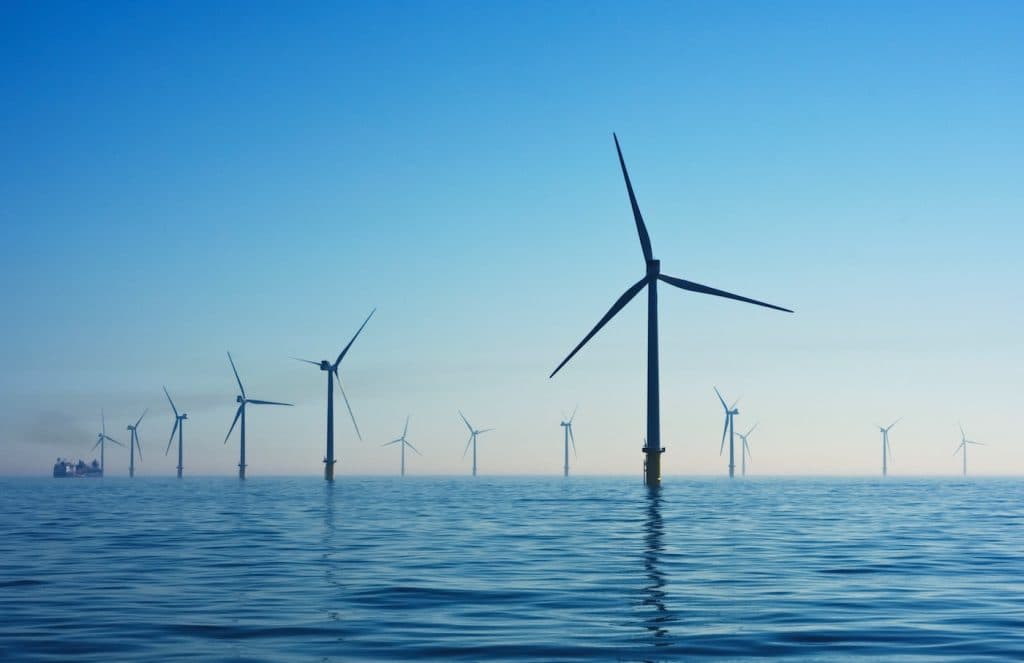
The United Kingdom is currently assessing this year's auction round to support the development of renewable electricity sources, with the results potentially due in early September. However, low maximum bid prices have raised concerns that the auction, in which developers compete for two-way Contracts for Difference (CfDs), may not be fully subscribed. Even securing support in the auction may not ultimately lead to a project being built, as was the case with one planned offshore wind farm.
Like many countries, the United Kingdom has ambitious targets for the development of low-carbon electricity sources, primarily nuclear and renewable sources. One of the support mechanisms is a system of auctions in which developers can compete for a guaranteed price for their electricity through a Contract for Difference (CfD).
Unlike auctions in Germany, where developers secure a guaranteed minimum selling price, contracts in the United Kingdom are two-way. When electricity market prices fall below the guaranteed price, projects receive operating support. Conversely, when market prices exceed the guaranteed price, operators must pay back the excess revenue.
This year's auction price caps may be too low for investors
The fifth round of auctions for support in the form of Contracts for Difference is taking place this year. According to think tank Regen, however, this year's round may be undersubscribed, especially because of the low maximum bid prices.
So-called administrative strike prices set the maximum price that a developer can secure at auction for each technology. For conventional offshore wind farms, for example, the cap for this round is 44 pounds per MWh, while for floating offshore wind farms it is 116 pounds per MWh. These prices are in 2012 terms, so inflation means the current figures would be higher; they will then rise further by the time the facilities enter operation and over their operating life.
"Developers were expecting administrative prices of around GBP 50/MWh and instead got GBP 44/MWh. We are hearing that the auction may not be fully subscribed, particularly for offshore wind, but also for floating offshore wind farms, which would be a major problem," Johnny Gowdy, director of the UK renewable energy non-profit Regen, told news outlet Montel.
The United Kingdom wants to increase installed offshore wind capacity to 50 GW by 2050, of which floating wind farms would account for 5 GW, according to Montel. Investors' reluctance to proceed with projects could put this target at risk.
One of the first examples could be a project by Vattenfall, which was halted last month. Representatives of the Swedish company said that it "simply no longer made sense to continue with the project", as expected costs had risen significantly and it would have made a loss. The wind farm had secured a Contract for Difference at 37.35 pounds per MWh, also in 2012 terms.
The United Kingdom remains an attractive market, but the government must engage with the industry
Potentially low participation in the auction is also a concern for Faisal Wahid, a senior consultant at LCP Delta. A shortage of projects could give the UK government an opportunity to adjust the terms for next year's auction, he said.
"If the current auction is undersubscribed, the government should look at why that has happened. If we find ourselves in a situation where successive auctions fail to secure sufficient capacity, that would be very concerning," Faisal told Montel.
Even so, Faisal said the country remains an attractive market for offshore wind developers. However, he said the government needs to engage with industry representatives and "come up with a better plan that reflects the real costs".
Translation disclaimer
This article is a machine translation of the Czech original and has not yet been fully reviewed. In case of any doubt, please refer to the Czech version.




