ČSA mine: the first major test of the state's new land reclamation and energy policy

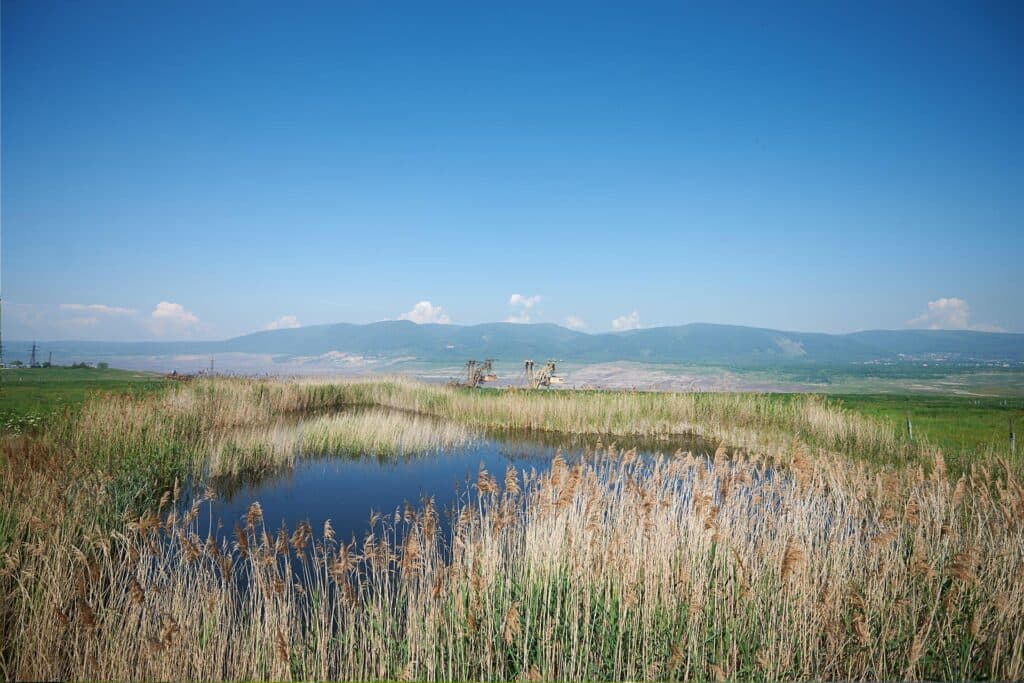
The Czechoslovak Army (ČSA) mine in the Most region was, for decades, one of the Czech Republic's most significant large-scale lignite mines. Thanks to the coal's high calorific value and its strategic location, it was a key fuel source for both power generation and district heating. However, following the end of mining, the ČSA mine did not become a “classic” land reclamation project modelled on the patterns of past decades. Instead, it has become a pilot area where ecological restoration, energy use and managed public access are being combined on a large scale for the first time.
This change was brought about by Czech Government Resolution No. 479 of 28 June 2023, which approved a new concept for the use of the post-mining area. The resolution followed previous government decisions on the future of coal regions, including Czech Government Resolution No. 421 of 17 June 2019. Rather than technical reclamation and artificial flooding of the mine, an approach based on natural succession, biodiversity protection and selective infrastructure development was chosen.
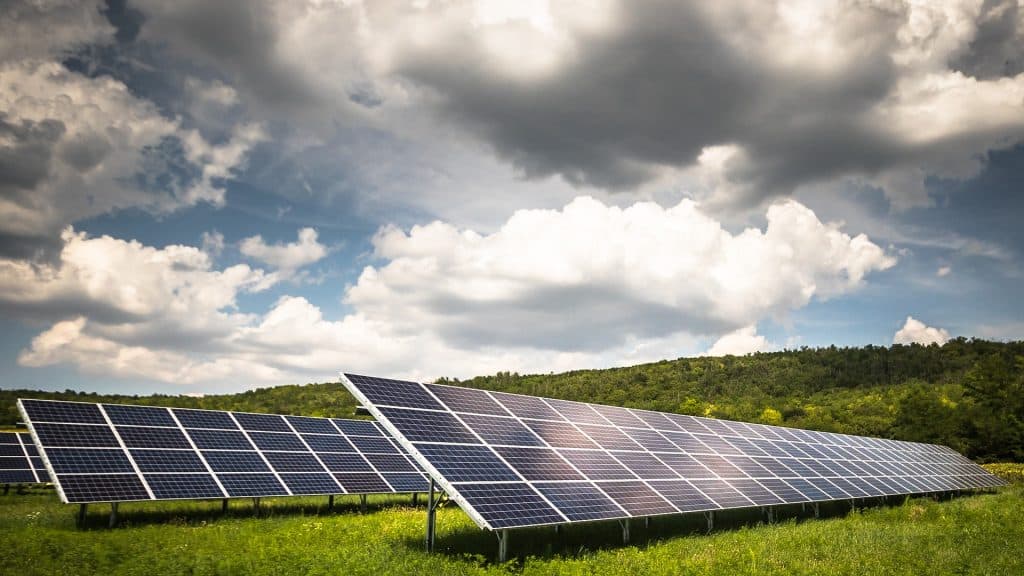
The area is expected to see the development of photovoltaic power plants, the Green Mine project and, in the long term, potentially a pumped-storage hydropower plant. At the same time, the ČSA Mine National Natural Monument was declared, encompassing the biologically most valuable part of the area. This change in the reclamation approach is linked to financial savings that are intended to be returned to the region.
Financial savings and a dispute with the state
The change in the approach to reclamation and remediation in the ČSA Mine National Natural Monument area has generated substantial financial savings. Severní energetická is to transfer these savings to the State Environmental Fund (SFŽP), which will subsequently return them to the region through grant mechanisms. Severní energetická and the SFŽP cannot agree — at least according to public information — on the amount of savings that Severní energetická is to transfer as a contribution to the SFŽP
The two sides differ over the amount from which the contribution should actually be derived. Public debate often refers to a contribution of slightly more than one billion koruna, based on the overall reduction in the reclamation provision. Severní energetická rejects this interpretation. According to the company, it confuses two distinct categories. “The notion of a contribution of CZK 1 billion stems from a misunderstanding of the situation, namely confusing the write-down of a provision with savings in the ecological restoration area — now the ČSA National Natural Monument area,” the mining company says. It also stresses that “the government resolution and the agreement clearly state that the contribution will be calculated from savings achieved in the ecological restoration/succession area”.
The original Comprehensive Remediation and Reclamation Plan, based on the Mining Act, did indeed envisage a reclamation provision of approximately CZK 2.84 billion. Following the change in the reclamation approach and the incorporation of ecological restoration, this requirement was recalculated at around CZK 1.8 billion. The difference between the provision created and the newly determined remediation costs therefore generates financial savings of around CZK 1.04 billion, an amount approved by the District Mining Authority. Under Section 37a of Act No. 44/1988 Coll., this amount is accounted for as a reduction in the provision and belongs to the mining organisation.
According to Severní energetická, however, this entire amount is not a relevant basis for the contribution. The company repeatedly explains that the released provision consists of two substantively distinct parts. The explanation of the so-called “second half-billion” is key. “These are savings on projects outside the area covered by the contribution agreement,” Sev.en says. “Put simply, these were works carried out more cheaply than envisaged in the 2016 budgets, which resulted in an overfunding of the financial provisions.” According to the company, these funds would normally have been released when the reclamation plan was updated around 2019–2020.
“However, this did not happen because the state decided to change the reclamation concept and, in a letter from the environment minister, asked us to wait for its decision on the future concept for restoring the mining landscape,” the company adds, saying that it complied with this request.
Severní energetická links the second part of the savings, also approximately CZK 500 million, exclusively to the change in the reclamation approach in the ecological restoration area.
“To quantify the savings, we conducted a detailed review of reclamation projects in the affected area that will not be carried out thanks to natural succession. The result is savings of CZK 466 million,” the company says. It also adds that “we presented these projects to the state and are prepared to document them during negotiations” and that the state had been aware of the approximate scale of these savings since the beginning of 2023.
Land dispute
The issue of valuing the land that Sev.en is to transfer to the administration of the Czech Nature Conservation Agency (AOPK ČR) also enters into the dispute over the contribution amount. Under the contractual formula, the value of this land is deducted from the final contribution. Sev.en puts the price at approximately CZK 155 million for around 77.5 hectares. AOPK ČR confirms that “the value of this land was set at approximately CZK 155 million in an expert appraisal submitted by the company”. However, it also says it commissioned its own valuation:
“The official valuation broadly corresponds to the amount set in the mining company's appraisal. However, an expert opinion estimates the market value of the land at just under CZK 5 million. When selling land, the company must follow expert appraisals — in this case, three identical ones — and an expert's opinion of the land's value has no bearing on the matter,” Sev.en said regarding the value of the land.
AOPK ČR also notes that the land is to be transferred as a gift and “the confirmed value of the gift must correspond to the actual value of the land”. Until an agreement is reached, “the agreement cannot be concluded and the land remains the property of Sev.en”. The final value of the land could therefore significantly affect the final amount of the contribution. Responding to the editorial team's enquiry, Sev.en said that “the transaction will either be completed in its entirety as defined by the agreement, or it will be cancelled”.
Regardless of the outcome of the dispute over the contribution amount, the transformation of the ČSA mine is part of the broader decline of the coal industry in northern Bohemia and represents the first major lignite mine in the region to transition from extraction to a new use of the land. The Vršany and Bílina mines are due to follow in the coming years, meaning that most of the Czech Republic's lignite mines will close over the next decade. Experience from the ČSA mine — particularly with ecological restoration and coordination among miners, the state and municipalities — may therefore serve as a practical model for other sites. It shows that the end of mining need not mean the decline of an area, but can become an impetus for a new combination of natural restoration, energy projects and regional development.