7 October 2026, 16:15
Loading...
How can “flexible connection” become standard? German developer presents model battery agreement

Lukáš Lepič
8 July 2026, 10:40
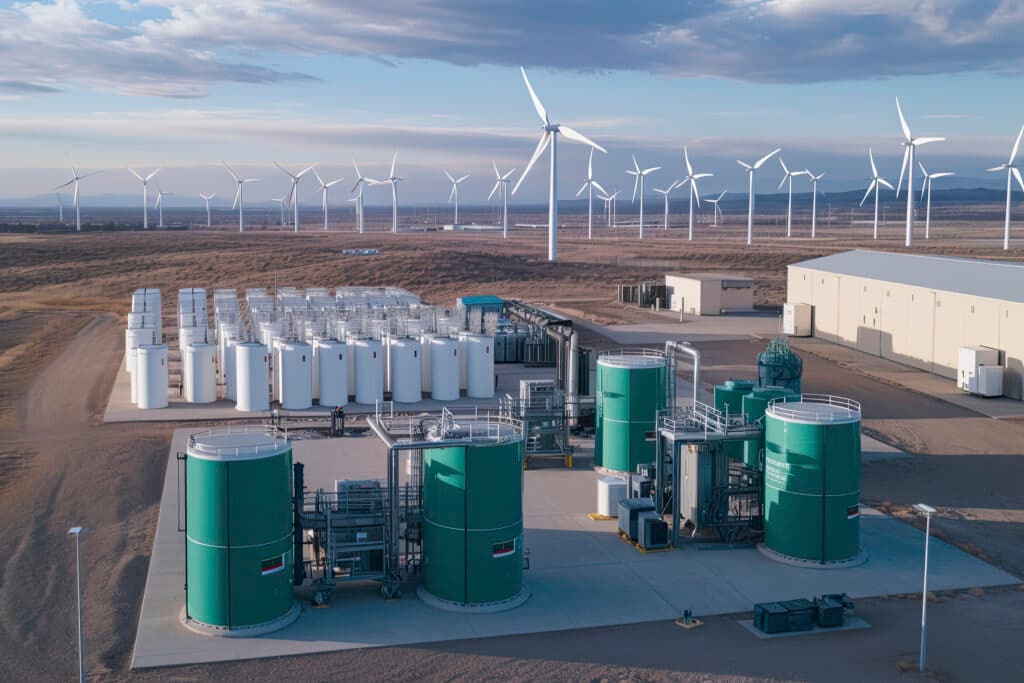
German utility-scale battery storage developer Green Flexibility has published a model contract intended to standardise so-called Flexible Connection Agreements (FCAs). These currently allow storage facilities to connect even in congested grids in exchange for the network operator being able to curtail their output at critical times. The problem is that each agreement is negotiated separately and the extent of curtailment varies from case to case, complicating project financing. The model contract aims to turn these individual agreements into a repeatable and predictable framework. In a country where several hundred GW of batteries are waiting for grid connections, this could be more than a corporate initiative—but for now it is a proposal from one market player, not a binding standard.
Flexible connections are a pragmatic response to one of the most pressing problems facing Europe’s energy sector: the shortage of available capacity in distribution grids. Rather than wait years for the grid to be reinforced, a project can connect sooner, with the understanding that the network operator may temporarily curtail its output in certain situations. The scale of the problem in Germany is enormous: according to analyses by energy trader enspired, German network operators had received connection applications for around 720 GW of battery storage by early 2026, equivalent to roughly nine times the country’s annual peak consumption. The grid cannot absorb such a surge, and many projects are hitting capacity limits and facing multi-year delays.
Seeking predictability
The key issue is not the concept of flexible connections itself, which already exists in Germany, but the effort to standardise it. So far, each FCA has been negotiated bilaterally, with the extent of curtailment and the terms varying according to the network operator and the individual contract. This creates a risk that is difficult for developers and banks to quantify: a storage facility’s revenue depends on how often and to what extent its output is curtailed, and this is not clearly defined in advance. Financing large projects relies on stable and predictable revenues, so this uncertainty increases the cost of capital or puts projects on hold altogether.
The model contract aims to fill this gap by offering a repeatable framework with predictable rules—and lenders with familiar, comparable terms. Green Flexibility draws on its own experience: it says it concluded Germany’s first-ever flexible connection agreement, and its connection and operation concept, called REGIOlink, includes a portfolio of models ranging from dynamic to standardised ways of connecting batteries. The idea is to use regionally tailored, grid-beneficial management instead of rigid capacity limits.
A so-called “feed-in socket” being implemented by the company with regional distribution system operator LEW Verteilnetz shows how this works in practice. In Balzhausen, Bavaria, the distributor has undertaken to connect three storage facilities, three solar power plants and a wind farm with a combined capacity of 126 MW to a single connection point rated at 80 MW. Since the individual sources do not deliver peak output at the same time, this combination has increased the effectively usable connection capacity by around 60%, without reinforcing the grid.
What the contract could change in the market
If standardisation takes hold, it could move flexible connections from an emergency solution to a routine and “bankable” tool. This would speed up storage connections, simplify negotiations with network operators and improve projects’ access to financing. The benefits would not be purely commercial: faster integration of batteries helps ease congestion, reduce renewable generation curtailment and dampen price fluctuations.
Caution is warranted, however, for two reasons. Green Flexibility is not an independent regulator, but a developer and so-called independent flexibility provider backed by investor Partners Group, which has invested around 400 million euros. Publishing a model contract is therefore also a way of setting a market standard based on its own concept. That is not inherently a problem—active market players often drive progress—but the final rules should be agreed by network operators, the regulator and other developers to avoid creating a standard tailored to a single company. The second risk is that exceptional curtailment could become routine, with flexible connections replacing genuine grid reinforcement.
The European framework: a useful tool, not a substitute for the grid
Flexible connection agreements are supported in Germany by the Renewable Energy Sources Act (EEG, §8a) and the Energy Industry Act (EnWG, §17), which also covers consumers, flexible resources and large standalone storage facilities. This year, transmission system operators have also introduced a so-called project maturity model to allocate connections to large battery projects and distinguish viable proposals from speculative applications. This is a problem Czech distribution companies are also familiar with: they have received thousands of applications to connect standalone batteries to the grid.
The issue extends beyond Germany. According to the Energy Storage Europe association, more than 1,700 GW of renewable and hybrid projects are stuck in European connection queues, with congestion most severe in Germany. In a position paper published at the end of 2025, the association recommends reforming connection procedures, creating priority “lanes” for storage and other grid-supporting resources, designing flexible connection agreements carefully, and publishing maps of available grid capacity.
At the same time, it warns that FCAs should be proportionate, technology-neutral and time-limited; they should not replace market-based redispatch, and regulators should monitor their use closely to ensure they remain a targeted tool rather than becoming routine. A model contract that puts these principles into practice could be useful; standardisation that makes curtailment the norm, less so.
The issue is also relevant to Czechia. The local equivalent of an FCA is so-called non-guaranteed connection, which distributors introduced for new solar power plants: operators can curtail generation by up to 5% of annual output without compensation. Czech grids are also facing a surge in applications: the CEO of ČEZ Distribuce recently warned that connection agreements are in place for around 18 GW of solar projects, while only about 3 GW are actually connected, and that reserved capacity is becoming an investment asset regardless of whether a project is built.
The question raised by the German model contract is therefore relevant here too: how can flexible and non-guaranteed connections be designed to speed up construction, remain fair and financeable, and avoid becoming a quiet tool for permanently curtailing new resources instead of reinforcing the grid?
Translation disclaimer
This article is a machine translation of the Czech original and has not yet been fully reviewed. In case of any doubt, please refer to the Czech version.
Sdílejte článek prostřednictvím:
You might also like

7 October 2026, 11:20