10 August 2026, 15:50
How to prepare for a blackout? ČEPS to launch new “SOS” service

Jakub Malý
11 May 2026, 12:34
This article is a machine translation of the Czech original and has not yet been fully reviewed. In case of any doubt, please refer to the Czech version.
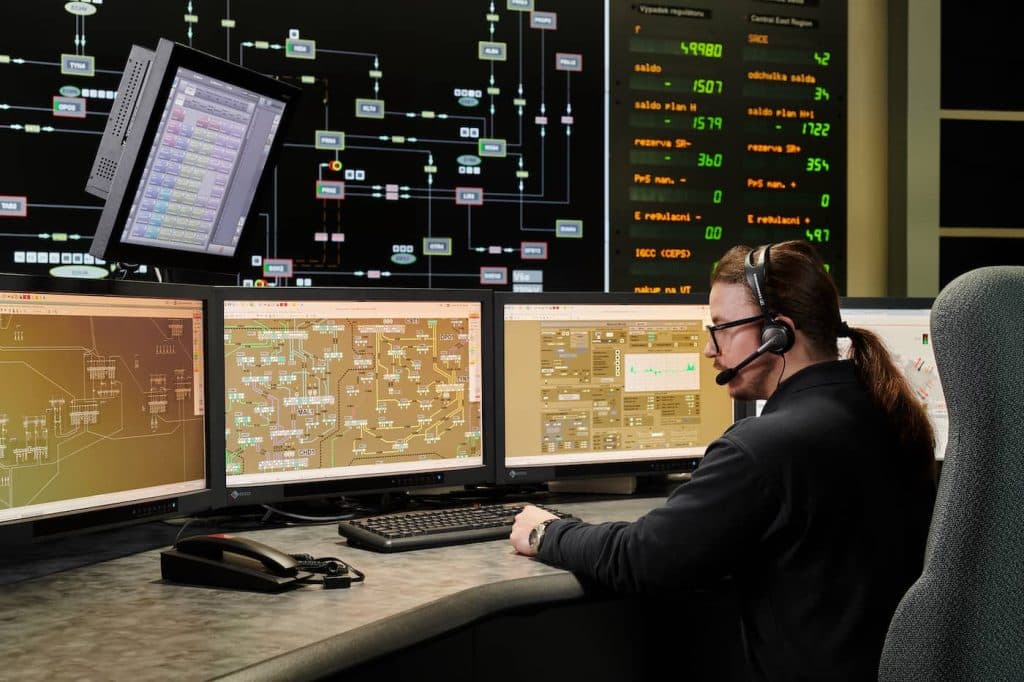
ČEPS has opened a public consultation on the introduction of a new ancillary service called System Restoration Capability (SOS). The consultation concerns proposed amendments to the Transmission System Operation Rules, specifically the Transmission System Code – Part II and the Transmission System Code – Part V. Comments may be submitted from 23 April to 24 May 2026, with ČEPS explicitly stating that the consultation covers only the changes highlighted in yellow in the relevant documents.
From a technical perspective, this is not a minor adjustment to the terminology of ancillary services. The Transmission System Code defines the rules for connecting to and using the transmission system, the conditions for providing ancillary services, and other operational arrangements necessary for the system’s security and reliability. Part II of the Code deals with ancillary services, their technical functions, conditions for provision, certification and procurement rules. Part V describes, among other things, the system defence plan and restoration plan—that is, the strategy, priorities and responsibilities for restoration following a system disturbance such as a blackout.
ČEPS’s existing framework already distinguishes power-balancing ancillary services, such as FCR (automatic frequency restoration reserves), aFRR (automatically activated power-balancing reserves) and mFRR (manually activated reserves), as well as so-called other ancillary services. These include, for example, island operation (OP) and black start (BS). Black start is the capability of a generating unit to start up without external voltage, reach the required voltage, connect to the grid and supply it in island mode. ČEPS describes it as a service enabling the restoration of supply after a complete or partial system collapse.
The new SOS service therefore appears to represent a shift from certifying an individual capability of a generating source towards a broader system restoration product. In other words, it is not merely a question of whether a particular generating unit “can black start”, but whether it is capable, as a whole, of playing a role in the gradual restoration of the power system: creating a voltage island, stabilising frequency and voltage, enabling the connection of further system elements, and cooperating with dispatch control. This is particularly important because recovery after a blackout is not a one-off start of a generating source, but a coordinated sequence of steps in which the power system is reassembled from local islands into a synchronously operating whole.
This development fits within the European NC ER (Network Code on Emergency and Restoration) framework, the network code for electricity system emergencies and restoration. ENTSO-E states that this code sets out the processes transmission system operators must follow during grid incidents, and its regulation covers, among other things, the design of restoration plans, re-energisation, frequency management, resynchronisation, communication procedures and testing of generating module capabilities.
Changing generation mix
The importance of SOS is growing as the generation mix changes. The Czech system was historically built around large synchronous generating sources, which, in addition to electricity generation itself, also provided some of the system’s physical characteristics: inertia, short-circuit power, control capabilities, reactive power and, in some cases, island operation or black-start capability. As coal-fired sources are retired and generation from renewable sources connected via power electronics grows, these capabilities can no longer be taken for granted as an incidental by-product of generation. This is precisely why they are gradually becoming separately defined, measured, certified and priced services.
Developments abroad show that other European countries are addressing a similar issue. German transmission system operators, for example, state that restoration after a major outage requires facilities capable of independently supplying a predefined part of the grid without external power while also regulating frequency and voltage. The German model also moves towards transparent, non-discriminatory and market-based procurement of these capabilities, with tenders potentially including sources that are not yet fully equipped for black start at the time of the tender but must become so before service provision begins.
The introduction of SOS appears to be the right step because it names a service that has always been crucial to system stability but, in the era of large conventional sources, often blended into routine operational reality. The energy transition, however, is separating electricity generation from system capabilities. If the Czech power system is to safely navigate the coal phase-out and the growth of decentralised generation, capabilities such as black start, island operation and coordinated restoration after a blackout must be explicitly procured, tested and paid for.
Sdílejte článek prostřednictvím:
You might also like

10 August 2026, 09:33

9 August 2026, 14:38