A promising opportunity for batteries: What are daily spreads on the Czech spot market?

Martin Voříšek
Martin Voříšek
28 August 2026, 06:14
denni-rozdily-na-ceskem-spotovem-trhu-rostou-pro-baterie-jsou-slibnou-prilezitosti

The difference between the lowest and highest electricity price during the day on the Czech spot market has increased significantly compared with the period before the energy crisis. This creates room for commercial flexibility for battery storage, although experience from mature markets shows that rapid growth in their capacity can quickly reduce spreads again.

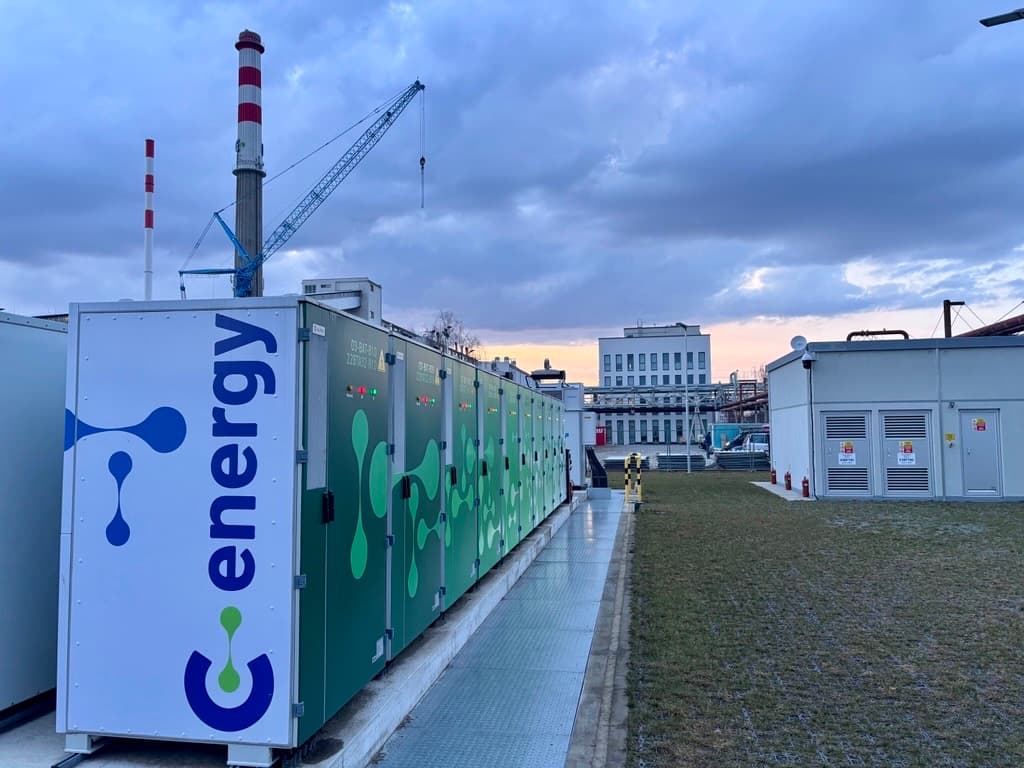
One source of revenue for batteries is commercial flexibility – they can buy electricity in hours with low prices and feed it back into the grid, particularly during evening peaks. The difference between the daily minimum and maximum is therefore one of the key indicators of their revenue potential.

This is not, however, revenue that can be achieved automatically. Batteries may not buy exactly at the daily minimum and sell at the maximum, while losses or the use of facilities for balancing services also reduce part of the spread. It is therefore primarily an indicative measure of the commercial opportunity.

The following chart shows how average differences between low and high prices on the Czech market have developed since 2015, how exceptional 2022 was, and how the price profile has changed this year.

The crisis year changed price conditions

Before the energy crisis, Czech spot prices were significantly lower and their seasonal fluctuations were more limited. In 2020, average prices in the available series ranged from approximately 20,6 EUR/MWh in July to 42,1 EUR/MWh in December. Between 2015 and 2020, they often stood at only around 40 to 50 EUR/MWh. Although the price profile responded to weather, consumption and the availability of generation sources, the scope for significant daily arbitrage was substantially smaller than in the subsequent period.

It was not until the end of 2021 and 2022 that a fundamental turning point came. Average values then fluctuated from 111,7 EUR/MWh in May to as much as 286,5 EUR/MWh in September. The exceptionally expensive period was linked to the European energy crisis. During the energy crisis, however, battery storage was not yet as widespread as it is now.

After the worst part of the crisis subsided, spot price levels fell, but price volatility did not return to 2020 conditions. Faster growth in solar PV is gradually deepening midday price troughs, while the costs of fast-reacting generation sources continue to push up prices in the evening. This combination creates the conditions for the so-called “duck curve” in the day-ahead market and opens up space for the commercial model of large-scale batteries.

This summer shows the scale of evening peaks

This year’s data confirm that price differences are not linked solely to midday declines during high solar PV generation. The average price in February 2026 stood at 67,7 EUR/MWh, while in June it reached 190,3 EUR/MWh. It reached 181 EUR/MWh in May and 161,8 EUR/MWh in August.

Higher summer prices show the market’s sensitivity to a combination of high temperatures, limited generation from some sources and higher electricity consumption, including as a result of greater use of air conditioning. Batteries can therefore benefit in such an environment not only from the regular daily profile, but also from exceptional evening peaks.

More significant, however, is the structural change in the shape of prices. Nevertheless, the Australian example shows that the rapid deployment of batteries itself can gradually dampen their commercial opportunity. In Australia’s NEM market, the capacity of large batteries exceeded 9 GW and doubled year on year. At the same time, the average difference between the price at charging and discharging fell from 342 to 51 AUD/MWh, or by approximately 85 %.

The Czech market may face its own cannibalisation

Batteries increase demand in cheap hours when they are charging and, conversely, increase supply in expensive hours when they are discharging. The result is a gradual flattening of the price profile, which depends on the scale of storage capacity in the power system.

For the Czech Republic, the pace of construction is therefore key, as is how quickly new capacity will affect prices in the day-ahead market. During the first half of 2026, 318 MWh of battery storage capacity was commissioned in Czechia, according to data from the AKU-BAT association, while Second Foundation’s projects under development exceed 300 MW and Sev.en Group’s plans total approximately 160 MW.

Current day-ahead market spreads therefore represent a promising signal for investors. However, it is difficult to estimate whether they guarantee future revenues. Projects commissioned earlier may benefit from still-limited competition. As the number of batteries grows, however, part of today’s potential may turn into lower revenues as a result of less pronounced midday price declines, milder evening peaks and greater pressure to diversify revenue streams beyond price arbitrage alone.

Translation disclaimer

This article is a machine translation of the Czech original and has not yet been fully reviewed. In case of any doubt, please refer to the Czech version.

OM Solutions s.r.o.
Kpt. Nálepky 620/7, Nové Dvory, 674 01
Třebíč
Company registration No.: 02682516