20 October 2026, 15:34
Loading...
Czech industry must go green to survive, expert says
Ekonews.cz
13 March 2023, 10:42
Last August saw a decision that could be one of the most important steps in the fight against climate change this decade. With relatively little notice, the United States Congress voted to adopt the Inflation Reduction Act. It is a massive investment package that could fundamentally reshape Europe’s and other countries’ approach to the green transition.
The transition to clean technologies, including their research, development and manufacturing, can no longer be seen purely as a matter of cutting emissions, but also as a question of maintaining competitiveness in the global market. The green race has begun, and Czechia should take note.
Under the anti-inflation package, the United States plans to support green technology projects. At least $369 billion has been earmarked for the programme over the next ten years, meaning the United States will invest more than one percent of GDP in climate measures. However, the programme contains some strongly protectionist elements that concern US trading partners, including the EU. Tax incentives and subsidies are provided only to companies that manufacture in America.
Europe therefore fears that strategic industries, such as the production of electric vehicles, batteries and renewable energy components, will relocate to the US. Indeed, battery giant Northvolt has already announced plans to move a planned battery factory from Germany to the US. Meanwhile, China continues to subsidise its domestic green economy at twice the level of the EU and controls most green technology supply chains. Around 80 percent of the world’s batteries and solar panel components are manufactured in China. Europe is therefore in a difficult position and must quickly come up with a solution.
The European Commission presented its plan for developing Europe’s green industry (Green Deal Industrial Plan) at the beginning of this year, and a political debate is currently under way on what strategy the EU should pursue. Member states are divided between those seeking a greater relaxation of state aid rules and those opposed to it. Countries are similarly divided over whether the EU should jointly borrow again, as it did during Covid-19, and establish a new fund to support green industrial manufacturing.
Czechia takes a moderate position on both issues. One of the main arguments against excessive relaxation of state aid rules is that such a move would disproportionately benefit large countries (Germany, France) and countries with low public finance deficits (Denmark, Sweden), while disadvantaging those that cannot afford greater support from their state budgets, including Czechia.
Czechia in the shadow of Poland and Hungary
On the other hand, Central and Eastern European countries are among those that should pay the closest attention to the IRA debate. The Central European region has the potential to become a European hub for the manufacture of green technologies and components. Developments in Poland and Hungary demonstrate this. Through a combination of skilled workers and state incentives, these countries have managed to attract billions in investment in green technology manufacturing.
The world’s largest battery manufacturer, CATL, plans to build its second European gigafactory in Hungary (the first is in Germany). Poland is already one of Europe’s leaders in battery manufacturing and has also seen rapid growth in the heat pump sector in recent years.
By contrast, Czechia is lagging behind in green technologies. Although we have promising results in battery technology research and development, batteries are hardly manufactured here on an industrial scale. Among other things, we are the last of the Visegrád Four countries not yet to have a gigafactory. We also lag behind our neighbours in developing the skilled workforce that could fill green jobs. This is the result of decarbonisation not being a priority for any of the governments to date. It is high time to reconsider this approach, as Czechia’s future competitiveness lies in green technologies.
Pulling together
If the European Union wants to compete with China and the United States, it will have to pull together. One of the main reasons China has managed to maintain a leading position in green technology manufacturing is not so much cheap labour as its ability to manufacture at large volumes, thereby cutting costs while attracting investors. This is precisely what the United States is now targeting with its investment package. However, this is not always straightforward in industrial policy. Countries compete not only with foreign rivals, but also with one another. Europe will therefore have to find its own way to respond effectively to global developments while safeguarding its unity.
Here, the European Union could take inspiration from the US. In the EU, for example, there is still no EU-wide support for electric vehicles, while in the United States support operates at both state and federal level. However, not every aspect of the Inflation Reduction Act is worth following. The American approach could be characterised as “all carrot, no stick”. To get the act through Congress, its regulatory components had to be significantly scaled back.
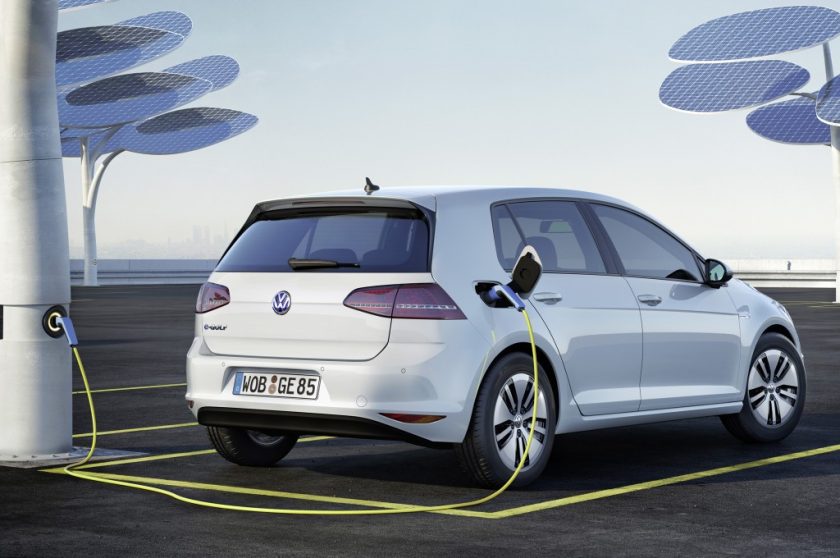
The EU, by contrast, has a fairly well-designed regulatory framework in the form of the Green Deal, but it now needs to be supplemented with appropriate investment. This must be directed at strategic sectors (batteries, solar panels, heat pumps), must not favour some member states over others, and must be conditional on environmental and social safeguards.
Finally, it is important to recognise that while healthy competition is a welcome development for decarbonisation, a trade war would certainly not benefit climate protection. The fact that the United States will massively support the development of green technologies over the next ten years is ultimately good news. As a result, the prices of these technologies will fall, not only in the US but elsewhere in the world as well. In retrospect, the US Inflation Reduction Act may be viewed as a turning point in global efforts to reduce emissions.
Republished from the online portal EkoNews.cz, a website covering business and sustainability.
Translation disclaimer
This article is a machine translation of the Czech original and has not yet been fully reviewed. In case of any doubt, please refer to the Czech version.
Sdílejte článek prostřednictvím:
You might also like
20 October 2026, 12:55
20 October 2026, 10:49
20 October 2026, 06:13