Global power sector emissions may have peaked last year, analysis shows
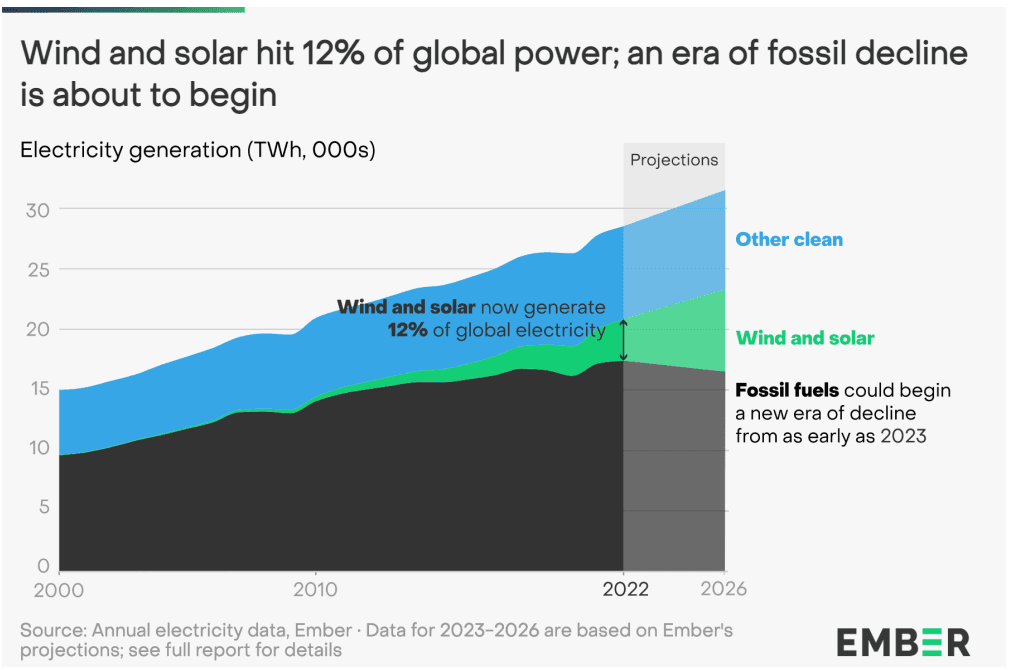
Energy think tank Ember has published a report on developments in the global electricity market, titled Global Electricity Review 2023. According to the report, wind and solar power plants generated a record share of the world’s electricity in 2022. From 2023 onward, these plants could lead to a decline in the share of electricity generated from fossil fuels.
Energy think tank Ember focuses on supporting the transition to clean electricity. Ember has published its fourth annual report on the global electricity market, Global Electricity Review 2023. In addition to mapping global changes in electricity generation, the report assesses whether the world is on track to limit the rise in global warming to a maximum of 1,5°C.
The report analyses data from 78 countries, which Ember says represent 93 % of global electricity demand, and estimates the remaining data. It focuses on the electricity sector, which Ember considers key to achieving climate neutrality by 2050. At the same time, based on the IEA’s Net Zero Emissions scenario, it assumes that the world will achieve climate neutrality first in electricity generation. Ember uses this scenario in its report as the reference scenario for achieving climate neutrality. Ember presented three main findings from the report.
Solar and wind power plants reach a record share of generation
In 2022, the global carbon intensity of electricity fell to a record low of 436 gCO2/kWh. This was driven by record growth in generation from wind and solar power plants. These plants accounted for 12% of the global electricity mix in 2022, up from 10 % in 2021. More than 60 countries now generate over 10 % of their electricity from wind and solar power plants.
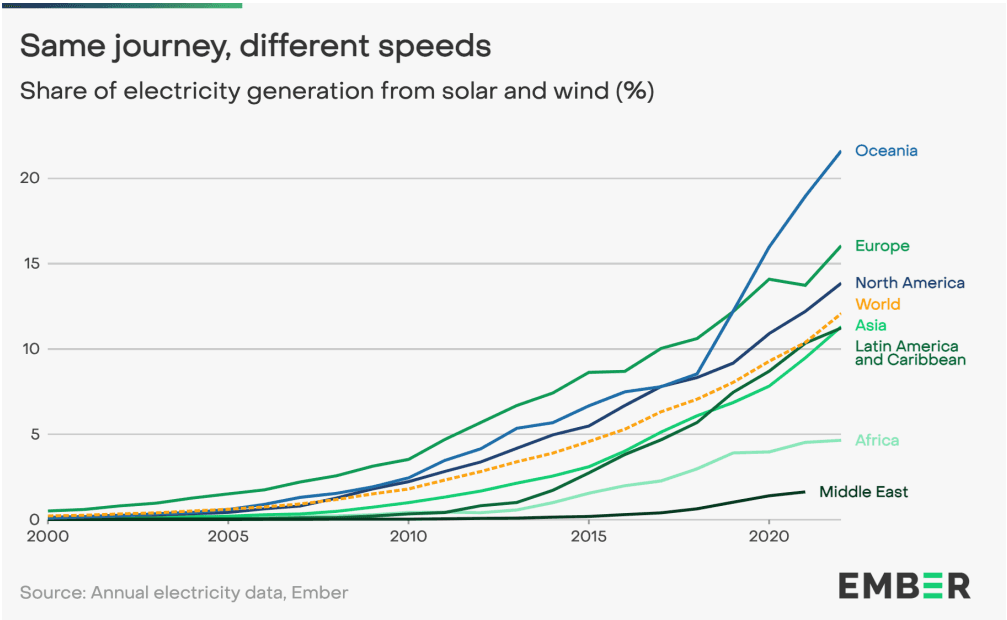
All low-carbon sources of electricity, meaning renewables and nuclear power plants, accounted for 39 % of global electricity generation. Solar power plants were the fastest-growing source of electricity, with year-on-year growth of 24 %. By contrast, the share of nuclear and hydropower plants fell due to lower generation, partly as a result of a period of drought.
Coal-fired power generation also increased
Emissions from the power sector rose by 1,3 % in 2022, reaching an all-time high. The share of clean electricity is also at a record level, but overall electricity consumption is growing too. Coal-fired power generation increased by 1,1 % year on year, in line with the trend of recent years. Ember stressed that the gradual shift away from coal-fired power generation agreed by countries at COP26 in 2021 has yet to take place. At the same time, the energy crisis did not lead to a major increase in coal-fired power generation.
Natural gas-fired power generation fell by a negligible 0,2 %. In 2022, the fewest coal-fired power plants in the past seven years were closed. According to Ember’s report, this was because countries want to maintain backup capacity.
Ember expects an era of declining power sector emissions
The report’s findings indicate that continued growth in installed capacity and generation from solar and wind power plants will reduce power sector emissions. Ember expects generation from fossil fuels to decline slightly in 2023. It also assumes that clean electricity will grow faster than electricity demand. This would lead to a reduction in emissions from electricity generation.
2022 could therefore be the year in which global power sector emissions peak. According to Ember, this shift is happening partly because the invasion of Ukraine contributed to further increases in fossil fuel prices, prompting countries to focus on investment in electrification, including technologies such as heat pumps, electric cars and electrolysers.
Translation disclaimer
This article is a machine translation of the Czech original and has not yet been fully reviewed. In case of any doubt, please refer to the Czech version.




