7 November 2026, 17:23
Loading...
GIE report: Impact of the crisis on decarbonization in Central and South-Eastern Europe
Veronika Jurcová
25 November 2023, 12:48
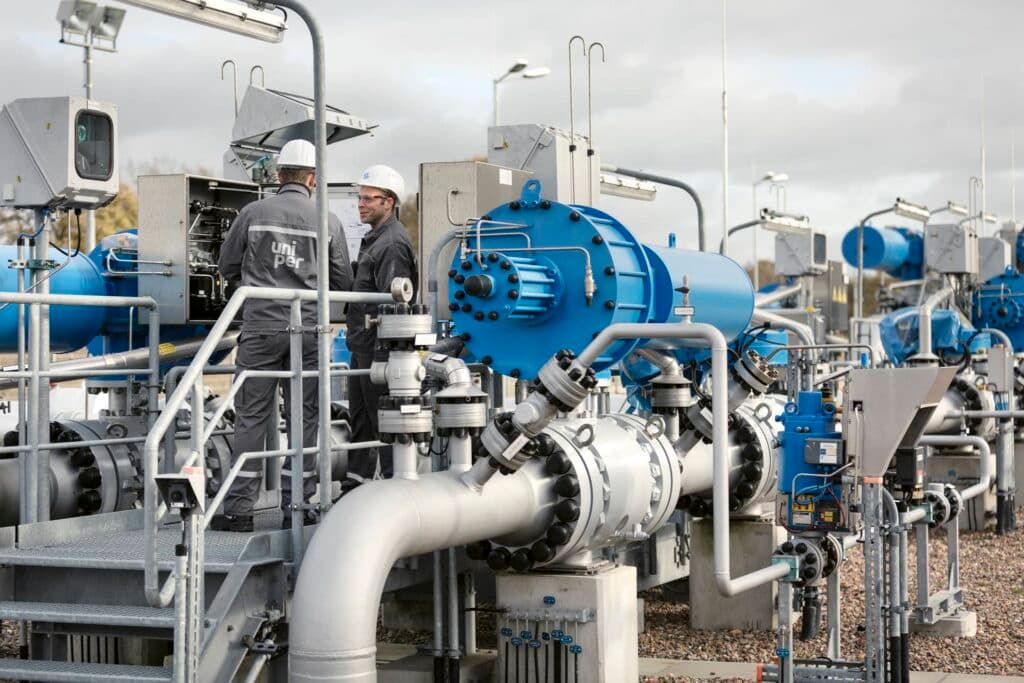
Gas Infrastructure Europe (GIE), an organization representing gas transmission system operators, gas storage operators and LNG terminal operators, presented a report on 16 November on progress in decarbonizing Central and South-Eastern Europe (CEE and SEE), prepared in cooperation with Deloitte. The third edition of the report focuses on the impact of the energy crisis on decarbonization plans and gas infrastructure.
The report on decarbonization in the CEE and SEE regions examines the situation in detail in 14 countries: the Czech Republic, Estonia, Croatia, Cyprus, Lithuania, Latvia, Hungary, Poland, Austria, Romania, Slovakia, Slovenia and Greece. It analyzes key information on energy markets, emissions, emissions targets and the main challenges and strategies related to decarbonization. The report also provides an overview of national and cross-border decarbonization projects.
This year's edition focuses in particular on the impact of the energy crisis following Russia's invasion of Ukraine in February 2022. It describes how gas flows in Europe have changed, the growing importance of liquefied natural gas and gas storage, and the role of so-called green gases, such as hydrogen and biomethane, in the context of European legislation.
The report is divided into three parts: a regional analysis, a sectoral analysis and, in the third part, brief profiles of individual countries.
Regional analysis
In its section on regional issues, the report focuses in particular on the high energy intensity of economies in the region. Although some countries, such as Hungary and Slovakia, have reduced the energy intensity of their economies despite an increase in economic activity in the post-COVID-19 period, all other countries in the region, with the exception of Austria and Cyprus, remain above the EU average.
The region also has a high share of coal and oil in its overall energy mix. The return of approximately 11 GW of coal capacity to standby, driven by high natural gas prices, has played an important role. Nevertheless, all countries in the region except Poland have expressed an intention to phase out coal in the short or medium term.
"While the energy crisis has led to a significant increase in coal-fired electricity and heat generation, in the long term we are still on track to phase out coal as planned. Accelerated mining of the remaining available coal resources has shortened the lifespan of these deposits. It is therefore even possible that some countries may phase out coal gradually before their planned official phase-out dates," says Miroslav Lopour, senior manager for energy strategy at Deloitte
Impact of the energy crisis
The energy crisis following Russia's invasion of Ukraine in February 2022 has particularly affected the region's strategy for using natural gas. EU demand fell by 13.2 % overall in 2022. In the CEE and SEE region, gas imports from Russia fell sharply and were replaced mainly by supplies of liquefied natural gas (LNG). This change significantly affected gas flows in the region, with traditional transit countries such as Czechia, Austria and Slovakia becoming final destinations for LNG. There was also a need for new infrastructure projects to connect landlocked countries with coastal LNG terminals. In the case of the Czech Republic, this includes, for example, the connection with Poland via Stork II. Gas storage also played a crucial role in the crisis.
The EU response brought several crisis measures, such as the regulation on natural gas storage, as well as a focus on decarbonization and securing alternative supplies. The REPowerEU plan of May 2022 includes measures to save energy, produce clean energy and diversify energy sources, with the main aim of strengthening Europe's strategic resilience and reducing its dependence on Russian gas.
One of the aims of the REPowerEU plan is to reach annual biomethane production of 35 billion cubic metres by 2030. The plan also sets a target of 10 million tonnes of European clean hydrogen production by 2030. Imports from non-EU countries are also expected to reach 10 million tonnes per year by 2030.
The revision of the Renewable Energy Directive, RED III, also seeks to accelerate decarbonization. It raises the renewable energy target to 42.5 % by 2030 and introduces measures to speed up permitting for renewable energy projects, as well as a target for the use of green hydrogen in industry.
Despite these plans, natural gas still has a place in decarbonization strategies in the CEE and SEE region, particularly as a replacement for coal. In Czechia, one example is the project being prepared by Plzeňská teplárenská to switch from coal to gas and hydrogen.
"The European Commission requested this regional analysis because it lacked information on energy systems in this geographical area. Our work aimed to fill this gap in order to support the efforts of EU bodies and facilitate an effective and inclusive transition. Three years have passed since then, and this third edition reflects figures from last year's crisis, which demonstrate the region's importance in supporting the implementation of the REPowerEU initiative," said Boyana Achovski, GIE Secretary General
Sectoral analysis
The report focuses on progress in decarbonization across different sectors. As in the previous year, industry and energy were the largest sources of emissions this year. Only limited progress was recorded in transport. By contrast, significant improvements were made in electricity generation. Some smaller advances were also made in the district heating sector.
The report highlights that new legislative measures at EU level, extension of the EU emissions trading system, EU ETS II, to the transport and heating sectors, and the broader pressure created by the energy crisis should have a positive impact on the overall decarbonization process.
Green gases
The GIE report also examines the development of the biomethane and hydrogen markets in the region. It assesses policy support and the maturity of the legislative framework. On biomethane, it is rather critical of the slow market development despite the potential in the region. CEE and SEE countries are involved in several hydrogen projects. However, a clear legislative and regulatory framework for support will be a key factor in developing markets for both gases.
The report also lists several hydrogen infrastructure projects. In the case of the Czech Republic, it mentions the Central European Hydrogen Corridor (CEHC), which aims to build a hydrogen transport corridor by 2030 from Ukraine through Slovakia and the Czech Republic to hydrogen demand centres in Germany and the EU.
Translation disclaimer
This article is a machine translation of the Czech original and has not yet been fully reviewed. In case of any doubt, please refer to the Czech version.
Sdílejte článek prostřednictvím:
You might also like

7 November 2026, 13:37

6 November 2026, 14:13