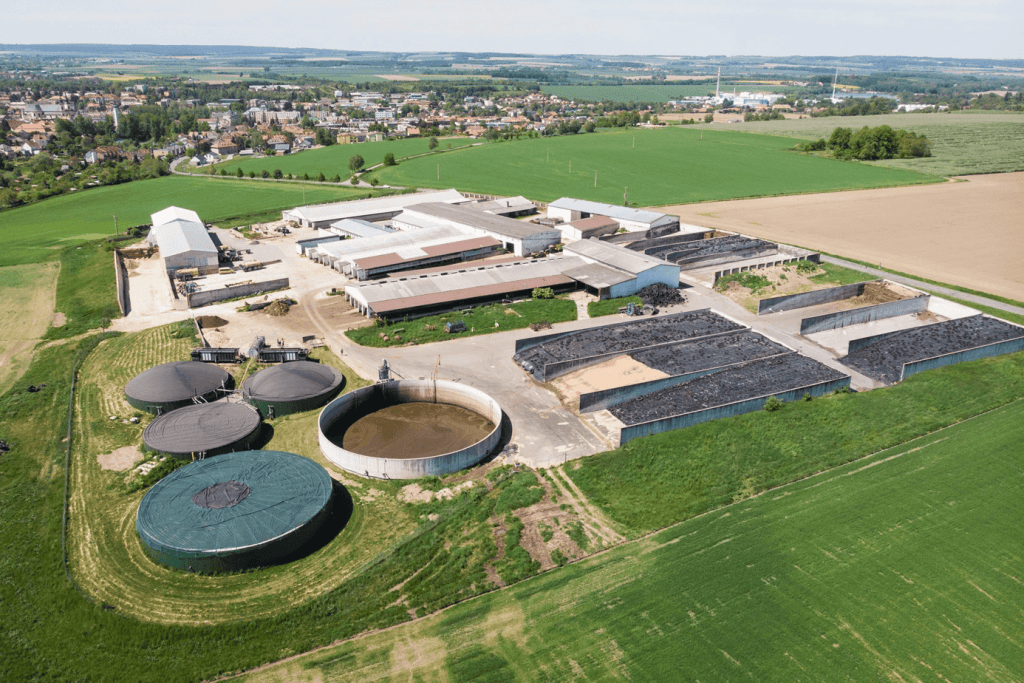
Kněžice in the Central Bohemian Region has relied on its own biogas plant and boiler house for heat supplies for almost twenty years. But due to expiring support, it will have to curb generation or shut down altogether. Dozens of other plants across the country face a similar fate.
Almost everyone has heard of Kněžice near Nymburk. The Czech Republic's first self-sufficient municipality with more than 500 residents has generated its own heat for nearly two decades. It supplies 160 municipal and private buildings, from family homes to the town hall, school and a retirement home. Part of the municipality also has hot water secured this way.
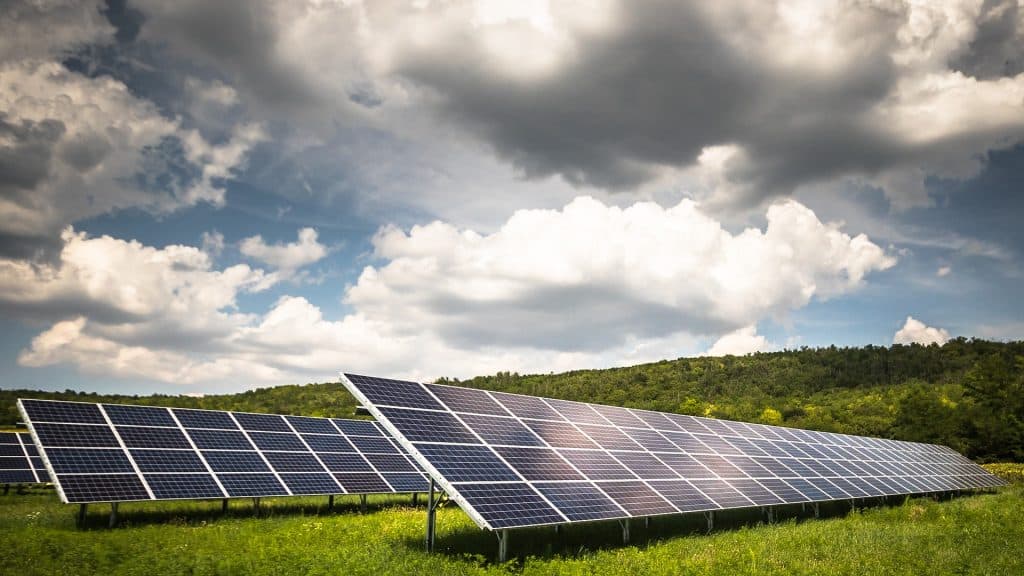
At the energy site by the agricultural cooperative, it operates two large boilers and a biogas plant with a capacity of 330 kilowatts. More recently, a larger solar installation has also been installed on the roof of one of the buildings. The boiler house burns hay and wood chips from surrounding forests, while the biogas plant produces electricity and heat from organic waste.
The municipality has also solved another problem as a result: it has no conventional wastewater treatment plant. The contents of cesspits and holding tanks go to the biogas plant as feedstock, alongside slurry from local farms and leftover silage.
“Most often, tourists from South Korea come to see how it works here in practice,” Mayor Milan Kazda says by way of welcome. Kněžice has received numerous domestic and international awards for its approach. Overall investment in self-sufficiency reached CZK 138 million. Most of it was covered by subsidies at the time, but the municipality had to take out a loan of CZK 43 million, secured by virtually all its assets.
The risk paid off. Rising energy prices and the recent energy crisis did not affect local residents thanks to their own stable supplies. But rather than celebrating a major anniversary, Kněžice is now facing uncertainty. This August will be a turning point. After twenty years of operation, guaranteed operating support for the biogas plant will end, and the municipal leadership must decide what to do next.
End of green bonuses
Like other renewable energy sources, biogas plants received operating support in the past in the form of a green bonus. The state guarantees it for twenty years to cover higher operating costs and ensure a return on initial investment. Kněžice was among Czech pioneers in 2006, which is why its support is ending among the first in the country.
Until now, the municipality has received a green bonus combined with the market price from a trader for electricity sold, earning it approximately CZK 4.70 per kilowatt-hour. From August, the price will depend on the situation on the exchange. Milan Kazda, who is completing his eighth term as mayor in Kněžice, plans to test the new regime until the end of the year and then decide whether it is worthwhile for the municipality.
The state wants the Kněžice biogas plant to move to new modernisation support, but this comes with strict conditions. For a plant of this size, eligibility requires investment of at least CZK 20 million over the past five years. It would then receive support for another fifteen years. The municipality has already invested tens of millions of crowns over the years, and repairs are continuing now.
The new support is also based on topping up a reference electricity price set at CZK 3.45 per kilowatt-hour. If the market price is lower, the state pays the difference. Conversely, when the market price exceeds this level, the producer returns part of its revenues to the state. At times when market prices fall into negative territory due to excess electricity, for example from solar power plants, the municipality will have to shut the plant down altogether.
“No one can accurately predict how the situation will develop. We do not know how many hours will have negative prices or how many hours the price will instead exceed the set threshold. The market is becoming increasingly dynamic, with prices changing in fifteen-minute intervals. For us, this means a significant reduction in operations and lower revenues,” the mayor says.
A massive wave will come in six years
Kněžice is far from alone in facing this problem. Adam Moravec, head of the biogas section at the CZ Biom association, warns that around ten plants could face a similar situation over the next year. In the following three years, it will affect dozens of facilities. A massive wave will come in six years, because most of the country's operating plants were built in 2012.
“Without an immediate and well-considered change to the conditions for modernising ageing biogas plants, we risk the widespread destruction of a sector that is meant to be a pillar of our energy transition,” Moravec warns. He also points out that in Kněžice's case, no other solution makes sense because the municipality uses the heat exceptionally efficiently.
According to CZ Biom, the current modernisation support contains a number of illogical and unclear conditions. For instance, the state requires certain parts of the facility to be replaced regardless of their actual technical condition. At the same time, it is not sufficiently clear which costs it will recognise, creating a risk for municipalities that they could have to repay the subsidies in future.
The Association of Local Authorities of the Czech Republic believes the overall framework for community energy is to blame. Municipalities that have invested in energy self-sufficiency often encounter administrative obstacles and uncertainty about the future operation of their projects. “Unlike in neighbouring countries, the development of community energy in our country is falling significantly short of expectations and is being held back by bureaucratic rules. Yet we should be making use of every opportunity to increase our domestic self-sufficiency and independence,” says Stanislav Polčák, chairman of the SMS working group on energy.
The problem is further underscored by the fact that support for heat generation from solid biomass also ends in December. Its continuation must be approved by the European Commission. However, according to CZ Biom, the Czech state has not yet begun the necessary negotiations, which have taken several years in the past. In the Czech Republic, this support applies to roughly fifty heating plants supplying around 100,000 households.
The association is currently holding discussions with the Ministry of Industry and Trade and the Energy Regulatory Office on levelling the conditions. According to the ministry, support for biogas plants is not a closed chapter. “Just as the biogas sector is changing, its support is being assessed and changed,” ministry spokesperson Štěpánka Filipová told Ekonews.
“Although the Czech Republic is primarily targeting the conversion of plants to biomethane, support for the modernisation of biogas plants also exists and possible changes to the current parameters are being discussed. The ministry remains in ongoing contact with local authorities,” she adds.
Heat for local residents could double in price
The mayor cannot currently estimate how much money the municipality will lose. For now, he expects reduced operations and losses of around CZK 2 million a year. However, he hopes that better conditions can be negotiated with the state by next year.
If that does not work out, it will directly hit local residents' wallets. The price of heat for Kněžice residents could rise by as much as double. “It would not be worthwhile for them compared with what regular suppliers offer,” he adds.
The mayor also points to the broader benefits of their self-sufficiency. The village has stopped using coal for heating altogether. State support also remains directly in the region, where the project employs five local people. The plant also helps retain water in the landscape: the production residue, known as digestate, is returned to local fields as an organic fertiliser.
The municipal leadership tried to address the problem in advance and has been intensively seeking ways to transform the biogas plant in recent years. “We have tried and done everything,” Milan Kazda says with a shrug.
Switching to injected biomethane production is not an option for the municipality either. The Kněžice plant is too small for such technology. “The nearest high-pressure gas pipeline is four kilometres from the plant. With our production volume, transporting biomethane over such a distance would not be economically viable at all,” he explains.
“Each biogas plant needs to be assessed individually. A facility that processes ten thousand tonnes of biodegradable waste a year cannot simply be written off because the state is unable to set conditions for its continued operation,” the mayor concludes.