23 October 2026, 14:38
Loading...
Nuclear energy in 2020 – part II
Vladimír Wagner
16 January 2021, 13:48
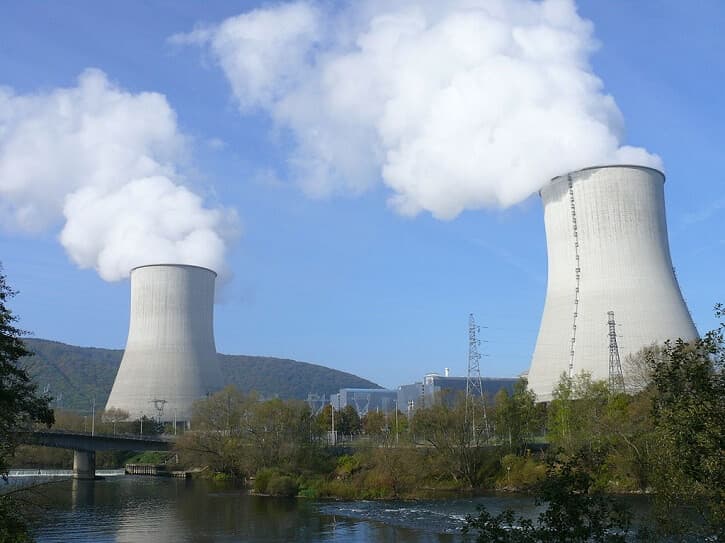
In 2020, the seventh Generation III reactor type, China’s Hualong One, began operation. Russia and South Korea commissioned their first Generation III units outside their own territories. The Russian VVER1200 reactor started up in Belarus and the South Korean APR1400 in the United Arab Emirates. China is completing a Hualong One unit in Pakistan. Initial operating experience with Generation III units indicates that they could meet the expectations placed in them.
The first part of the article is available here.
Nuclear energy developments in Europe
Only a very limited number of units are being built in Europe. The largest number are French EPR reactors. Two projects are very seriously delayed: the first EPR reactor, Olkiluoto 3 in Finland, and Flamanville 3 in France. In April 2020, an application was made for permission to load fuel at the Olkiluoto unit. Several technical problems emerged during testing. In May, for example, a defect was found in part of a fitting manufactured in Germany. Some of the problems are related to the considerable construction delay. This resulted in a further postponement of the unit’s start-up. Fuel will therefore only be loaded in spring 2021, while electricity generation has been pushed back to the autumn of the same year.
At the Flamanville unit, fuel loading is not expected until 2022. In 2020, its delivery to the plant site was authorised. The delay is due to the need to repair certain welds.
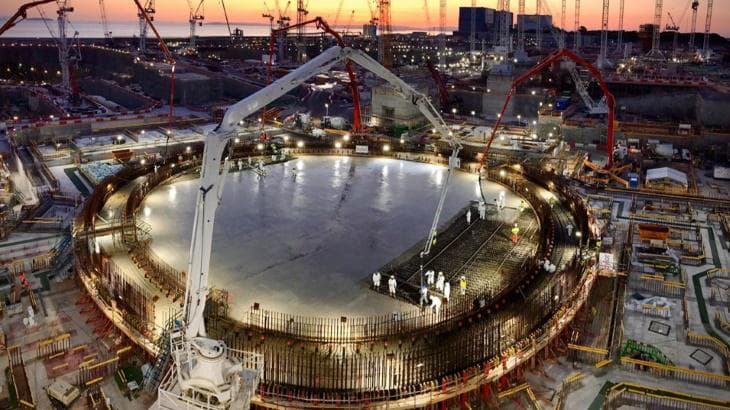
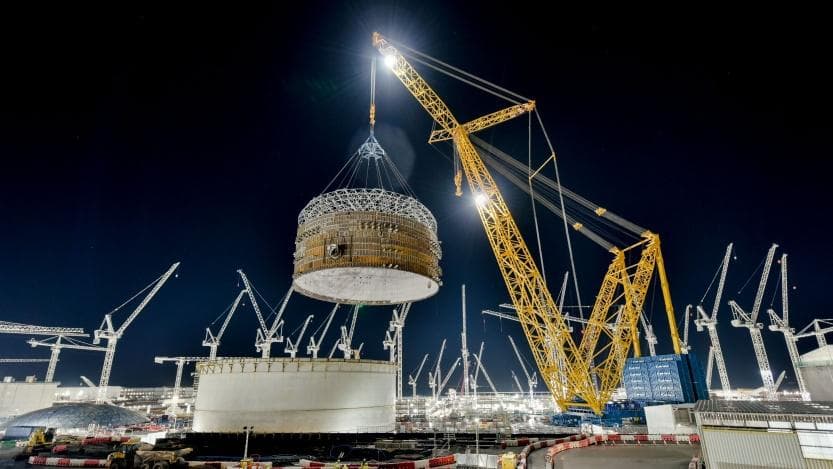
Construction of the two EPR units at Hinkley Point C has so far been progressing relatively well. However, even here it was not possible to avoid delays caused by the coronavirus epidemic. Positively, experience gained on the first unit is being used in building the second, making it possible to shorten individual stages. At the beginning of May 2020, concreting of the nuclear island of the second unit was completed.
The financing model for the Sizewell C project is still being discussed and has not yet been decided. However, site preparation has progressed considerably. At the same time, project plans are gradually being submitted to the relevant authorities and the necessary public hearings are being held. At the end of the year, the UK government announced that it would begin talks with EDF on the final financing model for the plant. Successful delivery of this project is critical both for the future of the EPR reactor and for the future of the UK energy sector and achievement of its low-emission generation mix target. The future of the EPR reactor also depends on the political decision on nuclear energy in its home country.
We have already written about the planned use of Chinese Hualong One reactors for the Bradwell B plant. An important step here is obtaining a European licence for this reactor. Bradwell B has also received an electricity supplier licence. Negotiations are also continuing at two other sites where new nuclear units are planned, although the specific suppliers (Hitachi and Westinghouse) have withdrawn their offers.
Nuclear energy in Central and Eastern Europe
It is becoming increasingly clear that a coal phase-out in Central and Eastern Europe will not be possible without nuclear capacity. Construction of nuclear units in Poland, which is heavily dependent on coal, is becoming more realistic. Poland has decided to pursue US reactors and use US financial loans. This has been made possible by the adoption of a new law in the US allowing the financing of overseas nuclear energy projects, which was previously not possible. Poland would like to build 6 – 9 GWe. One potential location is the unfinished Żarnowiec nuclear power plant. Another potential site is Kopalino. Poland expects its first unit to enter operation in 2033.
Southeastern Europe must also address a coal phase-out. This is leading to efforts to complete some long-suspended projects. However, these efforts in both Romania and Bulgaria are very strongly affected by ideological and political conflict and politicking. Romania ended negotiations with a Chinese investor on completing reactors at the Cernavodă power plant and began cooperating with the US and France in this area. Completion of the Belene nuclear power plant in Bulgaria or construction of another unit at the Kozloduy plant has still not been resolved. Mainly due to politicking, the future of these projects remains highly uncertain.
In 2020, progress was made in Ukraine’s efforts to complete two suspended units at the Khmelnytskyi nuclear power plant, namely units 3 and 4. An advantage here would be that the plant is preparing for connection to the European Union grid and electricity supplies to it. Ukrainian company Turboatom is working on the turbines for these third and fourth units, while also modernising turbines at Ukrainian nuclear power plants. During 2020, several analyses were carried out on the possible course of completion and the condition of the construction site, including the cranes located there that would be used for construction.
The completion of both units could be carried out by Czech company Škoda JS. Its representatives believe this will be possible and that the completed reactors will meet all required safety parameters. Some work needed to complete the units has already been carried out, and Škoda JS experts were able to study conditions directly on site. The company will seek the highest possible degree of localisation of work and supplies in Ukraine. Given that it is involved in the modernisation and maintenance of other nuclear facilities in Ukraine, it has established sufficient necessary contacts. It supplied a number of systems related, for example, to nuclear fuel handling for the Zaporizhzhia and South Ukraine nuclear power plants.
For Czech companies, this project would provide very valuable experience ahead of construction of new nuclear units at home. Based on a decision by the Ukrainian government at the end of September 2020, work on completing the units resumed. For now, this involves inspecting and restoring the construction site, preparing the completion project and establishing supply chains. Completion of the units is planned for 2025.
The situation in the Czech Republic and Slovakia
The previous overview noted that the situation regarding construction of a new unit had finally moved forward and that work had begun on a financing model and preparation of the necessary contracts. These were ultimately prepared and assume that the new unit will be built by ČEZ, with certain state guarantees ensuring a low cost of borrowing and insurance. The electricity price from the unit could thus be around 60 EUR/MWh. The contracts between ČEZ and the state were signed, and the proposed model was sent to European Union authorities for assessment and notification. It should be recalled that the proposal must address the fact that ČEZ, which owns the future construction site and also has experience with nuclear power plants and the required specialists, is not a state-owned company but has minority shareholders. These are mostly focused on shorter-term profits, and such a very long-term investment must not harm them. A range of financing models is possible, each with its advantages and disadvantages. Ultimately, one always has to be selected, and not everyone will ever be satisfied with it.
The Czech Republic expects to proceed with a tender for a pressurised water reactor with a capacity of up to 1200 MWe. It should be recalled that the capacity limit is determined by two factors. A smaller unit is more suitable for the country’s smaller power system. At the same time, limited cooling options must be taken into account if the new unit and all existing units at Dukovany operate simultaneously. In principle, five bidders with the reactors discussed in this overview could enter the tender.
Originally, the tender was expected to be launched at the end of 2020. Unfortunately, it then became clear that the current political elites are not focused on solving problems, but purely on political and ideological conflict. There were elections last year and there will also be elections in 2021, so politicians of all parties are focused solely on politicking, whatever the cost. Opposition parties therefore began campaigning to postpone a decision on the possible construction of the new unit and the possible format of the tender until after the elections, while also seeking to exclude the Chinese and Russian suppliers. The Pirates are promoting an anti-nuclear stance in both the European Union and Czechia, as well as a rapid closure of coal-fired capacity. Similar voices are also being heard from other parties, such as TOP09. All of them call for ideological views to take precedence over expert or technical issues and over all reality. In my view, such opportunistic politicking, which politicians engage in without any effort to obtain and consider facts, will have catastrophic impacts on the Czech energy sector.
It is worth recalling that the vast majority of nuclear unit suppliers form consortia for a particular project. For example, the VVER1200 unit is being offered for completion of the Belene nuclear power plant by a consortium comprising Rosatom, GE Steam Power and Framatome SAS. Rosatom also cooperates with these companies on the Hanhikivi and Paks projects, and with GE Steam Power on the Akkuyu and El-Dabaa projects. However, ideological campaigners would probably exclude these consortia as well. The question is what sense a tender would have after excluding two strong candidates out of five, and whether an agreement with a selected supplier without a tender, as envisaged by Poland for example, would not then be more sensible.
I am therefore beginning to be very sceptical about the future of nuclear energy and the energy sector in Czechia. Certainly, not much will move forward in the election year of 2021. Solving long-term problems requires a certain broad consensus and rational attitudes. Current politicians, who seek to use everything for political conflict, are not capable of this. I do not have much faith that politicians’ behaviour will change in the foreseeable future. Especially when I see that even overcrowded hospitals and thousands of unnecessary deaths happening before their eyes do not inspire them to act rationally, stop politicking and seek constructive cooperation. Failure in the energy sector could have even greater impacts on our lives, but from politicians’ perspective it is still a long way off.
It should also be recalled that construction of one new unit at Dukovany is only a necessary beginning that should demonstrate that we can do it. If we really want to create a low-emission generation mix, we need to build another unit at Dukovany and two units at Temelín. At present, Hungary appears to be moving far more decisively towards construction of new nuclear units, while Poland made significant progress in 2020. We may therefore fall behind these countries. In that case, we can at least take comfort in the fact that Czech companies will very likely participate in the construction of nuclear units in both Hungary and Poland, just as they have become involved in the described completion of the Khmelnytskyi nuclear power plant and Slovakia’s Mochovce power plant.
At the Mochovce nuclear power plant, the first two units are undergoing gradual modernisation focused mainly on turbines. This has enabled capacity to be increased from 471 MWe to 500 MWe. It should be completed in spring 2021. Work is also under way to prepare the start-up of unit 3 and complete unit 4. It is very important for the third unit to finally start operating. Slovakia should also slowly begin working on replacing the two VVER440 units at Jaslovské Bohunice.
Conclusion
2020 was highly significant for the development of nuclear energy. The seventh type of Generation III nuclear reactor entered operation. South Korea and Russia also launched their first such unit abroad, while China is close to doing so. Russia and China are building their reactors continuously and can therefore exploit the advantages of serial production. In these cases, the standard construction period of five years from first concrete for the nuclear island to start-up should indeed be achieved. Generation III reactors will gradually take the main share in nuclear energy development, and their operation appears to be meeting expectations.
It is clear that nuclear energy is experiencing a renaissance, particularly in China, Russia and some other countries. China will very soon overtake both France and the US in this area. Another turning point could come with the deployment of small modular reactors, which would enable nuclear technology to enter decentralised energy systems and district heating. The floating nuclear power plant Akademik Lomonosov has begun operating very successfully, and the RITM-200 reactor for icebreakers could enable mass production of floating nuclear power plants as well as land-based small modular units for specific purposes. If China’s HTR-PM small modular high-temperature gas-cooled reactor proves successful in operation, it will represent a further breakthrough in this direction. Very intensive efforts are evident in the field of small modular reactors. We will return to this in greater detail in one of the next articles.
The start of construction of the second Chinese CFR-600 sodium-cooled reactor and intensive cooperation with Russia on the development of these fast reactors demonstrate a strong effort to close the fuel cycle, increase the efficiency of nuclear fuel use and reduce the volume of nuclear waste. It should be recalled that there was a time when France led development of this type of reactor. There, however, development was cut off by green anti-nuclear activists. This too is a sign of Europe falling behind for ideological reasons. Progress in this area can also be expected in the coming years.
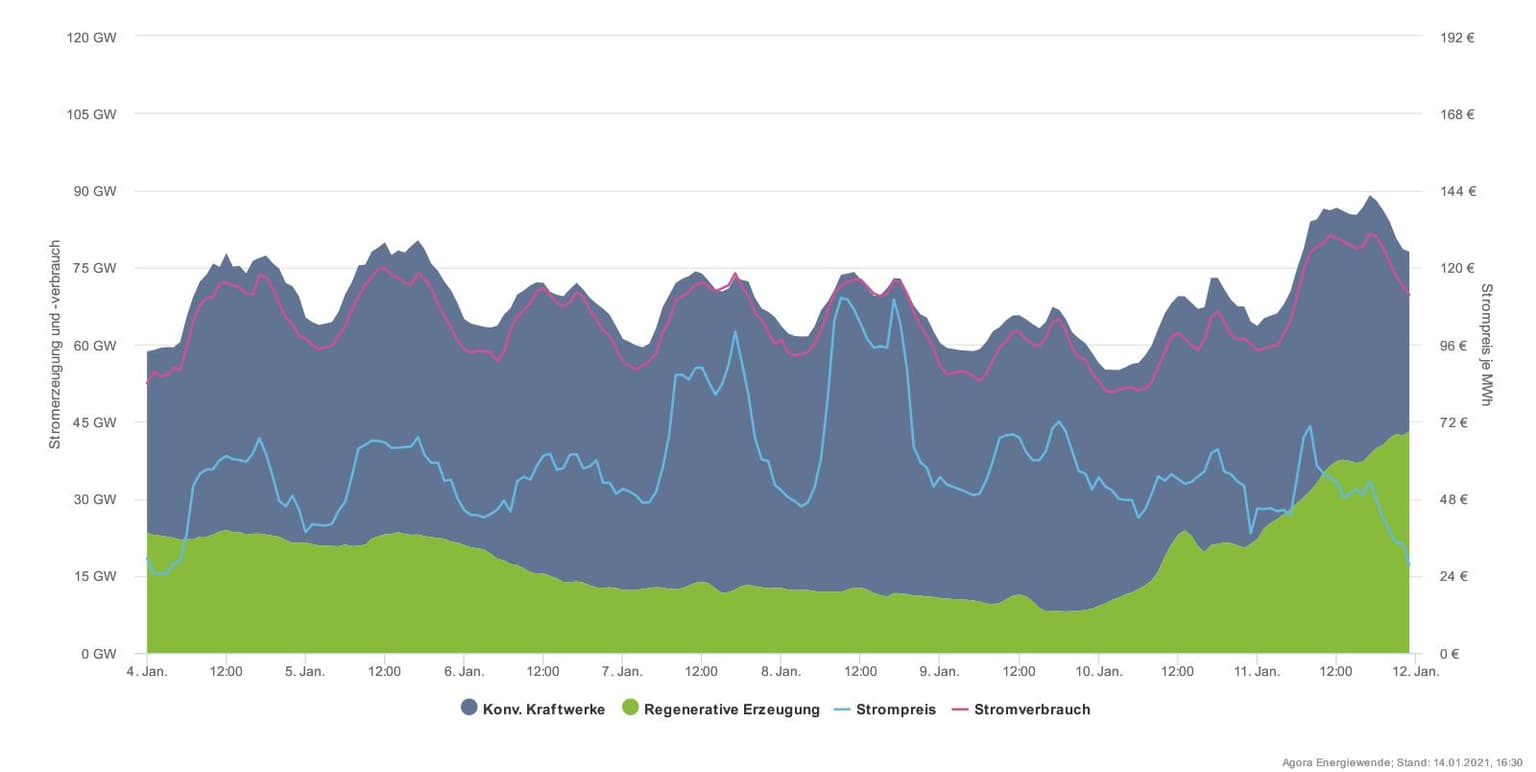
At present, pressure to reduce emissions is intensifying in Europe, and it is becoming clearer to a number of countries that they will not achieve carbon neutrality without nuclear capacity. Positively, by the time they ultimately decide to build nuclear units, at least some manufacturers will be able to respond positively to such demand and offer a reliable, proven reactor. Events in recent weeks could also help change attitudes towards construction of new nuclear units. Europe has an ever-smaller reserve of firm capacity for periods of temperature inversions without wind and sunshine, such as those experienced in recent weeks. This means various parts of the continent are pushed to the brink of shortages. This leads to huge increases in spot wholesale electricity prices, as happened in the UK. There, the hourly electricity price on 5 January 2021 reached as much as 1000,45 GBP/MWh, while the daily average was 145,08 GBP/MWh. France, where units at the Fessenheim power plant were shut down and electricity is used intensively for heating, is likewise reaching the limits of its capabilities. Austria, which has to import electricity intensively due to a lack of firm capacity, strongly felt the separation of the southeastern European system on 8 January 2021, from which it was importing heavily at the time. Czech nuclear and coal-fired units also helped save the situation. Czechia still has sufficient reserves for now, but it is necessary to proceed prudently when shutting down existing units and seek to build replacements quickly. This shows that the coal commission’s decision to retire coal-fired units in 2038, conditional on completion of their replacements, is fully justified.
Source of cover photo: EDF Energy
Translation disclaimer
This article is a machine translation of the Czech original and has not yet been fully reviewed. In case of any doubt, please refer to the Czech version.
Sdílejte článek prostřednictvím:
Topics:Opinion
You might also like
23 October 2026, 11:01
23 October 2026, 06:34