
23 October 2026, 14:38
Loading...
What are increasingly frequent negative electricity prices leading to in Czechia?
Vladimír Wagner
10 May 2026, 08:23
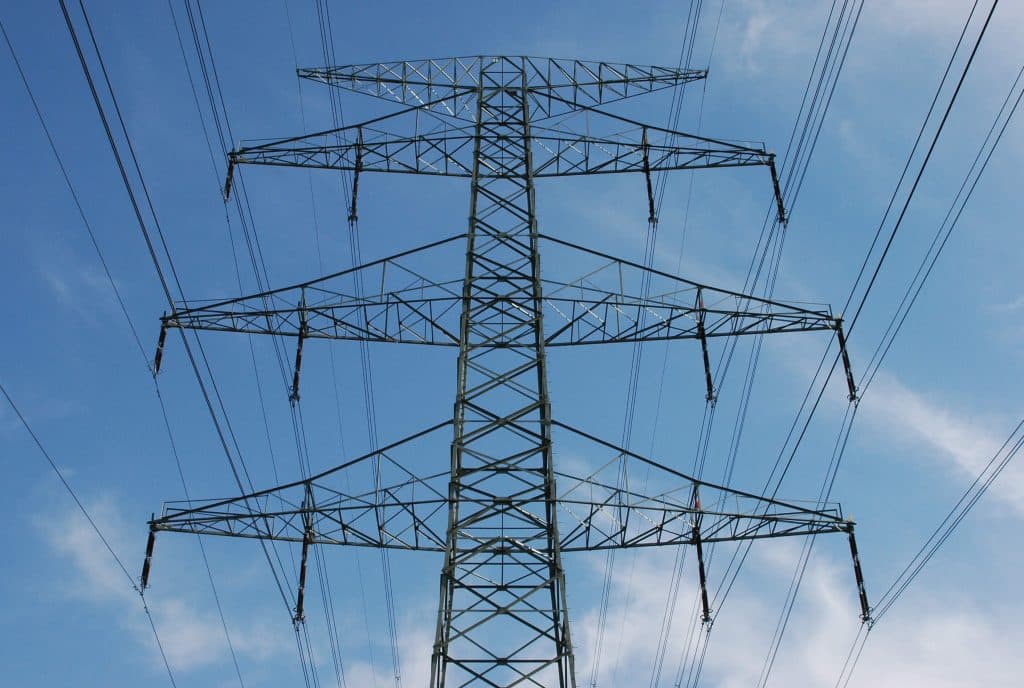
At present, when conditions are ideal for photovoltaic power generation, we are seeing extremely low prices on spot electricity markets. These prices are even reaching extremely negative values. Let us look at what this will lead to.
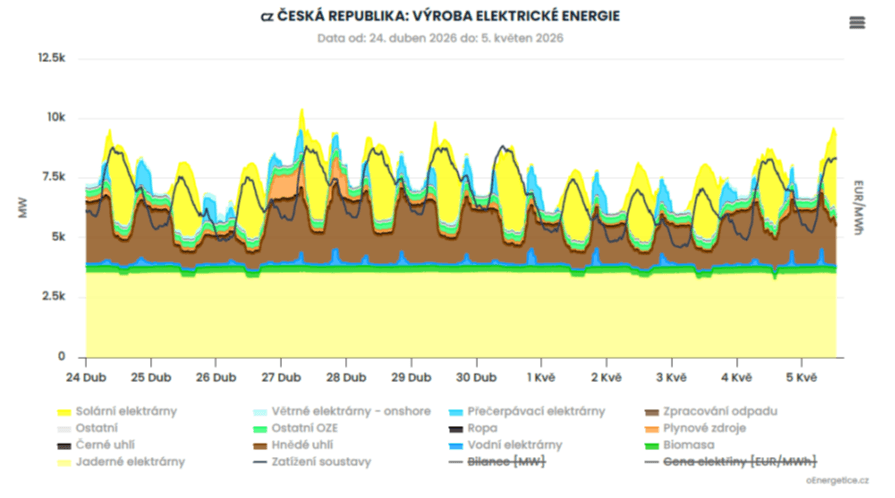
Fig. 1) Electricity generation in the Czech Republic around the turn of April and May from different sources shown in different colours; the black line indicates grid load (source: Energostat on oEnergetice)
The spring months of April and May are the best period for photovoltaic power plants. It is still relatively cool, but the sun is already relatively high and remains above the horizon for a long time. The efficiency of photovoltaic cells declines as temperatures rise. Solar power plants therefore feed the most electricity into the grid around noon at this time. The Czech Republic now has more than 5 GWp of solar capacity installed, which can in ideal conditions provide a sufficiently large share of the required output. Around noon in May, Czech solar can provide between 70–80 % of its nominal capacity, or around 3.8 GWe. Peak demand at that time is between 8 and 10 GW. At minimum demand, the requirement on April and May days is just over 5 GWe. It is therefore clear that the currently installed capacity in Czechia is quite optimal for covering the increase in daily peak demand. This is also shown in Figure 1, which depicts generation and consumption in Czechia around the turn of April and May.
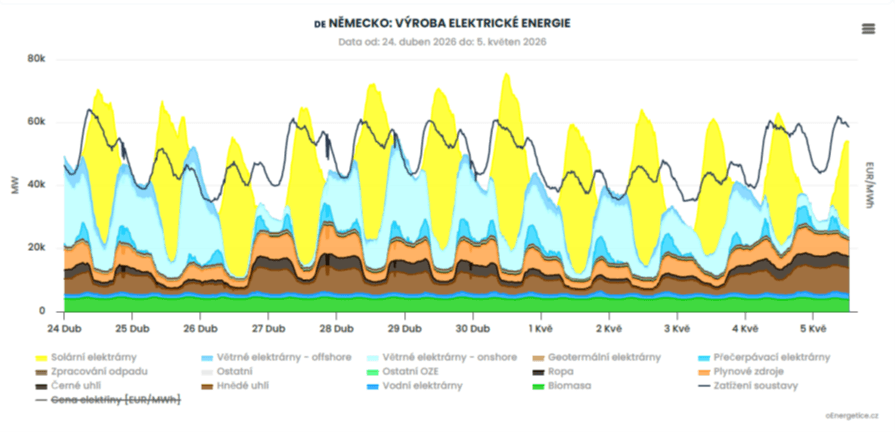
Fig. 2) Electricity generation in Germany around the turn of April and May from different sources shown in different colours; the black line indicates grid load (source: Energostat on oEnergetice)
Germany has nearly 120 GWp installed and can therefore in principle supply more than 80 GWe at midday in May. That is already a level of output higher than daily peaks in April and May, which mostly do not reach 80 GWe. This can also be seen in electricity generation in Germany around the recent turn of April and May. Germany also has almost 80 GWp installed in wind turbines. In ideal conditions, these too can cover almost all of Germany's needs, meaning that during spring months with ideal conditions for sun and wind, almost twice the required output is in principle available. Excess available output must then either be exported or generation at some units must be curtailed. The dramatic intraday changes in available output visible in Figure 2 place extremely high demands on system management. Surplus solar or wind power under ideal conditions for photovoltaics or wind turbines also dramatically affects Germany's neighbours and their energy systems.
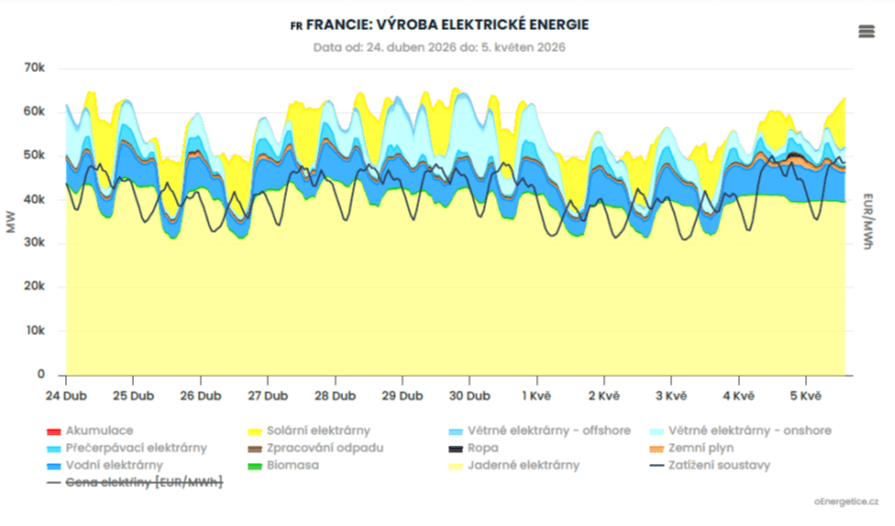
Fig. 3) Electricity generation in France around the turn of April and May from different sources shown in different colours; the black line indicates grid load (source: Energostat on oEnergetice)
The electricity generation profile of countries that rely predominantly on nuclear power plants can be seen in the cases of France and Slovakia. In France, part of nuclear capacity is already used for system balancing, while in Slovakia and Czechia nuclear sources cover baseload and their output is curtailed only exceptionally. France continuously has a considerable share of capacity available for exports, as it mainly fills the generation shortfall in Italy.
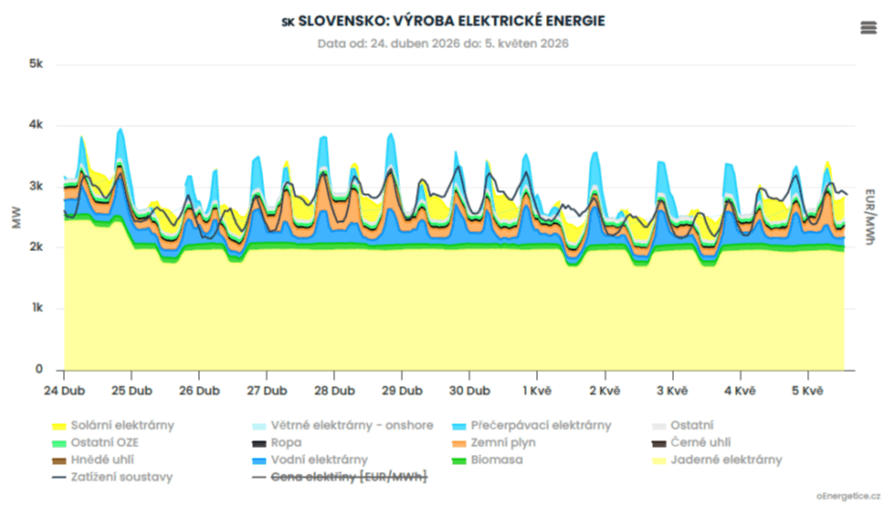
Fig. 4) Electricity generation in Slovakia around the turn of April and May from different sources shown in different colours; the black line indicates grid load (source: Energostat on oEnergetice)
Surpluses of solar and, potentially, wind capacity have dramatic effects on spot electricity prices. As output from these sources can be forecast only to a very limited extent months and years ahead, the dominant share of their electricity is sold on the spot market. It is impossible to predict over a longer period whether skies will be clear, cloudy or hazy, and whether the wind will blow. The possible instantaneous output of these sources can therefore differ by multiples. These power plants can thus offer only a reasonably large part of their potential output on the forward market. Pairing them with batteries or biogas and hydropower plants can improve the situation, but only to a certain extent. Nuclear power plants, which can plan their operation and any outages, can sell the dominant share of their output in advance on forward markets.
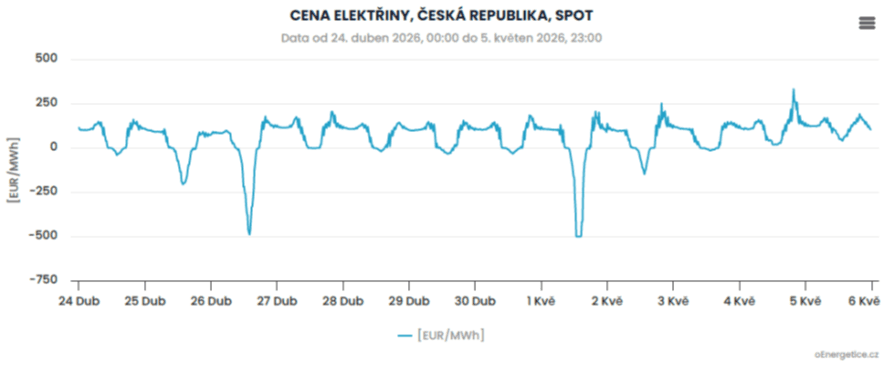
Fig. 5) Spot prices in Czechia around the turn of April and May. The -500 EUR/MWh negative price floor was reached on 26 April and 1 May (source: Energostat on oEnergetice).
This is precisely why the share of sales on the spot market rises with the share of fluctuating renewables in the generation mix, although in Czechia it still accounts for only around 20–30 % of traded electricity. Baseload is sold predominantly on forward markets, and in Czechia it is largely covered by nuclear sources. Current forward prices for June 2026 are around 90 EUR/MWh and are gradually rising, reaching around 100 EUR/MWh in the third quarter. Forward prices are relatively very stable.
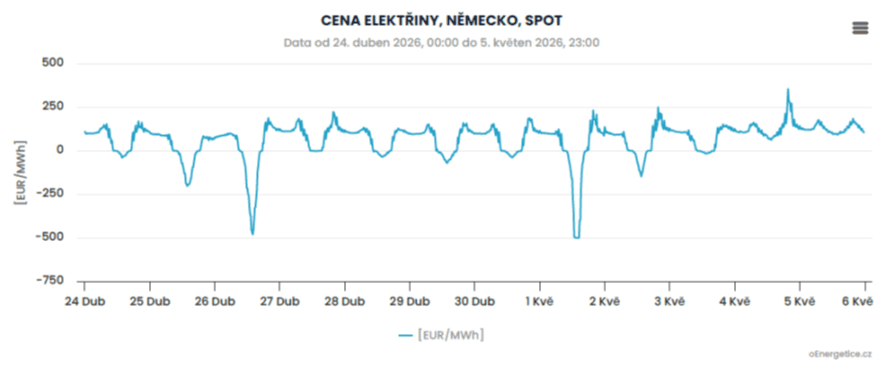
Fig. 6) Spot prices in Germany around the turn of April and May. The -500 EUR/MWh negative price floor was reached on 26 April and 1 May (source: Energostat on oEnergetice)
Spot prices, by contrast, are becoming ever more volatile, with extreme swings. As the surplus of subsidised renewable sources grows, negative prices are appearing more and more frequently. They are increasingly frequent and last ever longer. This occurs when highly subsidised sources are sufficient to cover the remaining unmet part of demand. They earn money even at negative prices if their level does not exceed the value of the subsidy. Around the turn of April and May this year, we recorded all-time negative-price records, with the -500 EUR/MWh limit reached on days off with low consumption. This is the set limit; no lower price can be set on the exchange.
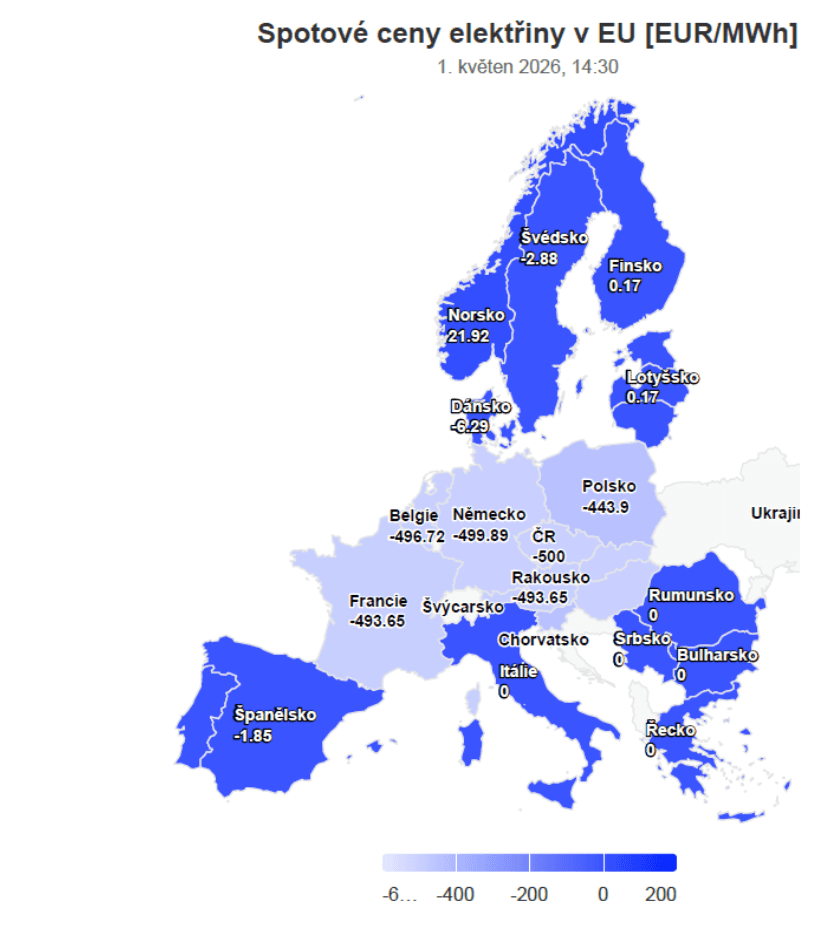
Fig. 7) Spot prices in various European countries around the negative-price extreme on 26 April (source: Energostat on oEnergetice)
If we look at the development of spot prices in Czechia, we see that periods of zero and negative prices alternate with intervals when prices exceed 200 EUR/MWh. It is also clear that such developments on the spot market occur throughout the region well interconnected with Germany. They are predominantly driven by the German power sector and its focus on subsidised renewable sources. On the other hand, it should be recalled that German taxpayers also pay a large part of the subsidies that sustain negative prices.
Subsidies for negative prices are not the only costs brought by large capacities of fluctuating renewable sources. Other items include the costs of grid reinforcement and payments for balancing and redispatch. In reality, the growing number of hours with zero and negative wholesale electricity prices continuously raises energy costs. Fossil-fuel sources that must remain on standby to maintain grid stability in a situation with a large share of fluctuating renewables must also be subsidised. Spain recently experienced the consequences of ignoring the risk posed by a system dominated by unstable sources during its blackout.
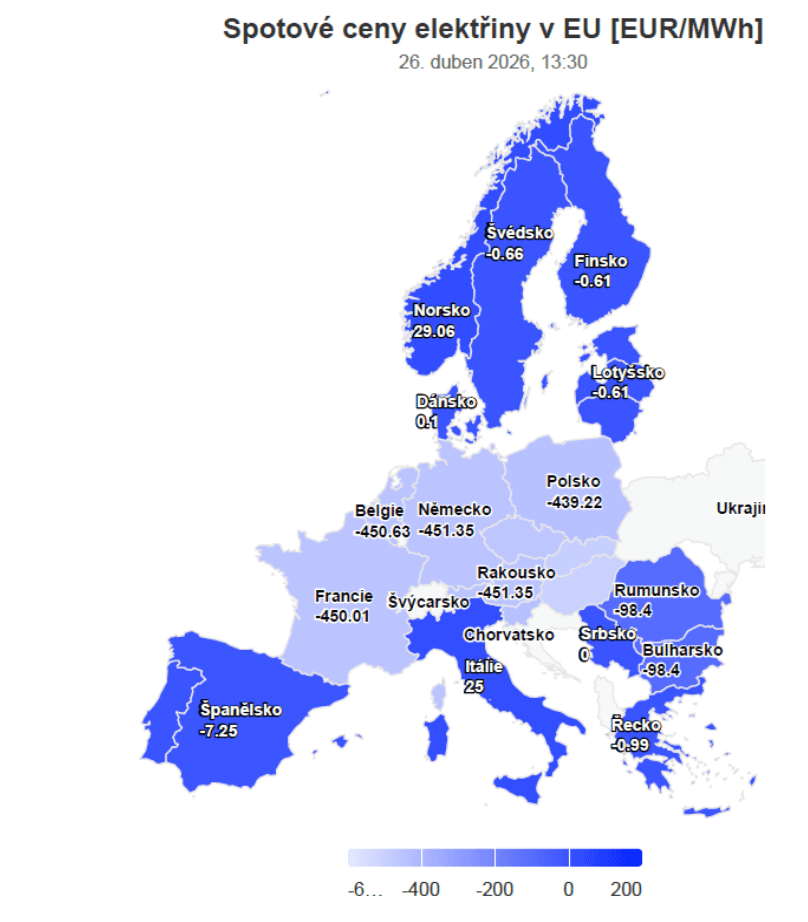
Fig. 8) Spot prices in various European countries around the negative-price extreme on 1 May (source: Energostat on oEnergetice)
However, the most dramatic effects of this deepening process are still ahead of us. It leads to subsidised fluctuating renewable sources severely cannibalising unsubsidised sources of the same type. At times when conditions are ideal and they should be earning funds for their operation and investments, prices are zero or negative and they have to be shut down.
I should note that only sources selling on the spot market are cannibalised. Nuclear power plants that have already sold their generation on the forward market can in principle offer to reduce output, for which they are paid out of the negative price paid by subsidised solar generation that replaces them. They can thus earn even more.
It may happen that solar and wind plants whose period of guaranteed subsidies expires will no longer cover even their operating costs and will have to be fully decommissioned. At the same time, it will not be possible to build any such sources without operating subsidies. The situation in Germany is therefore the main reason why projects for large photovoltaic power plants have been cancelled in Czechia, where no operating subsidy is envisaged for them, while even smaller projects face major challenges in achieving a return on investment.
I have described the risks arising from unplanned and ideologically driven energy policy in a number of articles (here, here, here, here and here), and it is good that a more rational view is beginning to prevail in Czechia and that a nuclear renaissance is slowly getting under way, as I described in a recent article.
The same issue is also addressed in presentations on the Vysoké napětí website:
https://www.youtube.com/watch?v=nvNjTyAjGpo&list=PLGLb3t59V9EZGvSEoPBOvY-kIfYce5bRG&index=3
https://www.youtube.com/watch?v=GVQIjVCKwlw&list=PLGLb3t59V9EZGvSEoPBOvY-kIfYce5bRG&index=1
Translation disclaimer
This article is a machine translation of the Czech original and has not yet been fully reviewed. In case of any doubt, please refer to the Czech version.
Sdílejte článek prostřednictvím:
Topics:Opinion
You might also like
23 October 2026, 11:01

23 October 2026, 06:34