Second auction this year for renewables with storage drew strong interest in Germany

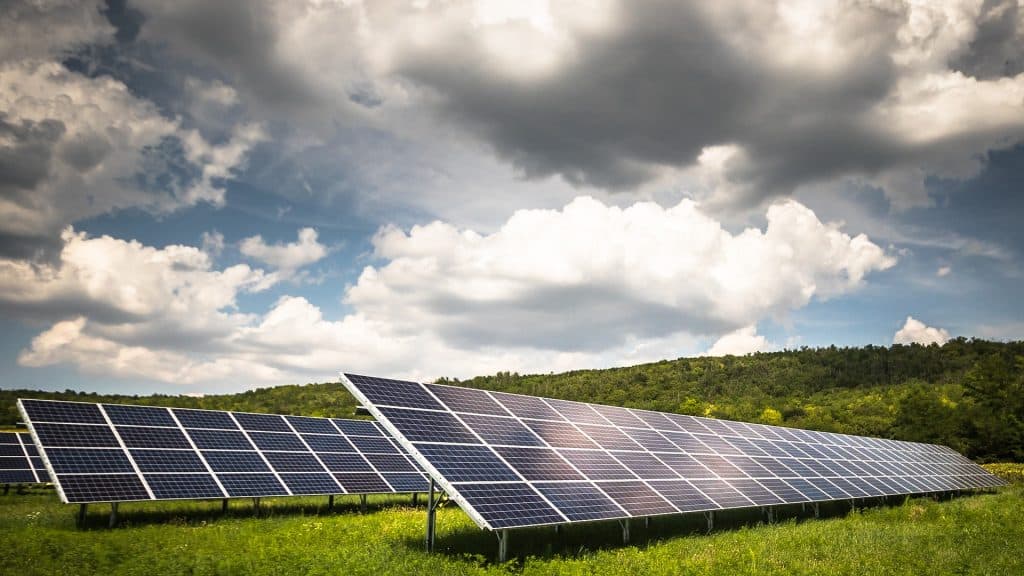
Germany held the second and final round of this year’s innovative auctions in early September. Developers of renewable energy projects equipped with storage compete in these auctions. After two previous rounds that ended in failure, the situation changed dramatically. Developers submitted projects with almost twice the capacity on offer, enabling all available capacity to be awarded.
Since shifting support for the development of large-scale renewable energy installations to an auction system, Germany has gradually been testing new types of auctions. It has also been continuously adjusting their terms to ensure a balance between pressure to lower prices and investors’ willingness to participate. One such step was raising price caps this year, including for innovative auctions.
In these auctions, developers compete to build power plants that combine either different types of renewable energy sources or renewables with storage. To take part in an auction, a power plant must include wind or photovoltaic generation. Experience from previous rounds shows that, from the outset—with the exception of the first round—only projects combining solar power plants with storage have been submitted.
After two unsuccessful rounds, the auctions pick up again
Initially, innovative auctions offered developers the opportunity to secure a fixed bonus, which they could receive in addition to revenue from selling electricity on the market. Last year, however, the terms were changed so that, as in regular German renewable energy auctions, participants now compete for a minimum guaranteed price.
In this case, power plant operators receive a premium based on the difference between the auction price and the average electricity price on the spot market. The guaranteed-price system is one-way, however: when market prices exceed the auction price, operators do not have to pay back the additional revenue.
Only one bid was submitted in the final round last year . The situation did not improve significantly in the first round this year, when only a small share of the capacity on offer was awarded. The second round this year, however, managed to attract enough investors. According to Germany’s network regulator, 53 bids were submitted for the 400 MW auction, with a total installed capacity of 779 MW.
“After two weak rounds, innovative auctions have picked up pace again. The volume of bids was almost twice the auction volume, showing how dynamic renewables can be. The priority now is to maintain the current pace of project development,” Klaus Müller, president of Germany’s network regulator, said, commenting on the results of the latest innovative auction.
A total of 32 projects with a combined capacity of 408 MW won the auction. According to the regulator, awarded prices ranged from 77.6 to 87.8 EUR/MWh, with a weighted average of 83.3 EUR/MWh. The price cap for participation in innovative auctions this year is set at 91.8 EUR/MWh. Regionally, Bavaria once again accounted for most of the projects, with 19 plants totaling 258 MW.
Most of the awarded capacity came from projects with an installed capacity of more than 10 MW. This year, plants with an installed capacity exceeding 20 MW are also eligible to compete in these auctions. The four large projects in this category accounted for roughly a third of the capacity awarded in the latest auction.
Further changes to the terms and lessons from the summer?
Participation in the innovative auction was very strong compared with the previous two rounds. One factor that may have helped attract more investors was the expansion of the zones around motorways and railway lines where renewable energy projects benefit from simplified permitting procedures.
Previously, developers of renewable energy projects located within 200 metres of these structures could benefit from a simplified building-permit process, under which municipalities cannot block construction simply by failing to act during the proceedings. This year, the zone was expanded to 500 metres in Germany. In the latest innovative auction, 21 projects with a total capacity of 175 MW secured support to be built in these zones, out of the 408 MW awarded.
Investors may also have been encouraged by experience from this summer, when electricity prices on European spot markets repeatedly fell into negative territory. Although operators of these plants receive no support during periods of negative prices, they can use their storage to limit electricity fed into the grid during the hours with the lowest prices. The regulator’s statistics do not, however, specify the storage capacity these plants will have.
Translation disclaimer
This article is a machine translation of the Czech original and has not yet been fully reviewed. In case of any doubt, please refer to the Czech version.




