25 October 2026, 21:21
Loading...
Czech National Bank investigates convoluted process behind state’s counterproposal on ČEZ dividend
Daniel Grecman
23 June 2022, 14:29
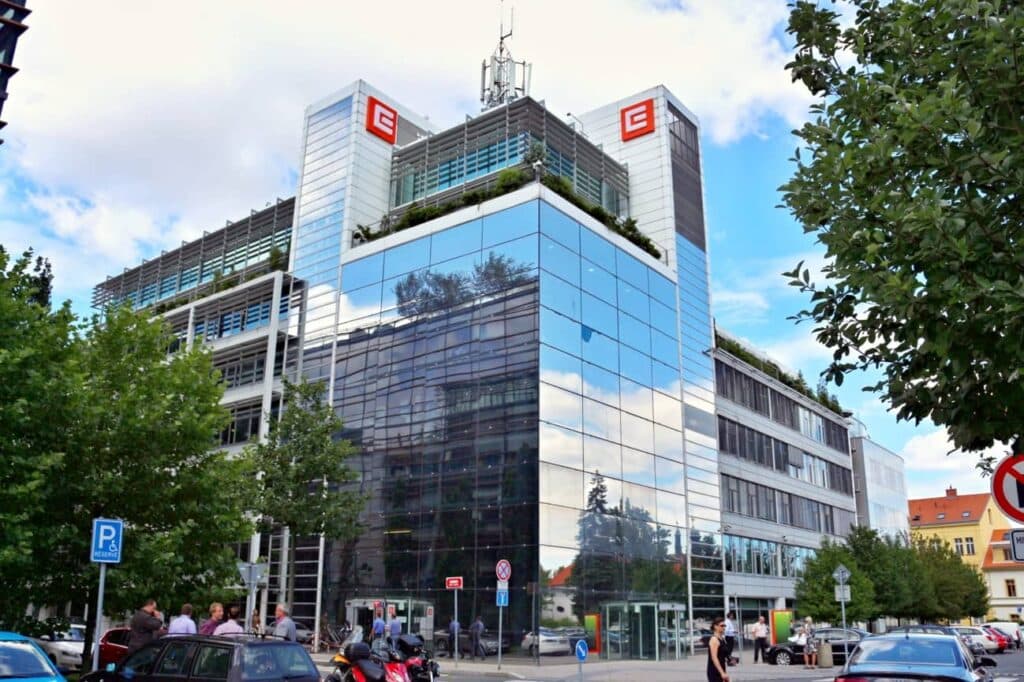
At the beginning of this week, reports began to emerge that the Ministry of Finance had submitted a counterproposal on the amount of the dividend from ČEZ, in which the state holds a majority stake (as of 31 December 2021, the state held 69.78% in ČEZ). The ministry thus decided to take a step that minority shareholders had been calling for ever since the proposed dividend amount was published. However, the ministry’s counterproposal disappointed minority shareholders and sparked speculation. Moreover, it appears to have been submitted after the deadline, and the Czech National Bank is investigating it.
The Ministry of Finance’s convoluted approach
ČEZ’s board of directors proposed on 15 March this year to pay a gross dividend of CZK 44/share. This amounts to a total of CZK 23.7 billion. Given the current situation in energy markets and the positive outlook for the company’s performance, the proposal fell short of expectations. It was expected that the state could use higher dividend income to compensate end consumers for energy prices.
The board’s proposal was within the company’s dividend policy, under which ČEZ plans, according to its strategy from March this year, to distribute 60–80% of net profit. Counterproposals on the dividend amount had to be submitted by 18 June at the latest. However, reports of a counterproposal did not begin to emerge until Monday, 20 June, with details to be published at 2 p.m. that day.
The initial enthusiasm of minority shareholders over the news faded once the details became known. These included a proposed dividend of CZK 48/share and a postponement of dividend payments from 1 August to 1 November. The total amount of funds would in this case stand at CZK 25.8 billion. The smaller-than-generally-expected increase in the dividend and the delayed payment sparked speculation over the company’s ability to pay the dividend.
The prime minister’s address
In an address on Wednesday, Prime Minister Petr Fiala presented his plan to bring strategic domestic power plants under full state control, noting that although the state is ČEZ’s majority shareholder, it cannot order ČEZ to supply electricity below market prices. France has incidentally taken a similar step, but the measure went to court, and such an approach would very likely trigger legal disputes in Czechia as well.
However, other solutions exist. According to some minority shareholders, an even higher dividend could be paid without jeopardising the company’s financial health.
ČEZ has recently made several strategic purchases, including the acquisition of Škoda JS and the securing of part of the capacity at a new LNG terminal in the Netherlands, and its ability to pay an increased dividend, even taking into account the latest news, is debatable.
According to ČEZ’s CFO, liquidity problems are also caused by the obligation to top up margin deposits due to exchange trading and rising commodity prices.
Another possible, albeit unpopular, solution is to force ČEZ to supply electricity to the market more cheaply, following Slovakia’s example. The Slovak government proposed a special tax on profits from nuclear power plants. The tax was so high that Slovenské elektrárne, in which the Slovak state holds a 34% stake, ultimately preferred to agree to supply electricity below market prices. We wrote about this issue earlier here. This approach, too, may trigger legal disputes.
Well-timed purchase of ČEZ shares
In light of recent developments, the purchase of ČEZ shares by companies owned by Czech billionaire Pavel Tykač, worth several billion CZK at the beginning of this year, appears to have been very well timed. ČEZ’s share price rose to CZK 863/share following reports in the second half of February of a further purchase being considered by Pavel Tykač, but it is now trading at around CZK 1,180/share.
Translation disclaimer
This article is a machine translation of the Czech original and has not yet been fully reviewed. In case of any doubt, please refer to the Czech version.
Sdílejte článek prostřednictvím:
You might also like

25 October 2026, 08:20