
20 October 2026, 15:34
Loading...
Analysts: Electricity consumption for EVs in Europe to double by 2030
Daniel Grecman
5 November 2025, 06:21
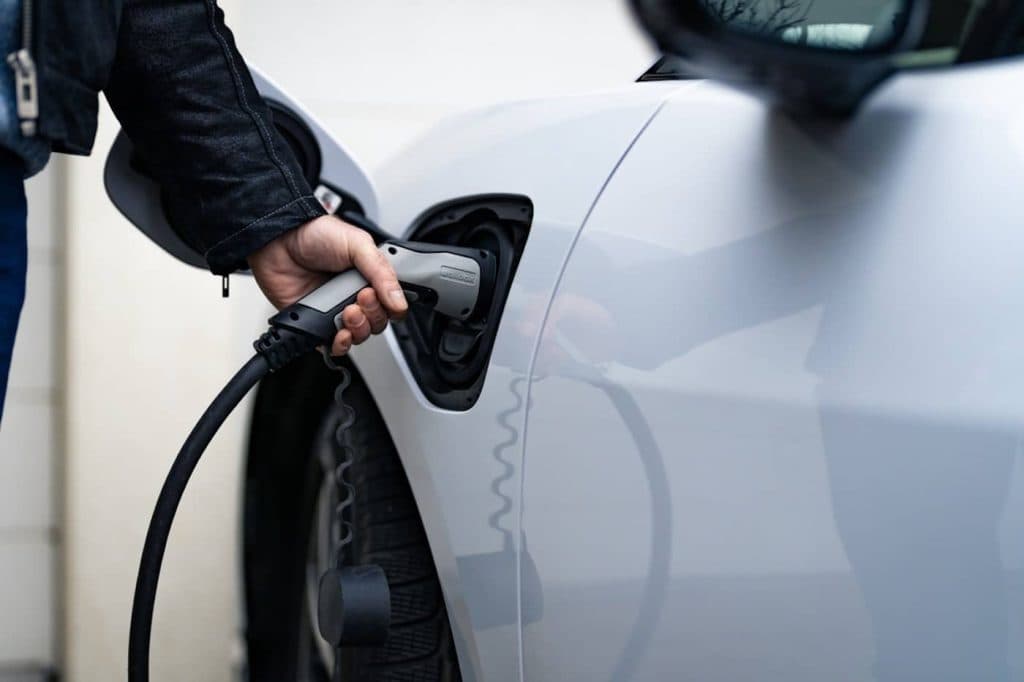
According to experts discussing the issue in a podcast by energy portal Montel, the increasing share of electric vehicles in the market for newly sold cars in Europe will lead to electricity consumption for EVs doubling in the near term. However, other sectors may see even greater growth in consumption. Charging infrastructure could become a bottleneck for the development of electric mobility.
Analysts agreed that the increase in electricity consumption for EVs in Europe will be steep. Shan Tomouk, head of energy research at Benchmark Mineral Intelligence, estimates consumption this year at 45 TWh. By 2030, he expects it to reach around 100 TWh. To put this into perspective, Europe’s total annual consumption is currently estimated at around 2,700 TWh, of which Czechia accounts for just under 58 TWh.
Regarding the rise in consumption, Tomouk added that while the expected increase is significant, it is “not all that remarkable” compared with the projected increase in electricity consumption in, for example, data centres. We have written about data centres, their consumption and technology giants’ planned investments in nuclear energy here and here.
But back to electric mobility. According to the European Automobile Manufacturers’ Association (ACEA), electric vehicles accounted for approximately 16 % of new car sales in the first three quarters of this year. Norway has the highest share of new electric cars, at 95 % of all newly sold vehicles, primarily due to government support (tax breaks, road charges, etc.).
In this context, a presentation by Jakub Seidler of the Czech National Bank is also of interest. It shows that fewer than 20 % of cars in Czechia are less than five years old and that the average age of a car in Czechia is currently over 16 years. More generally, the percentage share of zero-emission cars (EVs and hydrogen cars) in the total vehicle fleet remains very low. The EU average was slightly above 2 %.
The infrastructure is the bottleneck
The transition to electric vehicles could pose a challenge for Europe’s electricity infrastructure, Tomouk and Wenche Teigland, CEO of Fount, which operates a charging station network, agreed in the podcast.
“Even in Norway, where the grid is fairly resilient, we are seeing problems with the rollout of heavy-duty vehicles, which require more powerful charging stations,” Teigland said.
She also added that charging stations must be located along roads where the grid is currently often not sufficiently developed, or where there is no available connection capacity.
“European grids were not necessarily built with the electrification of transport in mind. When you build networks of fast-charging stations, where a single station can have demand of 1–2 MW, queues for grid connections emerge,” Tomouk explained, adding that distribution companies need time to modify their systems so that new equipment can be connected while keeping the grid secure.
Translation disclaimer
This article is a machine translation of the Czech original and has not yet been fully reviewed. In case of any doubt, please refer to the Czech version.
Sdílejte článek prostřednictvím:
You might also like


20 October 2026, 12:55
20 October 2026, 10:49
20 October 2026, 06:13