Power grids face record upgrade as operators boost investment by billions

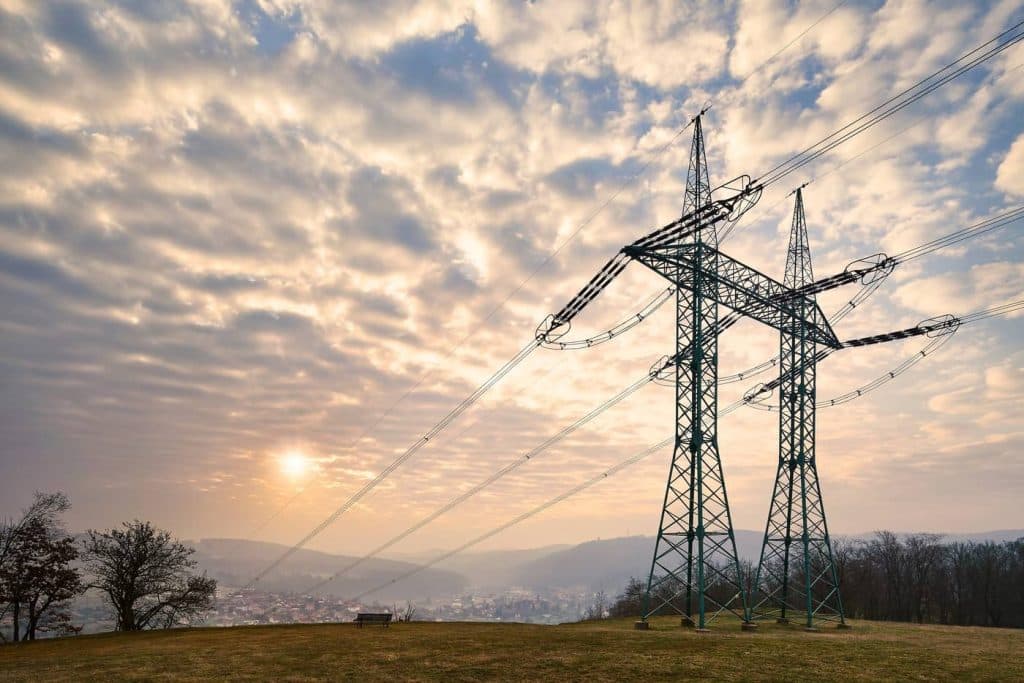
Operators of the Czech Republic’s power grids are planning investments of more than CZK 40 billion this year. This is several billion more than in previous years. The money will primarily go towards strengthening grid resilience and capacity; alongside further system development, the aim is also to prevent further power outages. In response to the threat of a repeat of last July’s outage, operators have also introduced preventive inspections and adjustments to operational management. This follows from information provided by energy companies to ČTK. According to energy sector representatives, investment growth should continue in the coming years.
The major power outage of 4 July last year, which lasted several hours, affected around one million customers. There are 6.3 million connection points in the Czech Republic. According to the findings of ČEPS’ investigation, the main cause was a cable falling onto the V411 line, resulting from an incorrect repair carried out previously. This was followed by other mutually independent outages. ČEPS’ analysis was recently confirmed by an international panel of energy experts. It was therefore the failure causing the greatest disruption in the Czech Republic since the transmission system was established.
ČEPS, the transmission system operator, and individual distribution companies responded with a set of measures aimed at minimising further problems. These primarily involved reinforcing key parts of the grids and identifying their critical nodes, both through technical measures and operational management. The preventive steps also included close cooperation between distribution companies and ČEPS, for example through regular emergency scenario exercises, mutual assistance in relieving system load and the provision of ancillary services.
At the same time, investment in the country’s grids is gradually increasing, as had been planned even before the outage. ČEPS plans to invest an average of CZK 13 billion per year. According to spokesperson Hana Klímová, the money should go towards modernising and reinforcing key transmission system lines, as well as developing substations to provide capacity for distribution system operators, while ensuring reactive power compensation and grid parameters for the future.
Distribution companies are also planning to spend billions of crowns more on strengthening the grids. According to spokesperson Soňa Holingerová, ČEZ Distribuce has been steadily increasing its investments, which now stand at around CZK 18 billion to CZK 19 billion annually. “They are mainly directed towards increasing grid capacity, renewing and modernising existing infrastructure, digitalisation and automation, and improving the grid’s resilience to extreme events,” Holingerová said.
EG.D is preparing investments of more than CZK 9 billion this year, representing an increase of around 50% year on year. “These funds are directed towards thousands of specific projects, from modernising low- and high-voltage lines to key projects at the very-high-voltage level. At very high voltage, we are planning dozens of projects, including the reconstruction of substations and lines, which increase the capacity and stability of the entire system,” EG.D spokesperson Lubomír Budný said. He noted that around half of the investments are related to connecting new customers and generation sources. Hundreds of millions of crowns are also going towards grid digitalisation.
Prague Energy invests more than CZK 2.5 billion annually in developing its distribution grid and, for the first time this year, will exceed CZK 3 billion. “This mainly concerns the renewal, modernisation and digitalisation of the grid,” Hanzelka said.
According to him, one of the most demanding current investments is the expansion of the Prague North substation and its connection to the newly built Prague North 400/110 kV supply point. “This will give Prague an important fourth supply point for electricity deliveries,” Hanzelka added.