
1 November 2026, 21:20
Loading...
Top 10 energy events of the past week
oEnergetice.cz
14 January 2024, 19:28

1. AGGM: Charges for exporting gas from Germany breach EU law. They also make gas imports to Czechia more expensive

A special fee for gas transmission levied by Germany at its borders is not in line with EU law, according to the head of Austria’s AGGM. The country introduced the fee to cover the costs of filling gas storage facilities in 2022. Since the start of the year, the fee has risen by more than a quarter, making gas imports to neighbouring countries, including Czechia, more expensive.
During the peak of the energy crisis in 2022, many governments and public companies incurred additional costs that they are now seeking to cover. One example is the cost of filling German gas storage facilities after Russia’s Gazprom lost its reserved capacity. To fill the storage facilities ahead of winter, the German market operator bought gas in summer 2022, when prices reached exceptionally high levels.
2. OPEC lost one of its members at the end of the year
The end of 2023 brought a change to the ranks of the Organization of the Petroleum Exporting Countries (OPEC). Angola, a member until now, decided to withdraw. It is thus following in the footsteps of Indonesia, Qatar and Ecuador, which have done the same relatively recently. Angola’s withdrawal is due to a dispute over production quotas, and there is also speculation about a link to the recent visit by the US president to the country. OPEC is therefore entering 2024 with twelve members, although this is unlikely to have a significant impact on the organization’s activities.
Angola, which had been an OPEC member since 2007, has large oil reserves. Over time, it has reached daily production of around 1.1 million barrels, which is not a particularly significant share given the organization’s total output of around 30 million barrels per day. Thanks to its oil wealth, however, the Angolan economy has become one of the fastest-growing in the world. The planned production quotas could therefore have a significant impact on its growth.
3. Sabotage of German gas pipeline caused millions in damage
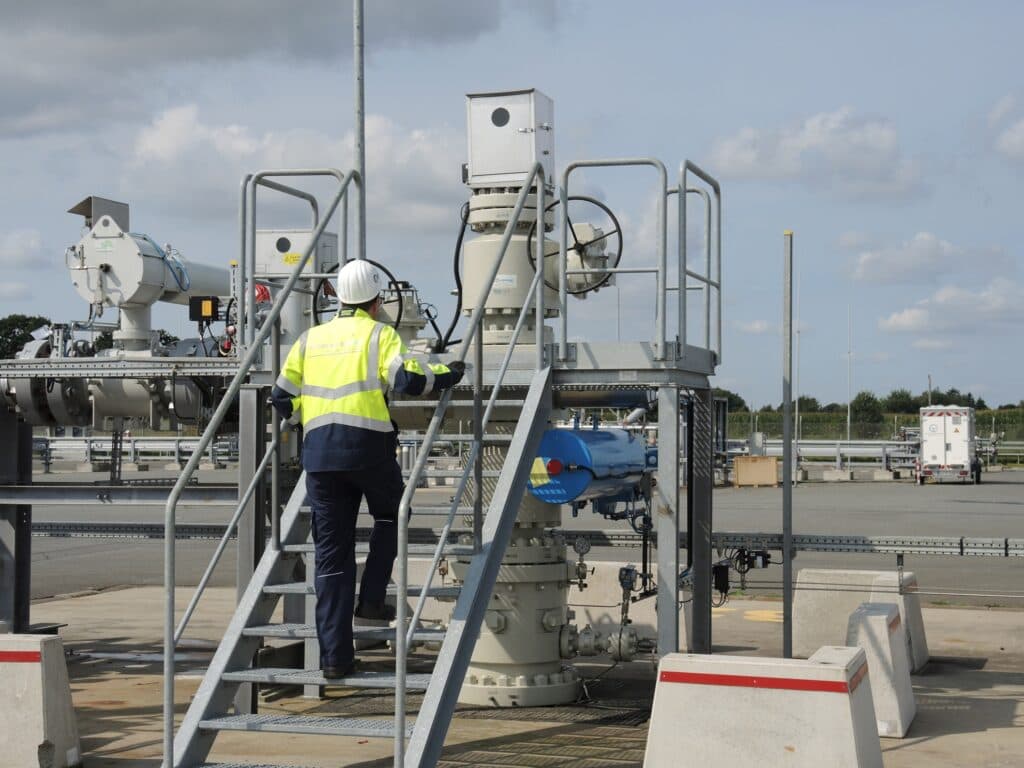
Alleged sabotage of an important gas pipeline currently under construction in the German state of Schleswig-Holstein could cause damage exceeding one million euros, reports German newspaper Der Spiegel. The pipeline is being built to connect the liquefied natural gas (LNG) terminal in the coastal city of Brunsbüttel to the regional gas grid.
The new pipeline will enable the terminal to operate at full capacity; it has been operating at limited capacity since the start of 2023. At the end of last year, unknown perpetrators drilled holes in the pipeline in at least eight places. Germany considers the pipeline a critical part of its energy infrastructure and has launched an investigation on suspicion of unconstitutional sabotage.
4. Lithium prices plummet, with market supply expected to be sufficient
Lithium prices are falling on global markets. Analysts point to an oversupply and the slow development of electric mobility in the United States. The price decline threatens some mining companies in Australia and China. According to the Australian government, however, prices remain above the production costs of major producers.
Lithium prices have fallen by 85% over the past year. With the exception of a brief period between April and June 2023, they have been falling steadily since November 2022. During that period, the price reached a record high of USD 37 000 per tonne. At the end of December 2023, it stood at around USD 13 600 per tonne. Some institutions expect prices to remain at current levels.
5. China approves construction of 4 more nuclear units. Projects totalling over 31 GW are under construction
China’s State Council has approved the construction of four more Hualong One nuclear reactors. Two new units each will be built at the existing Taipingling power plant and the new Jinqimen power plant. Construction is expected to take around 5 years. China currently has over 31 GW of new nuclear capacity under construction and aims to have 200 GW of installed nuclear capacity by 2035.
Construction of four more Hualong One nuclear reactors, each with an installed capacity of 1090 MW, will begin in China. The State Council approved the construction of two units at each of the Taipingling and Jinqimen plants at the end of the year.
6. Germany added record renewable capacity last year, but the pace must accelerate further
Renewable energy continued to expand rapidly in Germany last year, setting a new record. According to data from the country’s regulator, total installed capacity rose year on year to 170 GW, mainly thanks to new solar and wind power plants. However, Germany will have to more than double the pace of growth if it is to meet its 2030 targets.
Last year was a record for Germany not only in terms of the share of renewable energy in electricity generation. It was also the strongest year-on-year increase in installed capacity to date, reaching 17 GW. This figure, according to German grid regulator Bundesnetzagentur, is net of the capacity of plants decommissioned last year.
7. Emirates invest in African green hydrogen
 Abu Dhabi National Energy Company TAQA plans to build a green hydrogen production facility in Western Sahara. It will invest 10 billion dollars in the 6 GW Moroccan project.
The project is reportedly to be located in the Dakhla-Oued Eddahab region, which is geographically situated in Western Sahara—a territory considered “non-self-governing” by the UN.
8. Poland applies to reserve grid capacity for its first nuclear power plant
Polish transmission system operator Polskie Sieci Elektroenergetyczne (PSE) has set out the requirements for connecting Poland’s first nuclear power plant to the national energy system. The plant is planned for the Lubiatowo-Kopalino site near the village of Choczewo, in Pomerania in northern Poland.
Every quarter, PSE updates the list of companies that have applied to connect to the transmission grid. According to the latest list, published on 7 December, Polskie Elektrownie Jądrowe (PEJ) has received the connection conditions for a nuclear power plant in the Gdańsk region with an installed capacity of up to 3 720 MWe.
9. Nuclear alliance calls for a new low-carbon directive
The nuclear alliance of eleven EU countries led by France has called on the European Union to fully take into account “all non-fossil energy sources” when setting future energy and climate policy targets. The countries stressed the need for a thorough review of the EU’s climate and energy policy framework, with an emphasis on fully recognising their contribution, the Euractiv website reports.
Eleven countries, including Czechia, took part in the alliance meeting on 19 December 2023. Bulgaria, Croatia, Czechia, Finland, Hungary, Poland, Romania, Slovakia, Slovenia, Sweden and France called in a joint statement for a thorough review of the EU’s climate and energy policy framework.
10. Czech scientist heads European consortium working to secure fusion energy
Radomír Pánek, director of the Institute of Plasma Physics of the Czech Academy of Sciences, has led the European scientific consortium EUROfusion since the start of January. The consortium coordinates an international research programme aimed at securing a safe, sustainable and environmentally friendly source of fusion energy in Europe. The Czech scientist was elected chair of the consortium’s General Assembly in December, Martina Spěváčková of the Academy of Sciences told the Czech News Agency today.
The EUROfusion consortium brings together nearly 5000 scientists from 193 European research institutions, universities and companies working to harness energy through thermonuclear fusion. It has a budget of nearly one billion euros provided by the European Commission and member states.
Feature
Oil was discovered in Czechoslovakia after an accidental gas explosion

The first oil deposit in the territory that would later become Czechoslovakia was discovered in Gbely, in the Skalica District, on 10 January 1914, during an investigation prompted by a gas explosion. Local inventor Ján Medlen had been using the gas to heat his cottage. Subsequent expert examinations first confirmed the presence of a gas deposit, and further drilling produced a surprising result: the discovery of very high-quality oil. It was the first time oil had been found in the so-called Vienna Basin, where it is still extracted today.
Medlen had already attracted his neighbours’ attention with various inventions before the explosion, which completely destroyed his farm in early 1913. For example, he tried to build a perpetual motion machine, and probably shocked his neighbours most by selling the land he had inherited and exchanging it for marshy land outside the village. While digging a drainage ditch, he discovered gas, which he collected in a shaft and piped to his home through a simple brick conduit. Although he tried to seal the rudimentary system and installed ventilation, he was unable to prevent the accumulated gas from exploding.
Opinion
Nuclear energy in 2023, part 1: A nuclear renaissance is beginning in Czechia too
A number of European countries are returning to nuclear power, and the need for its rapid development was also highlighted at COP28. The first small modular reactor to enter commercial operation, which can be classified as a Generation IV reactor, has begun operating. The number of Generation III reactors is growing, along with experience in their construction and operation. More countries are planning to build new units.
Nuclear power enables France to achieve low-emissions electricity generation (source: Energostat).
Comparisons between the energy sectors in France and Germany increasingly show that low-emissions electricity generation cannot be achieved under broader geographical conditions that do not offer the same hydropower potential as Norway or geothermal potential as Iceland. France, as well as Sweden, Switzerland and now Slovakia, has extremely low emissions from electricity generation. Germany, by contrast, clearly shows that even a country with the strongest economy cannot achieve a low-emissions electricity mix based solely on renewable sources.
Energostat: electricity generation in Czechia
Energostat: electricity generation in Germany
Translation disclaimer
This article is a machine translation of the Czech original and has not yet been fully reviewed. In case of any doubt, please refer to the Czech version.
Sdílejte článek prostřednictvím:
Topics:Energy Weekly
You might also like

1 November 2026, 16:09
1 November 2026, 07:59

31 October 2026, 12:55

31 October 2026, 08:21